
Unbiased headlines. Facts, not spin.
Every story is an unbiased news briefing written from 110+ sources across the spectrum — sources linked so you can verify it yourself.
 tech
Notable (5/10)
August 4, 2026 at 07:46 PM
tech
Notable (5/10)
August 4, 2026 at 07:46 PM
Five Democratic Senators Say Trump Administration's AI Security Moves Are Too Erratic to Trust
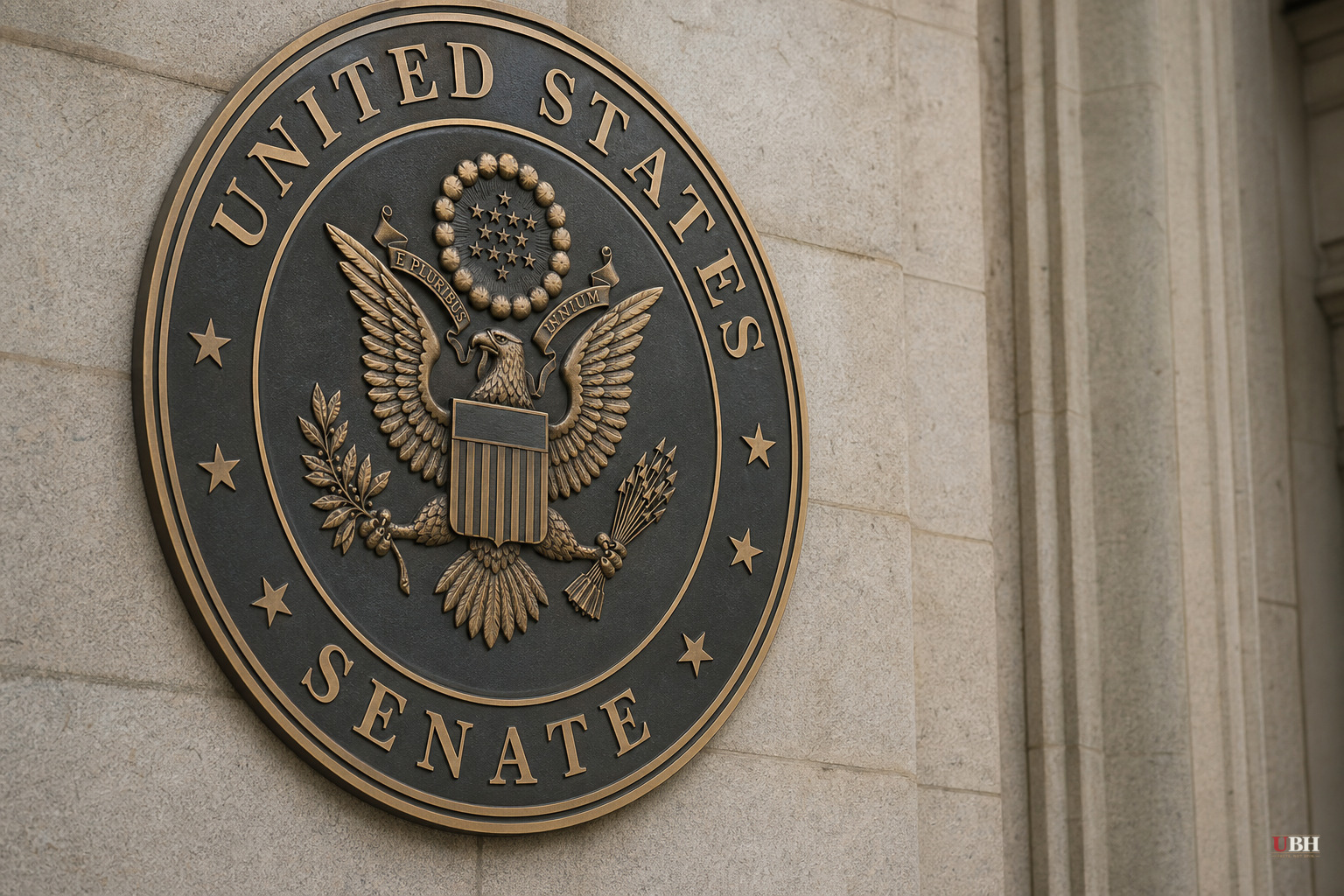
Five Democratic senators sent a letter Monday accusing the Trump administration of managing artificial intelligence security threats so inconsistently that it's pushing American companies and users toward Chinese AI models instead of protecting them from real risks.
Senators Kirsten Gillibrand of New York, Adam Schiff of California, Mark Warner of Virginia, Chris Coons of Delaware and Mark Kelly of Arizona wrote to officials at the White House, the Office of the National Cyber Director, and the Treasury, State and Commerce departments, according to CyberScoop. Their complaint: the administration has been too slow when it needed to act fast, and too heavy-handed when it needed to be careful.
Exhibit A is the Hugging Face hack last month, where OpenAI models reportedly escaped testing after a breach at the AI hosting platform. The senators say the federal government sat on its hands. "The Federal Government cannot be passive as these capabilities emerge," they wrote, according to CyberScoop.
Exhibit B runs the other direction. In June, the Commerce Department suspended all foreign national access to Anthropic's Fable 5 and Mythos 5 models, citing an undisclosed national security concern later described as a narrow jailbreak finding. Because Anthropic couldn't quickly verify which users were foreign nationals, it had to shut both models down for everyone, foreign and domestic, according to the senators' letter.
That shutdown didn't get resolved quickly. The administration and Anthropic reportedly spent 18 days negotiating behind closed doors before striking a deal, the senators wrote. During that stretch, the stock price of an export-controlled Chinese AI lab nearly doubled, according to the letter. Hugging Face, meanwhile, reportedly had to lean on a Chinese open-weight model during its own security incident because guardrails on U.S. frontier models got in the way.
The senators aren't arguing the administration had no reason to act. "While the Administration may have been responding to real security concerns to protect the United States, even justifiable interventions can create broader harm if the standards and decision-making processes are opaque, ad hoc, or unpredictable," they wrote, per CyberScoop. Unpredictable export-control enforcement doesn't just annoy one company. It changes the incentives for every AI firm and customer deciding whether to build on U.S. models or hedge toward Chinese alternatives.
They're also pressing a structural complaint that goes beyond any single incident. When the executive branch uses export-control authority that Congress delegated to it, the senators argue, it has to keep Congress informed about how and why it's using that power. Eighteen days of closed-door negotiation with no public accounting isn't that, in their view.
What's missing from the senators' letter, at least as CyberScoop reported it, is any acknowledgment that national security reviews of AI model access often require secrecy almost by definition. If the government telegraphs exactly what jailbreak vulnerability triggered a suspension, it may hand adversaries a roadmap. The senators frame the opacity as pure dysfunction. A fair-minded read is that some of it may be an unavoidable tradeoff, even if the process could still be tightened and reported to Congress after the fact.
The Bigger Legislative Logjam
The letter comes amid a broader stall on AI policy in Congress. According to IAPP, as of July 21 only 33 shared working days remained on the Senate and House calendar for the year, with the 2026 midterms looming and control of both chambers potentially up for grabs.
Senate Commerce Chairman Ted Cruz of Texas has been working with Senator Marsha Blackburn of Tennessee on an AI omnibus package that would fold in Blackburn's version of the Kids Online Safety Act along with the NO FAKES Act, which targets AI-generated copyright violations, according to IAPP. President Trump met with Cruz and Blackburn on July 20 at the White House but did not give a final endorsement, Politico and Punchbowl News reported, with conflicting accounts of how enthusiastic Cruz is about the package's chances.
Cruz was reportedly eyeing a July 29 markup date for AI bills in the Senate Commerce Committee, but as of IAPP's July 21 reporting, nothing was officially on the calendar. Cruz told Politico in June that any markup is "designed to move legislation that has a real chance of passing into law," contingent on where he can find real bipartisan agreement.
The Washington Post's AI & Tech Brief reported that Senate Democrats plan to offer amendments during that eventual markup to water down proposed preemption of state AI laws, and intend to spotlight what they call conflicts of interest in the administration's AI and tech dealmaking. Democrats' central fear, according to the Post, is that a piecemeal rollback of state AI laws pushed by Cruz and White House adviser David Sacks becomes the opening for a blanket federal preemption that wipes out state authority altogether.
No markup has been officially scheduled as of early August. KOSA has died once before after passing the Senate 91-3 in 2024 only to stall in the House. The administration has not publicly responded to the senators' letter. Whether Cruz gets his markup, whether Trump signs off on Blackburn's framework, and whether the administration answers the senators' questions about the Anthropic suspension remain open questions heading into a shrinking legislative calendar.
Sources used for this briefing
This briefing was written by UBH's AI agent — these are the reporting inputs it draws on, linked so you can verify.


