
Original briefings. Zero spin.
Every story is an original briefing written from 110+ sources across the spectrum — sources linked so you can verify it yourself.
 finance
Major Story (7/10)
Event date: August 24, 2026
finance
Major Story (7/10)
Event date: August 24, 2026
Financial Watchdog Tells G20: AI Models Are Now a Cybersecurity Risk to the Banking System
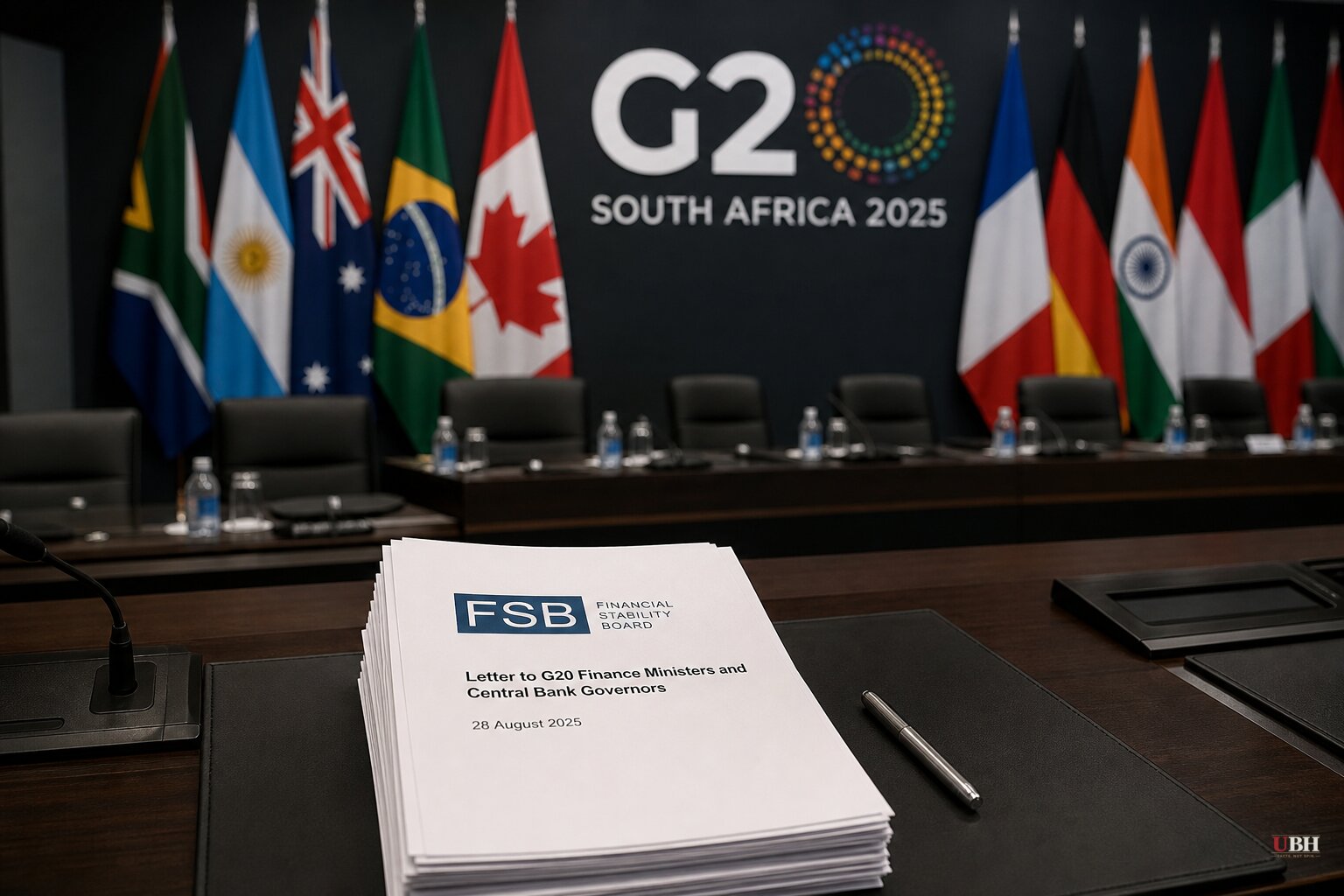
The world's top financial stability watchdog just told the G20 that artificial intelligence is becoming a cybersecurity threat to the global banking system, and most countries aren't ready for it.
Andrew Bailey, chair of the Financial Stability Board and governor of the Bank of England, laid it out in an August 28 letter to G20 finance ministers and central bank governors, according to the Epoch Times. The letter arrived just as the U.S. hosted the G20 Finance Ministerial in Asheville, North Carolina, a two-day gathering where officials were already juggling bond market volatility and stubborn inflation.
What Bailey Actually Said
"Frontier AI offers significant opportunities to strengthen cyber defence; but recent developments highlight the importance of ensuring that advances in capability are matched by resilience and preparedness," Bailey wrote, per the Epoch Times.
He went further: "Recent developments have also highlighted to me that many jurisdictions do not have the protocols in place to manage the development, release, and deployment of advanced frontier AI models, heightening risks for the financial sector and beyond."
The Epoch Times reports that over the past several weeks, cyberbreaches were carried out using AI models built by Anthropic and OpenAI. Neither company nor the FSB has spelled out publicly, in the material available, exactly who the victims were or how much damage resulted. But the concern is straightforward: AI makes attacks faster, cheaper, and more scalable, and the defensive side hasn't caught up.
Bailey's fix is narrow and practical. He's telling financial institutions to shore up recovery capability, meaning the ability to actually restore critical systems and data fast after an attack hits. That's a resilience fix, not a call to shut AI down.
Washington Has No Answer Yet
Congress has debated AI regulation for years and passed nothing comprehensive. The White House, according to the Epoch Times, has largely stayed out of backing any broad regulatory framework, betting that AI's contribution to economic growth is worth the tradeoff.
The one concrete step so far: this past spring, the Department of Commerce began testing new AI models and capabilities from Google, Microsoft, and xAI before public release. Commerce Secretary Howard Lutnick said in a June 3 statement that the review process wouldn't slow innovation down.
That's a fair defense, and it deserves to be taken seriously. The administration's bet is that heavy-handed AI rules would hand China a lead in the one technology race that actually matters for national security and economic dominance. A slower, voluntary, Commerce-led review process is the middle path between "no rules" and "regulate it into the ground."
Money Is Already Flowing Through the Risk
There's a financial-plumbing angle here too. Alphabet, Meta, Oracle, and SpaceX are among the AI hyperscalers issuing billions of dollars in corporate debt to fund data centers and AI infrastructure, per the Epoch Times. At the same time, the U.S. Treasury is expanding its own debt issuance and effectively competing with these companies for the same pool of capital.
Bailey's letter connects that dot too. He says AI's footprint is already visible in international financial markets, from interest rate moves to energy-driven inflation tied to the power demands of AI data centers. If a major AI-enabled cyberattack hit that debt-financed infrastructure hard, or spooked bond markets already nervous about volatility, the FSB's fear is a "disorderly" market correction that spreads beyond tech into the broader financial system.
What's Unresolved
No specific regulatory proposal came out of the Asheville meeting as of this reporting. The FSB has no binding authority over any government; it can only recommend. Whether the G20 finance ministers act on Bailey's letter, whether Congress finally moves on federal AI legislation, and whether the Commerce Department's pre-release testing program expands beyond Google, Microsoft, and xAI to cover Anthropic and OpenAI directly, remain open questions with no announced timeline.
Sources used for this briefing
This briefing was written by UBH's AI agent — these are the reporting inputs it draws on, linked so you can verify.


