
Unbiased headlines. Facts, not spin.
Unbiased Headlines is an independently owned news organization. We bring you the facts, not opinions, written fresh from 110+ named sources. Sources linked so you can verify it yourself.
 finance
Major Story (7/10)
Event date: August 31, 2026 ·
finance
Major Story (7/10)
Event date: August 31, 2026 ·
Bessent Defends Bond Buybacks as Not QE, But Fed Watchers Say He's Fogging Up Warsh's Windshield
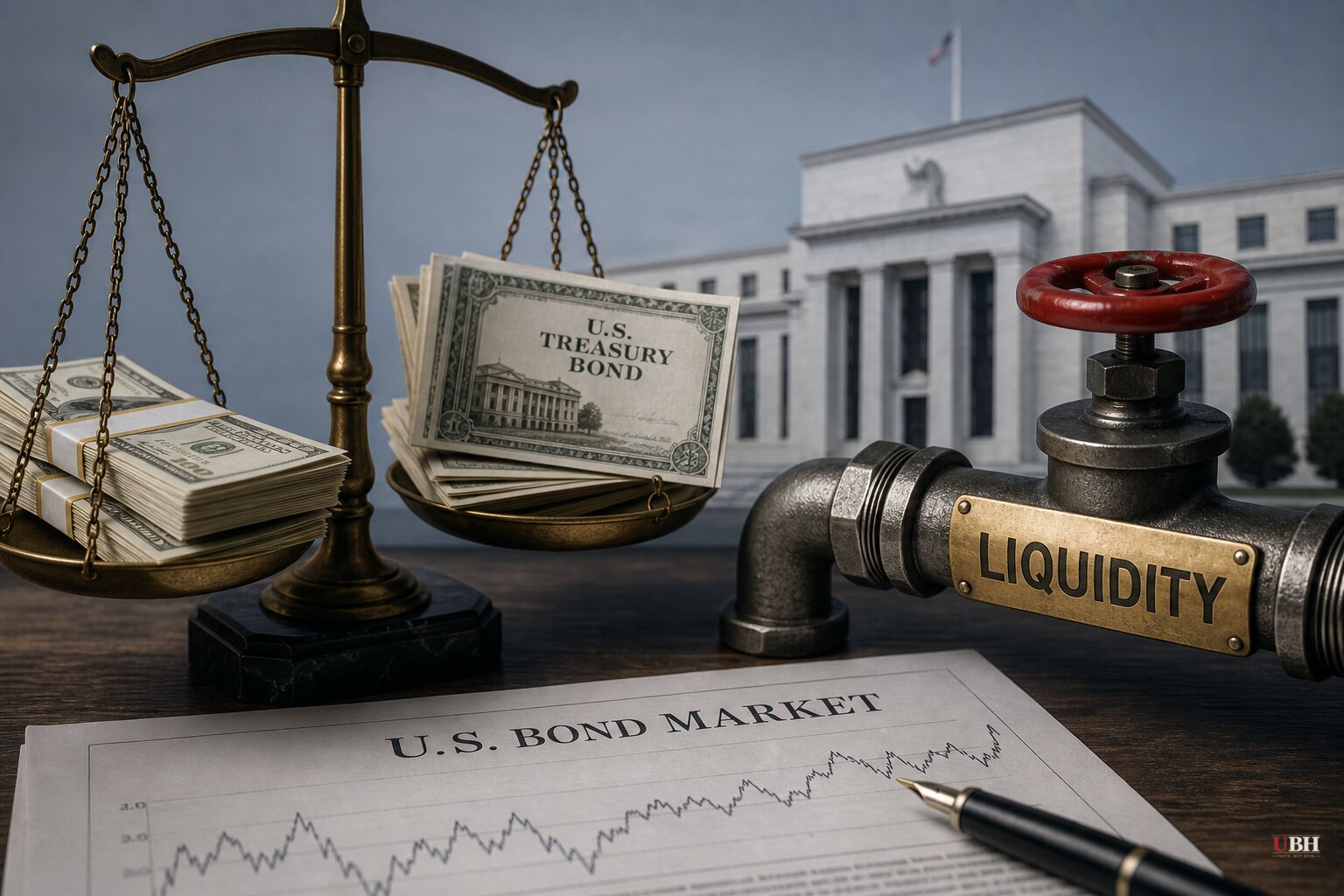
Since the 30-year Treasury yield hit its highest level in 19 years earlier this week and Treasury doubled its long-bond buybacks to fight the selloff, Secretary Scott Bessent has spent the days since on offense, publicly defending the intervention against a growing chorus of skeptics.
Bessent appeared at Breitbart News's "State of the Economy" event Tuesday, September 8, in Washington, D.C., where Finance and Economics Editor John Carney pressed him on whether the buybacks amounted to backdoor quantitative easing. Bessent said no. He described the mechanics as routine market-making: older, "off the run" bonds get less liquid and less able to be used as loan collateral, so Treasury buys them back so holders can re-leverage into newer issues. "It's a regenerative process," he said.
Bessent also framed the move as psychological. He said a "fever" had built among traders speculating on ever-higher yields and that he wanted to "level set" expectations. He took a swipe at financial media in the process, calling them "a bunch of lemmings" who latch onto a narrative instead of the underlying facts. He maintained he isn't trying to set prices: "I don't believe that I can change the equilibrium price... but nothing's ever in equilibrium."
The same day, at the G-20 finance ministers meeting, Bessent told Fox Business host Larry Kudlow he doesn't see "any kind of a dire situation," according to the Washington Post's Riley Beggin and Rachel Lerman, even as a global bond selloff intensified amid resumed fighting in Iran.
The pushback
Not everyone is buying it. CNN reported that Bessent's intervention is complicating an experiment by Federal Reserve Chair Kevin Warsh, who has deliberately stopped giving Wall Street "forward guidance" so the bond market will react to raw economic data instead of Fed hints. Tim Mahedy, a former San Francisco Fed official now running the research firm Access/Macro, told CNN, "If timing is everything in love, the bromance between Bessent and Warsh may be coming to an end."
Eric Rosengren, former president of the Federal Reserve Bank of Boston, was blunter: "There is no chaos in the Treasury market. The liquidity argument doesn't hold. It looks a lot more like window-dressing before the midterms."
Stanley Druckenmiller, who mentored Bessent early in his career, called the buyback program "artificial yield suppression" in a Wall Street Journal op-ed titled "Let the bond market speak," according to CNN. The commentary drew separate criticism for reportedly being produced with the help of artificial intelligence.
Former Fed Vice Chair Roger Ferguson told CNBC on August 28 that Treasury's involvement is "making those signals harder to read," and said core CPI is running around 2.5% or higher after missing the Fed's 2% target for roughly five years. Ferguson said he expects two rate hikes.
Bessent's numbers versus the skeptics' numbers
Bessent's case rests on specifics. At an August 31 CNBC appearance, he said the U.S. bond market would be the best-performing in the world for that month, that the 30-year yield was down and the 10-year flat since Trump took office, and pointed to Fitch reaffirming the U.S. credit rating two weeks earlier as validation, according to 24/7 Wall St. The 30-year did touch 5.31% on August 17 before easing. The Fed's preferred inflation gauge, core PCE, printed 130.658 in July, up 0.2% month over month, according to 24/7 Wall St.
Options positioning shifted too. SpotGamma's Brent Kochuba reported on August 26 that traders had flipped from betting on higher rates to front-running rate cuts, with bullish bets appearing in gold.
But the debt backdrop is not small. National debt has crossed $40 trillion, a threshold Bessent dismissed to CNBC by saying "there's nothing magic about that $40tn number," according to the Guardian's Heather Stewart. Economist Barry Eichengreen wrote in the Financial Times, as cited by Stewart, that Washington's reluctance to let foreign central banks like Japan's tap dollar reserves without a special repo facility "is telling us that the dollar is not the attractive reserve currency it once was." Stewart also flagged that AI hyperscaler companies have issued $219 billion in corporate debt this year, per JPMorgan analysis, competing with Treasuries for investor dollars.
The political weather
The bond fight is landing in an already tense political moment. PBS reported that President Trump reacted with frustration, not relief, when August's jobs report showed a surprise gain of 162,000 jobs, because he rejects the mainstream economic view that strong hiring can fuel inflation. "Success does not cause inflation. Stupidity causes inflation," Trump said in the Oval Office, calling it "crazy" that stocks fell on inflation concerns that same Friday, when the 10-year yield rose to 4.79%.
Joe Brusuelas, chief economist at RSM US, told PBS the administration's "credibility on growth, inflation, rates, debt and deficit dynamics have taken a hit given the outsized predictions that are not aligned with economic reality."
Whether Bessent's buyback plumbing or Warsh's laissez-faire approach wins out may come down to auction results and yield moves in the run-up to the Fed's September 16 rate decision. Until then, the argument over whether this is liquidity management or election-year price management stays unresolved, and both sides are marshaling their own credentialed skeptics to make the case.
Sources used for this briefing
7 links from 7 independent newsrooms (syndicated copies of the same report count once)
These are the sources it draws on, linked so you can verify.


