
Unbiased headlines. Facts, not spin.
Every story is an unbiased news briefing written from 110+ sources across the spectrum — sources linked so you can verify it yourself.
 health
Major Story (7/10)
June 22, 2026 at 06:14 PM
health
Major Story (7/10)
June 22, 2026 at 06:14 PM
Fentanyl Deaths Have Fallen Sharply. The Fight Over Who Gets Credit, and What Comes Next, Is Unresolved.
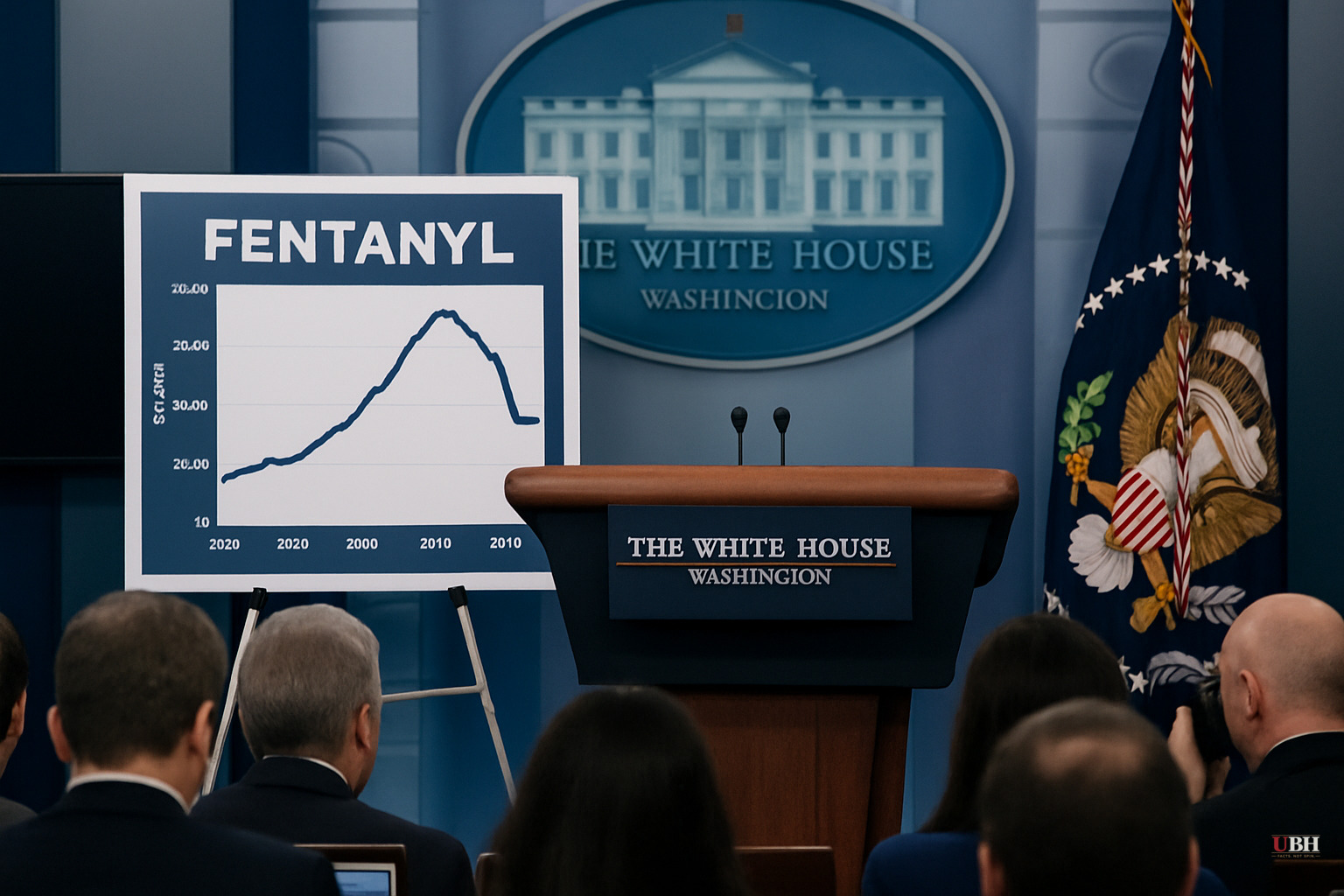
Since prior coverage established that fentanyl deaths have been falling since mid-2023, the question dominating policy circles is no longer whether the trend is real. It's why it happened, who deserves credit, and whether the current federal strategy will sustain or reverse it.
What the Data Actually Shows
A study published in Science magazine — authored by Carnegie Mellon drug-policy researcher Jonathan Caulkins and five colleagues — found that the annual rate of fentanyl overdose deaths fell by roughly one-third between the mid-2023 peak and the end of 2024, according to The Dialogue. Seizures of fentanyl dropped 37 percent over the same window. The numbers have continued declining since then.
The peak of the epidemic predates Trump's second term.
The Administration's Claim
Health and Human Services Secretary Robert F. Kennedy Jr. announced more than $700 million in federal funding on Wednesday, according to the Daily Signal, framing it as part of Trump's Great American Recovery Initiative. The package includes:
- $96 million for a new program called STREETS (Safety Through Recovery, Engagement, and Evidence-based Treatment and Support), administered by the Substance Abuse and Mental Health Services Administration. Eight communities will compete for up to $3 million each per year over four years.
- $223.1 million to expand Certified Community Behavioral Health Clinics.
- $238.6 million to support the 988 Suicide and Crisis Lifeline.
- $80 million for substance use prevention, treatment, and recovery programs.
- $70-plus million toward mental health services, including programs addressing childhood trauma, mobile crisis care, and diversion from the criminal justice system into community-based treatment.
- $612 million for additional behavioral health initiatives.
Kennedy unveiled the funding during a visit to an Easterseals MORC clinic. "These investments will help move people from the streets into treatment and recovery, strengthen families, save lives, and make communities safer," he wrote in a press release.
The Daily Signal credits the Trump administration directly for the death-rate decline, asserting overdose deaths have fallen "to the lowest ever" under Trump. That framing glosses over the timeline: the sharpest drop began in mid-2023, roughly 18 months before Trump was inaugurated for his second term.
What Researchers Actually Think
According to The Dialogue, Caulkins and his co-authors are careful not to assign credit to any single policy actor. The leading theories include a supply disruption possibly originating in China, where precursor chemical crackdowns appear to have raised fentanyl production costs. Caulkins notes the traditional skepticism among drug-policy researchers about supply-side enforcement. Seizing a shipment "doesn't inflict very much pain on the bad guys," which is exactly why a disruption of this apparent scale is striking.
The criminal drug trade is adaptive by design. When one route closes, traffickers open another. The researchers also examined Reddit forums where users discuss drug availability and found that street-level reports of scarcity tracked the supply-side data. That's unusual corroboration.
The Dialogue also notes that fentanyl remains the number one cause of fatal overdoses in the United States and that traffickers are actively introducing new synthetic drugs into the market. The crisis is not over.
The Case Against the Current Strategy
The Drug Policy Alliance, a harm-reduction advocacy organization, published a tracker in April 2026 arguing that the administration's approach is self-contradictory. The group says federal funding has been clawed back from communities even as new investment is announced, that SAMHSA staff who managed the national overdose-response infrastructure were laid off in what DPA describes as "chaotic firings," and that recent federal guidance attempts to cut off SAMHSA funding for fentanyl test strips.
DPA also flags that 400 hospitals are at risk of closing or reducing services because of provisions in Trump's budget legislation, and that the administration's proposed FY2027 budget would deepen those cuts further.
If the decline in overdose deaths was driven partly by expanded access to treatment and harm-reduction tools, dismantling that infrastructure while adding new programs on top could produce net harm. The DPA's tracker includes testimonials from providers describing reduced services, longer waitlists, and job losses. These are anecdotal, but they are sourced to named programs and real service disruptions.
The DPA, however, is an advocacy organization with a stated position opposing many Trump-era drug policies, including the tightening of harm-reduction funding. Its tracker should be read as an interested-party document, not a neutral audit.
The Unresolved Question
The STREETS program is structured around competitive grants to eight communities, with implementation timelines that run four years out. That structure means the program's actual effect on the overdose rate won't be measurable until well into the next presidential term. In the meantime, the Caulkins-led Science study's finding that a possible China-driven supply shock may have caused much of the existing decline raises a hard policy question: if supply normalizes and fentanyl flows back at scale, does the U.S. treatment and recovery infrastructure have enough capacity to absorb the resulting surge? According to the Drug Policy Alliance, as of April 2026, that infrastructure was already strained — with waitlists stretching weeks or months in some areas. Whether the more than $700 million announced Wednesday is enough to close that gap, or whether it coexists with cuts that undercut it, remains unclear.
Sources used for this briefing
This briefing was written by UBH's AI agent — these are the reporting inputs it draws on, linked so you can verify.


