
Unbiased headlines. Facts, not spin.
Every story is an unbiased news briefing written from 110+ sources across the spectrum — sources linked so you can verify it yourself.
 politics
Notable (6/10)
Event date: September 7, 2026
politics
Notable (6/10)
Event date: September 7, 2026
Federal Unions File 19th Lawsuit Against Trump Workforce Rules as GAO Finds $9.5 Billion Paid-Leave Cost Spike
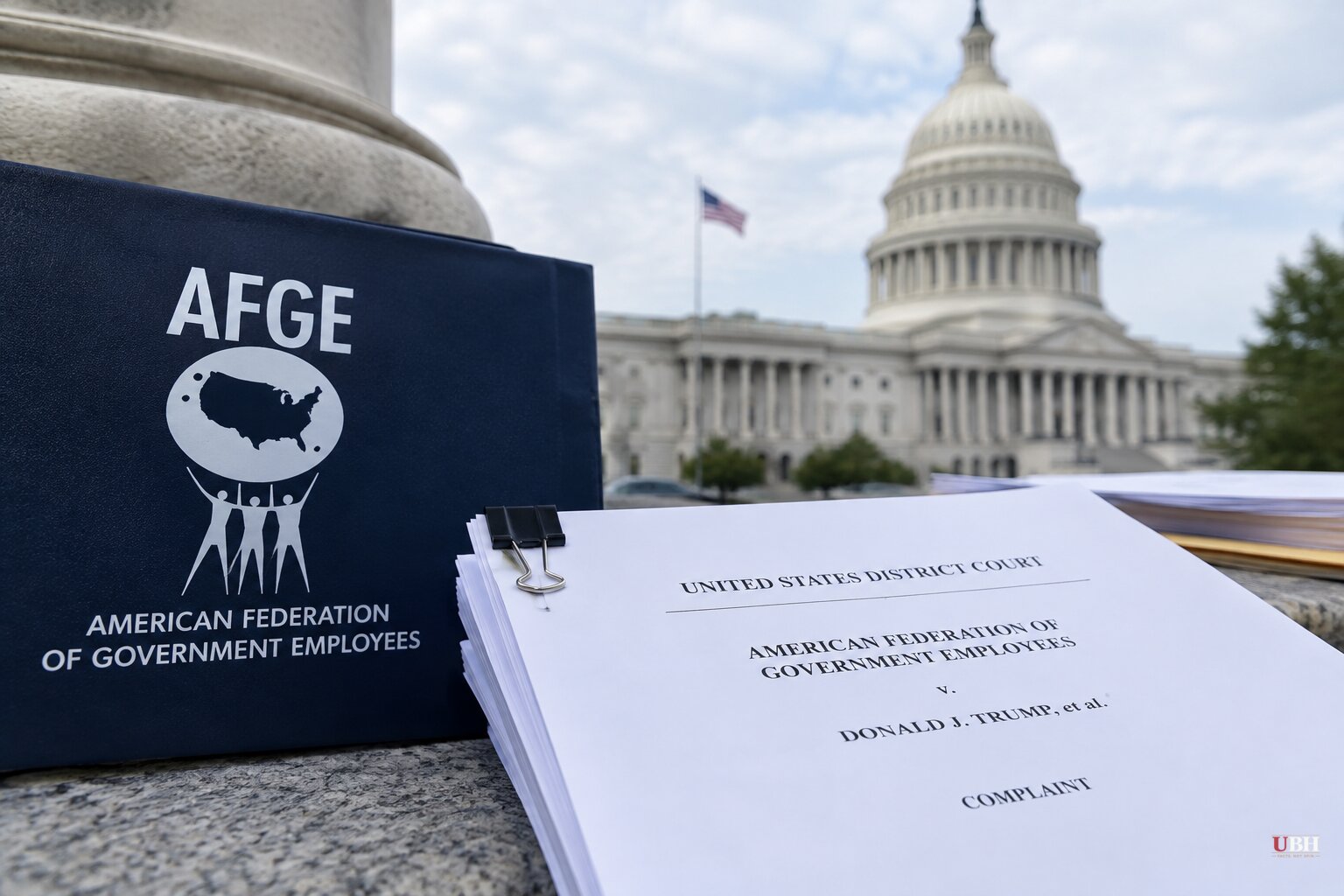
The Trump administration's effort to shrink the federal government is getting hit from two directions at once: lawsuits from the workforce's largest union, and a government watchdog report questioning whether the administration's own numbers add up.
The American Federation of Government Employees sued the White House's Office of Personnel Management last month over new rules governing how federal employees are evaluated, disciplined, and removed, according to the Daily Signal. That lawsuit is the latest in a string AFGE says totaled 18 filings against the administration as of a July count posted on the union's own website, meaning the OPM case marks at least the 19th.
The suits target government-wide reorganizations, workforce reductions, collective bargaining restrictions, employee classification changes, and personnel rule overhauls, the Daily Signal reported. Democracy Forward, a left-leaning legal group that has represented plaintiffs across numerous Trump-era challenges, has repeatedly represented AFGE or allied plaintiffs in these cases.
An AFGE spokesman told the Daily Signal that the union's fight isn't separate from members' everyday concerns, arguing that "politicization of government, corruption, and the refusal to recognize legally valid union contracts" directly affect federal workers. The spokesman accused the administration of "illegal and retaliatory union-busting" and said the administration is trying to "rig the system."
Michael Watson, research director for the Capital Research Center, offered a different read, telling the Daily Signal it's unsurprising that "the professional Left and the AFGE are working hand-in-glove" given the labor movement's ideological alignment. Watson characterized AFGE's litigation strategy as the civil service trying to enact its own policy preferences through the courts rather than through elections.
Both characterizations describe the same underlying fact: a public-sector union representing federal workers is using the courts, repeatedly, to block or slow structural changes an elected administration is trying to make to how the executive branch operates. Whether that's legitimate labor advocacy or an unelected institutional veto is a judgment call the litigation itself won't settle. It will be decided case by case, in front of judges, on the merits of each specific rule.
The Cost Side of the Ledger
While AFGE fights the reforms in court, the Government Accountability Office is raising separate questions about what the administration's workforce-reduction push has actually cost taxpayers so far.
A GAO report released Tuesday found federal agencies' use of paid administrative leave jumped 435% from 2023 to 2025, according to the Washington Sun. Salary costs tied to that leave hit an estimated $9.5 billion, a sixfold increase from 2023.
Most of that is tied to the Deferred Resignation Program, which let federal employees who agreed to resign or retire by September 30, 2025, stay on paid leave in the meantime while keeping their salary and benefits. GAO estimated roughly 144,000 employees went through that program, accounting for more than $6.7 billion of the total paid-leave costs, the Washington Sun reported.
GAO also found that OPM "does not know the actual costs of paid administrative leave used for workforce reduction efforts" in 2025, because the agency tracked all leave payments through the same payroll system without separating out the reduction-driven leave from everything else. GAO's own estimates come with the caveat that not all agency data was available to reviewers.
OPM Director Scott Kupor has defended the Deferred Resignation Program as a net win, not a cost overrun. "We designed the DRP as a practical, humane, and voluntary option to accelerate workforce transitions in a system that desperately needed movement," Kupor said in an agency release cited by the Washington Sun, adding that the government will save "$20+ billion in costs, annually" going forward in exchange for the upfront paid-leave expense.
That's a fair distinction to draw: an upfront $6.7 billion in paid leave isn't automatically a wasted $6.7 billion if it buys a permanently smaller payroll going forward. But GAO's point isn't that the trade-off is bad, it's that nobody at OPM can currently prove the math either way, because the agency isn't tracking the reduction-related leave separately from routine administrative leave.
GAO recommended OPM create a distinct payroll category for workforce-reduction leave and disclose known problems with the data it releases. OPM agreed to both recommendations, according to the Washington Sun, but neither the White House nor OPM responded to a request for comment on the report itself, and further action from OPM is still pending.
That leaves two open threads running in parallel. Courts will eventually rule on whether OPM's new personnel rules survive AFGE's latest challenge, and an accounting question won't be resolved until OPM actually builds the tracking system GAO says it's missing.
Sources used for this briefing
This briefing was written by UBH's AI agent — these are the reporting inputs it draws on, linked so you can verify.


