
Unbiased headlines. Facts, not spin.
Unbiased Headlines is an independently owned news organization. We bring you the facts, not opinions, written fresh from 110+ named sources. Sources linked so you can verify it yourself.
 health
Notable (6/10)
Federal Judge Denies Novo Nordisk Request to Halt Eli Lilly Weight-Loss Drug Ads
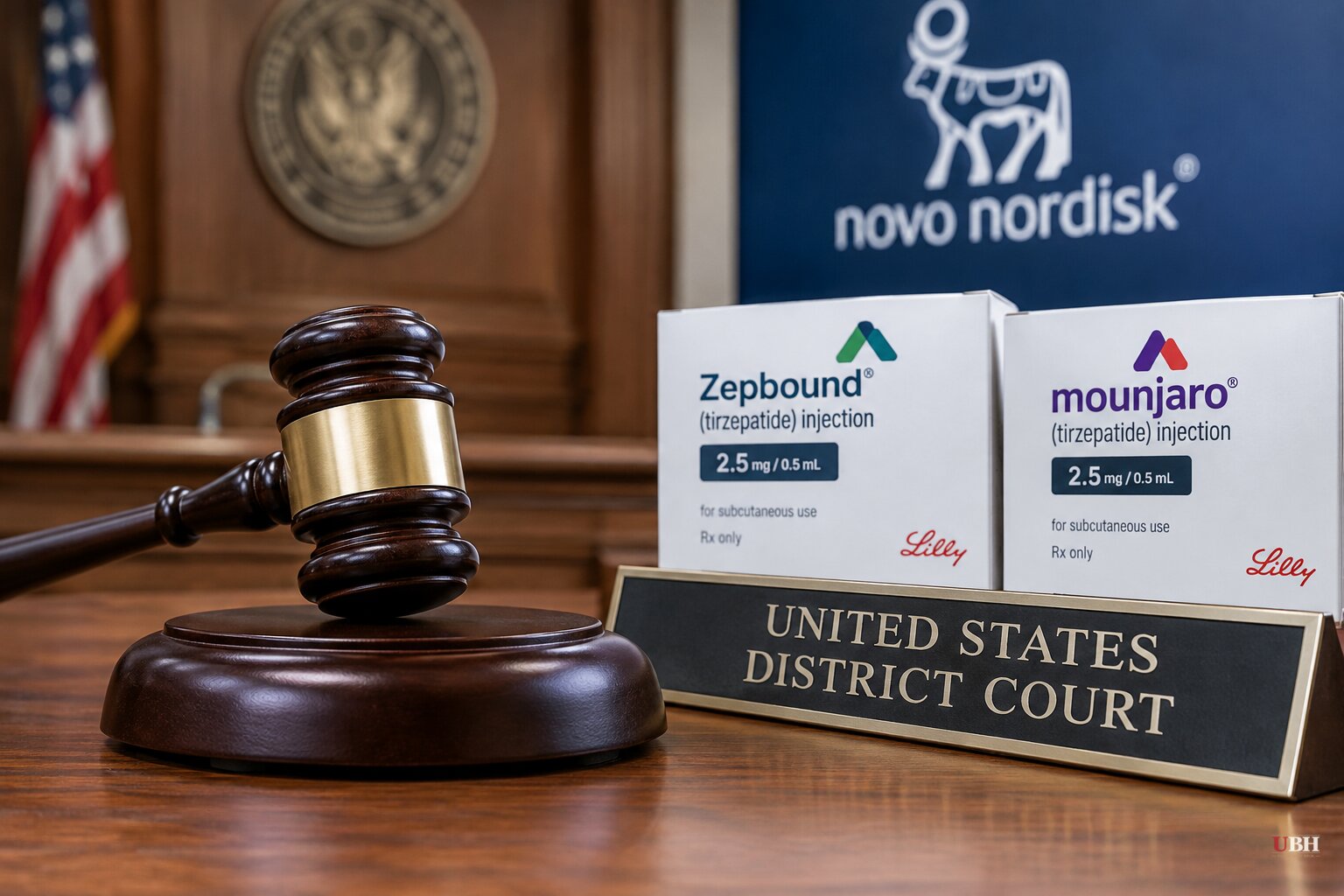
A federal judge has told Novo Nordisk it cannot shut down Eli Lilly's weight-loss drug advertising while their false-advertising fight plays out.
U.S. District Judge Zahid Quraishi, sitting in Trenton, New Jersey, denied Novo's request for a preliminary injunction on Monday, Oct. 26. He ruled after a two-day hearing in late August.
What the judge decided
Quraishi's 25-page decision turned on harm rather than truth. He found Novo had not shown that Lilly's ads threatened its sales, undermined its goodwill, or did lasting damage to its clinical reputation.
He called Novo's claim of irreparable harm "inadequate to warrant the extraordinary relief it seeks." He also described the company's showing as "speculative claims of harm," and the case as "less than persuasive" on a "very preliminary record."
The judge said Novo's witnesses were credible. But he found Lilly's ads had at most a negligible market impact between April and July, with prescriptions for Novo's products staying stable.
He added that money damages could compensate Novo for any "nontrivial harm" it might suffer without an injunction. He did not rule on the merits of the false-advertising claims.
The ads at issue
Novo sued Lilly in July. It alleges that ads for the obesity drug Zepbound and the diabetes drug Mounjaro violate federal and state false-advertising and unfair-competition laws.
The complaint targets two comparisons: Zepbound against Wegovy for weight loss, and Mounjaro against Ozempic for type 2 diabetes. In one commercial, a voiceover says Zepbound users lost an average of 50 pounds (23 kg) while Wegovy users lost an average of 33 pounds (15 kg). A written disclaimer accompanies the claim.
Novo says those figures come from a head-to-head study published in 2025 that left out its newer, higher Wegovy dose. It points to two other studies it considers fairer. In those, high-dose Wegovy averaged 47 pounds of weight loss and Zepbound averaged 48 pounds.
Novo's complaint calls Lilly's advertising "maliciously and deliberately false." Novo says it is too early to say how many patients are on the highest Wegovy dose.
Both companies claim the high ground
Lilly denies wrongdoing and said it was pleased with the ruling. In an Aug. 10 filing it argued that "Lilly is beating Novo in the marketplace," and that its medicines are more effective in treating diabetes and obesity. It asked the judge to reject both the injunction and Novo's request for corrective advertising.
Novo says the ruling settled less than Lilly might suggest. "While we are disappointed with the court's decision, today's ruling did not decide the question of whether Lilly's advertising is false and misleading, and this litigation is still ongoing," a Novo spokesperson said in an email. "Everyone deserves clear, accurate and up-to-date information when making decisions about their health."
The case is Novo Nordisk v. Eli Lilly, 26-cv-9027. Quraishi ordered Lilly to respond to the complaint, according to a trade-news summary of the ruling.
The money behind the fight
The stakes are large. Court papers show Novo reported combined sales of about $32 billion for its obesity medicines and Ozempic in 2025. The company is working to win back U.S. market share for its injectable obesity drugs.
That market is projected to exceed $100 billion by the end of the decade. The United States is one of a handful of countries that allow direct-to-consumer advertising of prescription drugs, which is why a dispute over a TV commercial carries this much weight.
Other legal pressure on GLP-1 makers
Advertising is not the only courtroom front for these drugs. Lilly is suing five more companies accused of selling illicit copies of its experimental weight-loss drug retatrutide, according to The Washington Post's Health Brief. Lilly CEO Dave Ricks is pressing regulators to do more.
Novo faces consolidated product-liability suits in which plaintiffs allege serious harm from GLP-1 drugs. One plaintiff, Maryland heavy-equipment operator Todd Engel, alleges Novo failed to warn patients and doctors that Ozempic could cause NAION, a form of optic nerve damage that cut off sight in both his eyes.
Novo told NPR that later research casts doubt on whether its drug causes NAION, and that the cases are without merit. The American Academy of Ophthalmology and the North American Neuro-Ophthalmology Society have said a 2023 JAMA Ophthalmology study showing higher NAION rates among diabetic Ozempic users "is not the type of study that can show the treatment caused NAION." They acknowledged a potential link and said more research is needed.
What comes next
The ruling leaves the ads on the air. It also leaves the central question open: whether comparing Zepbound against lower-dose Wegovy misleads consumers.
Lilly's response to the complaint is the next required step. The decision as described gives no trial date, and Novo has not said whether it will appeal the denial of the injunction.
Until the merits are decided, the two companies will keep fighting in court and on television over whose drug works better.
Sources used for this briefing
6 links from 5 independent newsrooms (syndicated copies of the same report count once)
These are the sources it draws on, linked so you can verify.


