
Unbiased headlines. Facts, not spin.
Every story is an unbiased news briefing written from 110+ sources across the spectrum — sources linked so you can verify it yourself.
 politics
Major Story (7/10)
July 17, 2026 at 11:24 PM
politics
Major Story (7/10)
July 17, 2026 at 11:24 PM
Federal Judge Blocks South Dakota From Punishing Nonprofit for Linking to Abortion Pill Sites
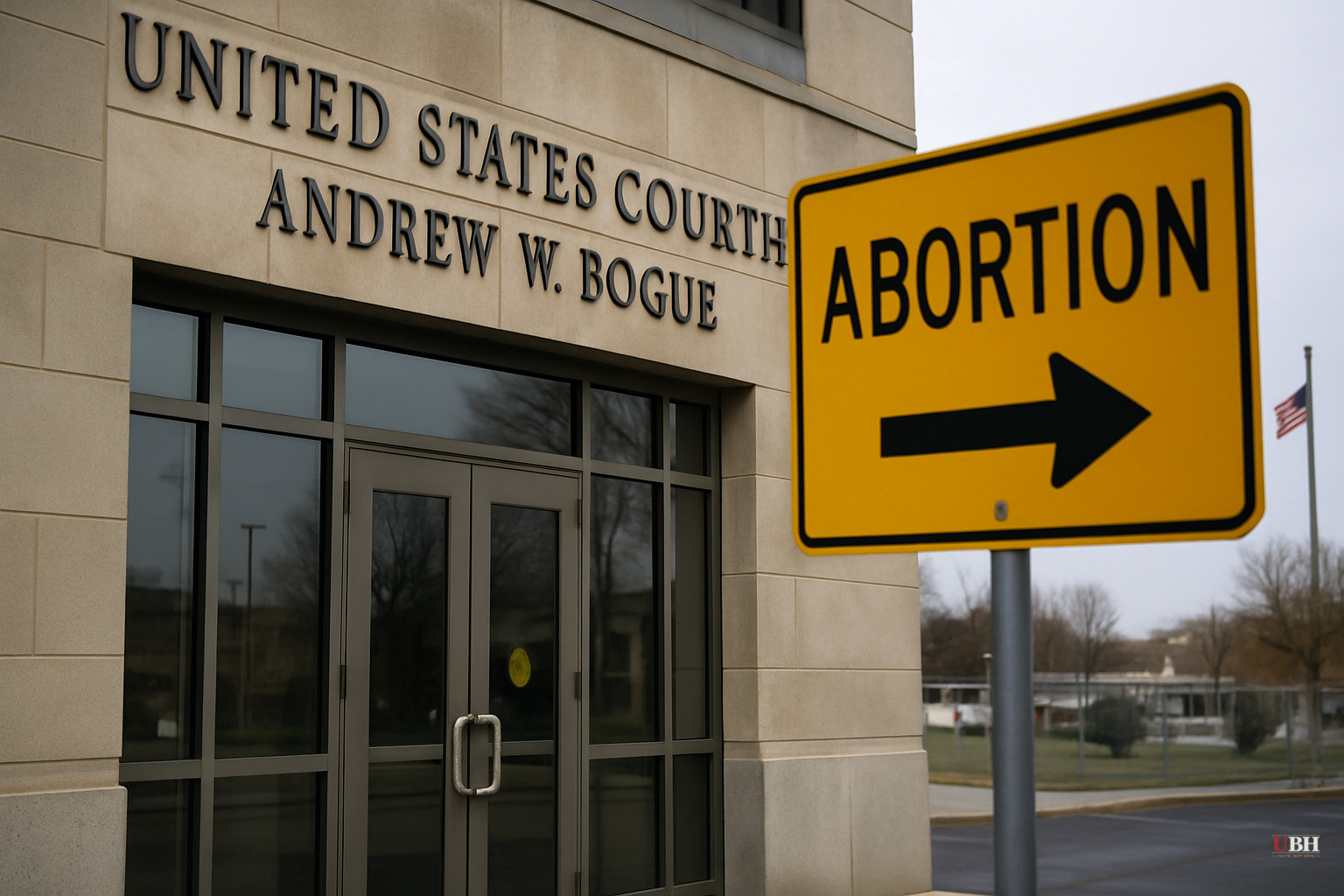
The Ruling
Judge Camela Theeler of the U.S. District Court for the District of South Dakota issued a preliminary injunction this week blocking the state from enforcing part of its abortion law against Mayday Health, a nonprofit that runs a website linking to third-party sellers of abortion pills.
South Dakota law makes it a Class 6 felony to "knowingly dispense, distribute, sell, or advertise" anything designed or advertised for use in an unlawful abortion. Mayday Health sued, arguing the law as applied to its website violates the First Amendment.
Judge Theeler agreed, at least for now, and blocked enforcement while the case proceeds.
Why the Court Says This Is Protected Speech
The state argued Mayday's links amount to commercial advertising, which gets weaker First Amendment protection than other speech. Judge Theeler rejected that framing.
According to the opinion, as reported by Reason, Mayday "does not sell, handle, or distribute abortion pills for these third-party providers," has no shown economic motivation, and operates as "a nonprofit organization expressing a moral belief and providing information for free." The court noted Mayday does sell merchandise and solicits donations elsewhere on its site, but found no evidence tying that fundraising to the pill-provider links themselves.
The state also argued the links amounted to "speech integral to criminal conduct" — the same category that strips First Amendment protection from things like solicitation to commit a crime or aiding and abetting. Judge Theeler distinguished between a direct proposal to engage in an illegal transaction, which the Supreme Court has held gets no protection under cases like United States v. Williams (2008) and Giboney v. Empire Ice & Storage Co. (1949), and the more general provision of information that a reader might use to seek out an illegal transaction on their own.
What's Actually at Stake
South Dakota bans abortion in virtually all cases except to save the life of the mother. The pill-linking provision is part of that broader ban, aimed at cutting off access to abortion pills sold by third-party merchants online.
State officials have a legitimate interest here that shouldn't get waved away. If South Dakota's elected legislature has banned abortion, a website that funnels women to pill sellers is functionally undermining that law, whatever its nonprofit status. Prosecutors and lawmakers defending laws like this one argue that information which reliably leads to a specific illegal transaction isn't just "speech" in the abstract. It's a practical roadmap to breaking the law, and treating it as fully protected expression could gut a state's ability to enforce any restriction once the internet is involved.
The court didn't dismiss that concern outright. It drew a real legal line, one the Supreme Court itself has recognized: providing general information isn't automatically the same as making a direct offer to sell contraband or soliciting a specific crime. Judge Theeler's opinion leans on United States v. Hansen (2023), where the Court said speech intended to bring about a specific unlawful act has no protection, while still preserving room for that abstract discussion. This case will test exactly where a state can draw that line, and Judge Theeler's answer, for now, is that Mayday sits on the protected side of it.
The Coverage Gap
Reason's writeup walks through the court's reasoning in detail, including the commercial-speech analysis and the distinction between illegal solicitation and general information.
AP News flagged the ruling with a one-line headline, "Court: Linking to abortion pill sites is free speech," but the retrievable version of that story consisted almost entirely of unrelated wire-service navigation content and other headlines, with no substantive reporting on the case's legal reasoning, the specific South Dakota statute at issue, or Judge Theeler's name. Reason's account carries the bulk of the factual detail here. No other outlet in this review offered competing analysis of the ruling's reasoning.
What Happens Next
This is a preliminary injunction, not a final ruling. The underlying lawsuit, Mayday Health v. Rhoden, continues in federal court.
The state's abortion ban itself remains fully in effect. Only the pill-linking-and-advertising provision, as applied to Mayday specifically, has been blocked for now. Other states with similar advertising bans aimed at abortion pill websites will be watching how this case develops.
Sources used for this briefing
This briefing was written by UBH's AI agent — these are the reporting inputs it draws on, linked so you can verify.


