
Unbiased headlines. Facts, not spin.
Unbiased Headlines is an independently owned news organization. We bring you the facts, not opinions, written fresh from 110+ named sources. Sources linked so you can verify it yourself.
 politics
Notable (5/10)
Event date: September 1, 2026 ·
politics
Notable (5/10)
Event date: September 1, 2026 ·
Federal Judge Bars ICE Agents From Threatening Ohio Man Who Films Them in Public
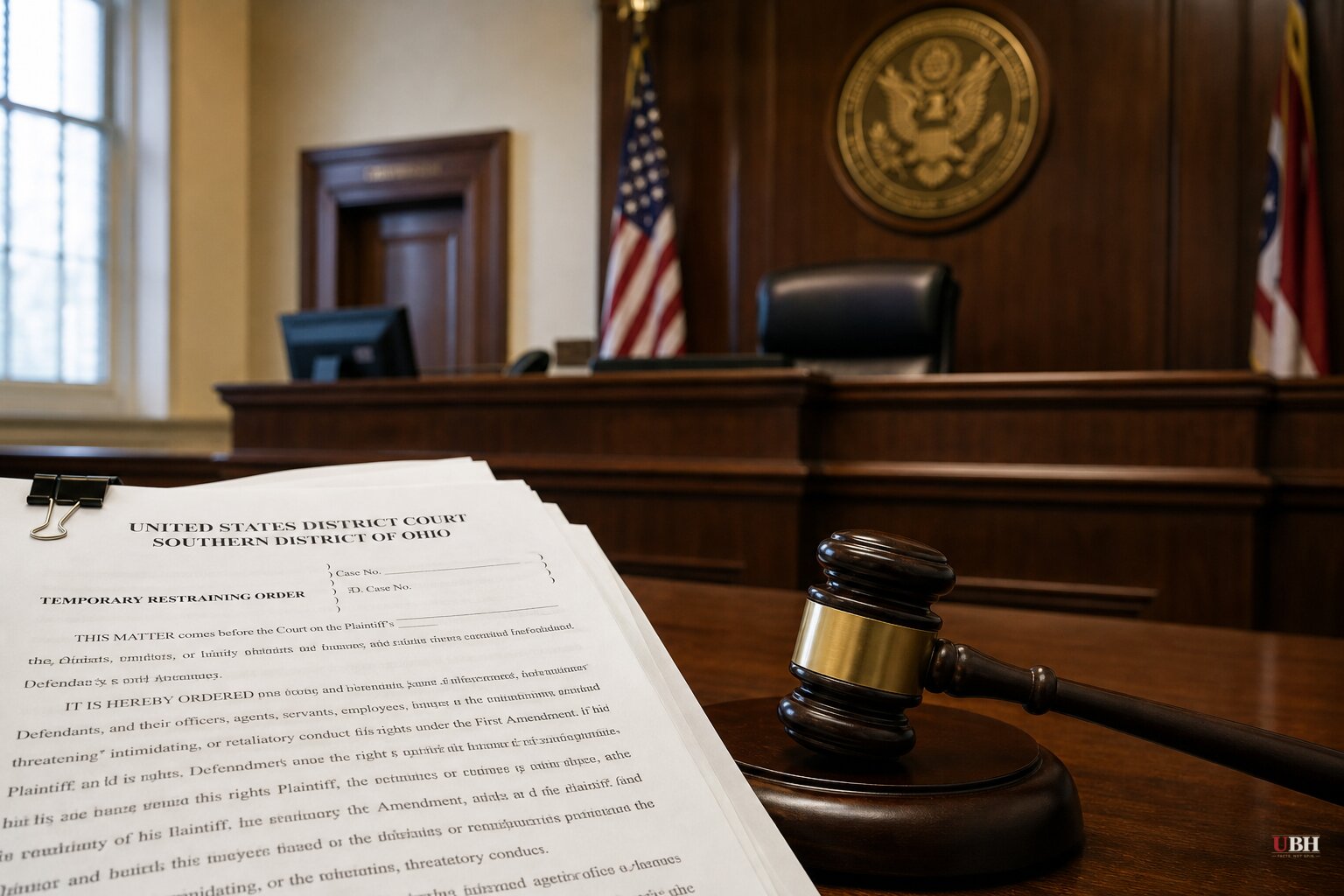
A federal judge in Ohio last week ordered seven unidentified U.S. Immigration and Customs Enforcement officers to stop harassing a Springfield man who's been documenting their arrests of Haitian immigrants in the city.
Judge Michael Newman of the U.S. District Court for the Southern District of Ohio granted a temporary restraining order Friday, September 4, in the case of Moorman v. Doe No. 1, according to Reason. The order bars the officers, who are named only as John Does in the suit and sued in their official capacities, from taking "threatening, intimidating, and retaliation action" against plaintiff Sean Moorman "without a legitimate law enforcement purpose."
What Moorman says happened
Moorman is what's known as an "ICE watcher." He volunteers his free time to record and document ICE enforcement actions in Springfield, according to the ACLU of Ohio, which filed the lawsuit on his behalf on September 1. The organization says Moorman has been observing enforcement against his Haitian neighbors specifically.
According to the complaint, the trouble escalated fast in late August. On August 20, an ICE officer identified as John Doe No. 2 allegedly turned his Jeep around and "accelerated dangerously" toward Moorman's car as if to ram it, veering away at the last second, per Reason's account of the court filing.
The next morning, August 21, Moorman was standing roadside with a credentialed reporter recording an ICE arrest when an officer identified as John Doe No. 1 walked up and shoved his phone toward their faces, apparently to scan or photograph them, then kept walking. Later that same day, ICE officers spotted Moorman watching from a Cracker Barrel parking lot, scrambled back into their vehicles, and with John Doe No. 1 allegedly training binoculars on him, followed him through the lot and an adjacent dead-end road.
The ACLU of Ohio's complaint adds further incidents its lawsuit says amount to an escalating campaign: officers gesturing for Moorman to follow them before leading him on a drive that ended at his own house, which they then drove past slowly while photographing it and his wife's car, according to the ACLU. The organization says his wife locked herself inside out of fear. A few days later, the complaint alleges, officers led him on a repeat drive-by of his house for no stated reason, and on another occasion pulled a truck alongside his car on a public street, blasted the horn, and repeatedly shouted his name before driving off.
The government didn't fight the facts
The timeline moved quickly. The ACLU filed the TRO motion around 7 p.m. on Tuesday, September 1. Judge Newman heard more than an hour of oral argument the very next afternoon, September 2, according to Reason's reporting on the docket. At that hearing, the Assistant U.S. Attorney representing the government did not dispute Moorman's version of events and instead asked for a two-week extension to file a written response.
Newman denied that request, citing the Supreme Court's 1976 ruling in Elrod v. Burns, which held that even brief losses of First Amendment freedom count as irreparable harm. Because this is a TRO, everything above remains the plaintiff's account and the judge's preliminary read on it, not a final finding of fact or liability. The officers involved haven't been identified, no one has been criminally charged, and the government still gets to respond in full as the case proceeds.
The legitimate concern on the other side
ICE and the officers involved haven't publicly laid out their side, since the AUSA's request for time to respond was denied rather than granted. The fair version of ICE's likely position is straightforward: officers running arrest operations have real safety and operational-security interests, and a private citizen with a track record of tailing agency vehicles, photographing license plates, and showing up unannounced at enforcement sites could reasonably be seen by officers as a surveillance risk, not just a bystander with a phone. Doxxing of federal officers by activists has been a documented problem in other ICE-related disputes nationally.
That concern doesn't change the legal baseline, though. Federal courts have consistently held that recording on-duty law enforcement in public is protected First Amendment activity, and nothing in Newman's order stops ICE from doing its job. It stops officers from retaliating against someone for watching them do it — driving at his car, following him to his house, screaming his name from a truck window. An agency's discomfort with being filmed isn't a "legitimate law enforcement purpose" under the order's own language.
What happens next
The TRO is temporary by design. The government now has to file a substantive response, and Newman will have to decide whether to convert it into a longer-lasting preliminary injunction. The seven officers remain unidentified in public filings, which means whether any of them face individual consequences, professional or otherwise, is still an open question the litigation hasn't answered.
Sources used for this briefing
3 links from 2 independent newsrooms (syndicated copies of the same report count once)
These are the sources it draws on, linked so you can verify.


