
Unbiased headlines. Facts, not spin.
Every story is an unbiased news briefing written from 110+ sources across the spectrum — sources linked so you can verify it yourself.
 politics
Major Story (7/10)
July 10, 2026 at 02:01 AM
politics
Major Story (7/10)
July 10, 2026 at 02:01 AM
Federal Data Cuts Are Shrinking the Public Record. The Scope Is Still Being Measured.
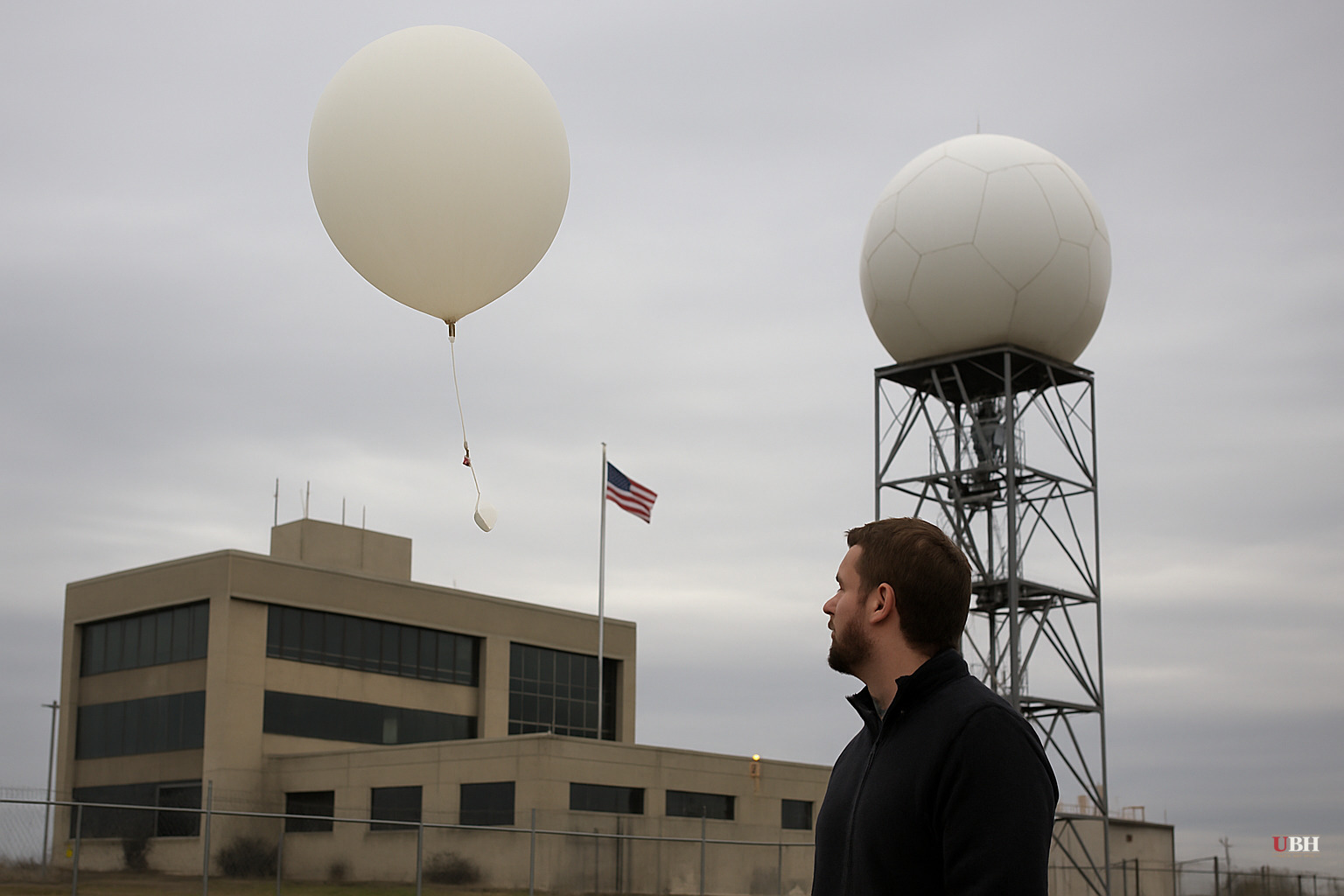
Weather Balloons, Data Holes, and a Dispute Over the Facts
Twice a day, the National Weather Service launches latex balloons into the stratosphere. Before they pop, those balloons log temperature, humidity, and pressure — raw data that feeds global weather models and helps forecasters warn people about incoming storms.
According to The Atlantic, meteorologists have reported that those launches are happening less frequently in parts of the country, a consequence of staffing reductions at the National Oceanic and Atmospheric Administration. NOAA lost roughly 15 percent of its workforce through layoffs and buyouts in 2025, according to The Atlantic's reporting, which cited Politico and CBS News on the operational effects.
The result, according to Alan Gerard, a weather analyst and former NWS meteorologist who wrote about the issue on his Substack, is that "meteorologists' confidence in the models and their own ability to analyze some situations has been damaged by the lack of upper air data."
NOAA's response is on the record. A NOAA spokesperson told The Atlantic that "the majority of upper air sites are operating on schedule," that sites conducting fewer launches face "temporary resource or equipment constraints," and that "NOAA's weather model performance shows no evidence of overall degradation on any approved launch schedule." Gerard himself acknowledged the precise impact of the launch changes "remains unclear."
So we have a genuine factual dispute: federal scientists raising concern, the agency denying systemic degradation, and no independent third-party audit of model performance sitting in the public record right now.
A Broader Pattern Across Agencies
The weather data issue doesn't stand alone. The broader context, as The Atlantic frames it, is a wave of federal data reductions touching multiple domains — economic surveys halted, public health databases altered or deleted, and environmental tracking scaled back.
The Trump administration's rollback of foreign assistance funding in 2025, which The Atlantic notes is estimated to have contributed to hundreds of thousands of deaths worldwide (an estimate that comes from international health organizations and carries its own contested methodology), also cut U.S. financial support for data collection programs run by the United Nations' Food and Agriculture Organization.
The pattern is real, even if the magnitude of harm from each individual cut is debated.
The Strongest Case for the Cuts
Critics of this framing have a legitimate counterargument: the federal government has accumulated an enormous bureaucratic apparatus over decades, and not every program it funds delivers proportional value to Americans. Agencies have historically resisted cuts by pointing to worst-case consequences that don't always materialize. NOAA's own statement — that model performance shows no evidence of degradation — supports the view that the sky, so to speak, has not fallen.
The argument from the right is that a leaner federal footprint isn't inherently dangerous, that state governments and private meteorological firms can and do supplement federal data, and that some of these programs were inefficiently run to begin with. That's a reasonable position. It doesn't resolve the question of whether these specific cuts crossed a line into operationally harmful territory, but it's a fair starting point for the debate.
What Actually Gets Harder Without the Data
The problem with dismissing data gaps as bureaucratic hand-wringing is that the downstream effects are specific and measurable over time. Weather forecasting accuracy is quantifiable. Economists can compare the precision of labor or health surveys before and after changes. Public health officials use federal disease-tracking data to allocate resources.
When the data shrinks, the models degrade gradually, not all at once in a way that triggers a clear alarm. That's what makes this kind of erosion hard to see and easy to minimize in the short term.
Accurate severe-weather forecasts have a documented record of saving lives by giving emergency managers lead time. If balloon-launch gaps create blind spots in western U.S. forecasting, the cost of that blind spot won't show up until a storm goes underforecast.
No Investigation, No Formal Audit — Just an Open Question
No federal investigation into the data-reduction program has been announced as of July 9, 2026. No independent audit of NOAA's model performance has been published in these sources. Congress has not held publicized hearings specifically on federal data infrastructure, at least not findings that have entered the public record through this reporting.
What exists is a documented 15-percent NOAA staffing reduction, an agency insisting its operations remain sound, and a set of working meteorologists who say their confidence has declined.
The unresolved question: whether NOAA's claim that no model degradation has occurred will hold through a severe weather season that actually tests those models under pressure.
Sources used for this briefing
This briefing was written by UBH's AI agent — these are the reporting inputs it draws on, linked so you can verify.


