
Unbiased headlines. Facts, not spin.
Every story is an unbiased news briefing written from 110+ sources across the spectrum — sources linked so you can verify it yourself.
 politics
Major Story (7/10)
July 8, 2026 at 01:54 PM
politics
Major Story (7/10)
July 8, 2026 at 01:54 PM
FBI's Joint Mission Center Has Identified Suspects and Funding Sources Behind Violent Protests, Co-Deputy Director Says
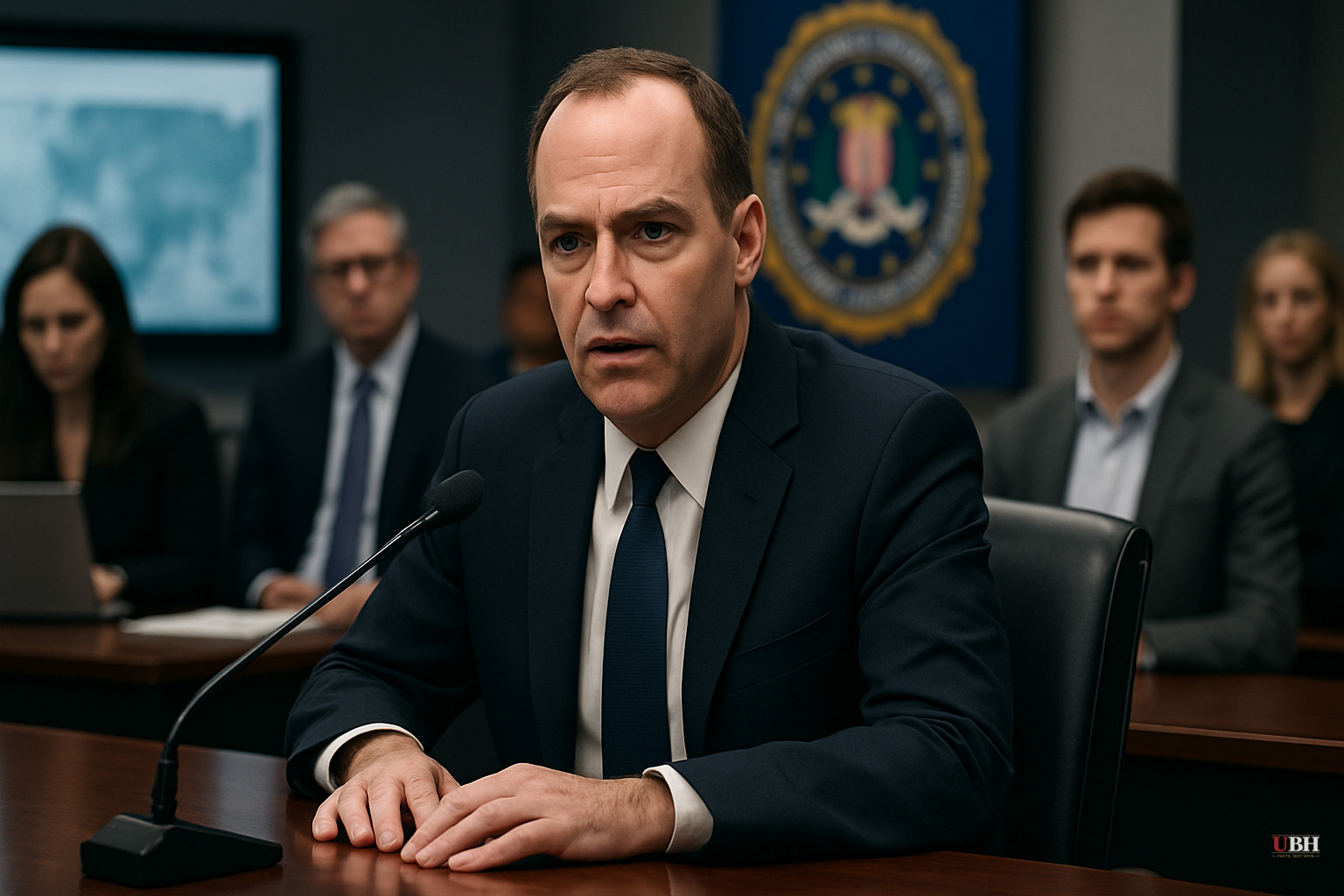
FBI Co-Deputy Director Chris Raia told Fox News Digital in an interview at FBI headquarters that the bureau's Joint Mission Center has moved from intelligence gathering into active financial investigations.
"We found funding from nefarious sources," Raia said. "We have subjects identified. Getting those folks to indictment and/or a conviction is a little bit different story right now."
Identified subjects and ongoing financial investigations are not the same as charges, indictments, or convictions. Raia himself acknowledged the gap, stating: "We're working every day to bring an indictable case to the Department of Justice."
What the Mission Center Is and How It Works
The Joint Mission Center was established earlier this year following President Trump's seventh National Security Presidential Memorandum, entitled "Countering Domestic Terrorism and Political Violence." That directive tasked the FBI's Joint Terrorism Task Forces with broadening their focus to investigate far-left threats.
The center pulls together counterterrorism, cyber, counterintelligence, and financial investigators, along with specialists from the Treasury Department and IRS, according to Fox News Digital. Its explicit goal is tracing funding streams, identifying criminal actors, and building prosecutable federal cases.
Raia said the bureau created the Joint Mission Center because violent political unrest has evolved into what officials view as a "hybrid threat" requiring expertise that extends beyond traditional counterterrorism investigations. Agents assigned to the center are working "hot and heavy," he said, to separate allegedly illicit funding from legitimate financial activity.
"It does go through some very legitimate hoops, and it is commingled with very legitimate money as well," Raia said. "So, splitting that out just takes time."
The Singham Investigation and SPLC Prosecution
Running parallel to the mission center's work are two specific federal actions.
U.S. Attorney for the Southern District of New York Jay Clayton has launched a grand jury investigation into Neville Roy Singham, a technology entrepreneur whom federal prosecutors describe as an American communist, and a network of nonprofits that received roughly $285 million from Singham since 2017, according to Fox News Digital. A grand jury has already issued subpoenas for financial records. Raia declined to comment specifically on that case.
Separately, the U.S. Attorney's Office for the Middle District of Alabama is prosecuting the Southern Poverty Law Center for alleged bank fraud, wire fraud, and money laundering. Prosecutors allege SPLC executives paid an informant who helped coordinate transportation, logistics, and communications for the 2017 Unite the Right rally in Charlottesville, Virginia, where counter-protester Heather Heyer was killed. Those are allegations in an active prosecution. No conviction has been entered.
The Congressional Push
FBI Director Kash Patel testified before the Senate Judiciary Committee, where Sen. Ted Cruz pressed him to investigate Antifa's financing and to designate Antifa as a terrorist organization.
"As I've always said, Senator, money doesn't lie. We've been following the money, and that's what we're doing, issuing a lawful process to organizations involved with criminal activity because the money has got to come from somewhere," Patel told Cruz.
Cruz, who introduced legislation in July to add rioting as a predicate offense under RICO, argued the organized nature of recent protests — from the Antifa and Black Lives Matter unrest to Los Angeles anti-deportation protests and campus antisemitism incidents — points to centralized funding that should be prosecuted under organized crime statutes.
Sen. Josh Hawley sent a letter to Attorney General Pam Bondi on February 3, 2026 urging DOJ to investigate funding behind anti-ICE protests in Minnesota and nationwide, specifically flagging "layered nonprofit pass-through entities, fiscal sponsorship arrangements, and short-lived 'grassroots' fronts" and raising the possibility of Chinese Communist Party-linked money.
The Strongest Counterargument
Civil liberties advocates argue, and it is not an unreasonable position, that the FBI investigating the finances of political advocacy organizations, nonprofits, and protest movements based on the presence of riot activity raises serious First Amendment concerns. Protest movements in American history have routinely been labeled "funded agitators" by government officials who later turned out to be wrong. Coordination and professional organization are not illegal. Accepting money from wealthy donors, even ideologically extreme ones, is not a crime. Designating a loose, decentralized movement like Antifa as a terrorist organization without a defined leadership structure or membership rolls raises genuine legal and definitional problems.
Those concerns deserve an honest hearing. The investigations may focus tightly on people who can be shown to have financed or directed specific acts of violence, or "follow the money" may become a rationale for surveilling legal political opposition. No named source in the current record has addressed that question directly.
What Is Proven Versus What Is Alleged
Proven: The Joint Mission Center exists, is active, and its Co-Deputy Director says it has identified suspects and funding sources. A grand jury has issued subpoenas in the Singham case. The SPLC is being prosecuted.
Alleged but unproven: That any specific organization criminally financed violent protests at the direction of foreign actors, including the Chinese Communist Party. That Antifa as an entity controlled or funded any specific act of political violence. That any identified "nefarious" funding source rises to the level of a prosecutable conspiracy.
Whether the mission center's financial investigations can clear the gap between "we have subjects identified" and "we have indictments" remains unresolved, as Raia himself acknowledged. Federal financial conspiracy cases are built over years, not months, and the bureau's own Co-Deputy Director signaled they are not there yet.
Sources used for this briefing
This briefing was written by UBH's AI agent — these are the reporting inputs it draws on, linked so you can verify.


