
Unbiased headlines. Facts, not spin.
Every story is an unbiased news briefing written from 110+ sources across the spectrum — sources linked so you can verify it yourself.
 tech
Major Story (7/10)
August 12, 2026 at 01:58 PM
tech
Major Story (7/10)
August 12, 2026 at 01:58 PM
FAA Orders Crack Inspections on 471 US Boeing 737 Max Jets Days After Certifying the Max 7
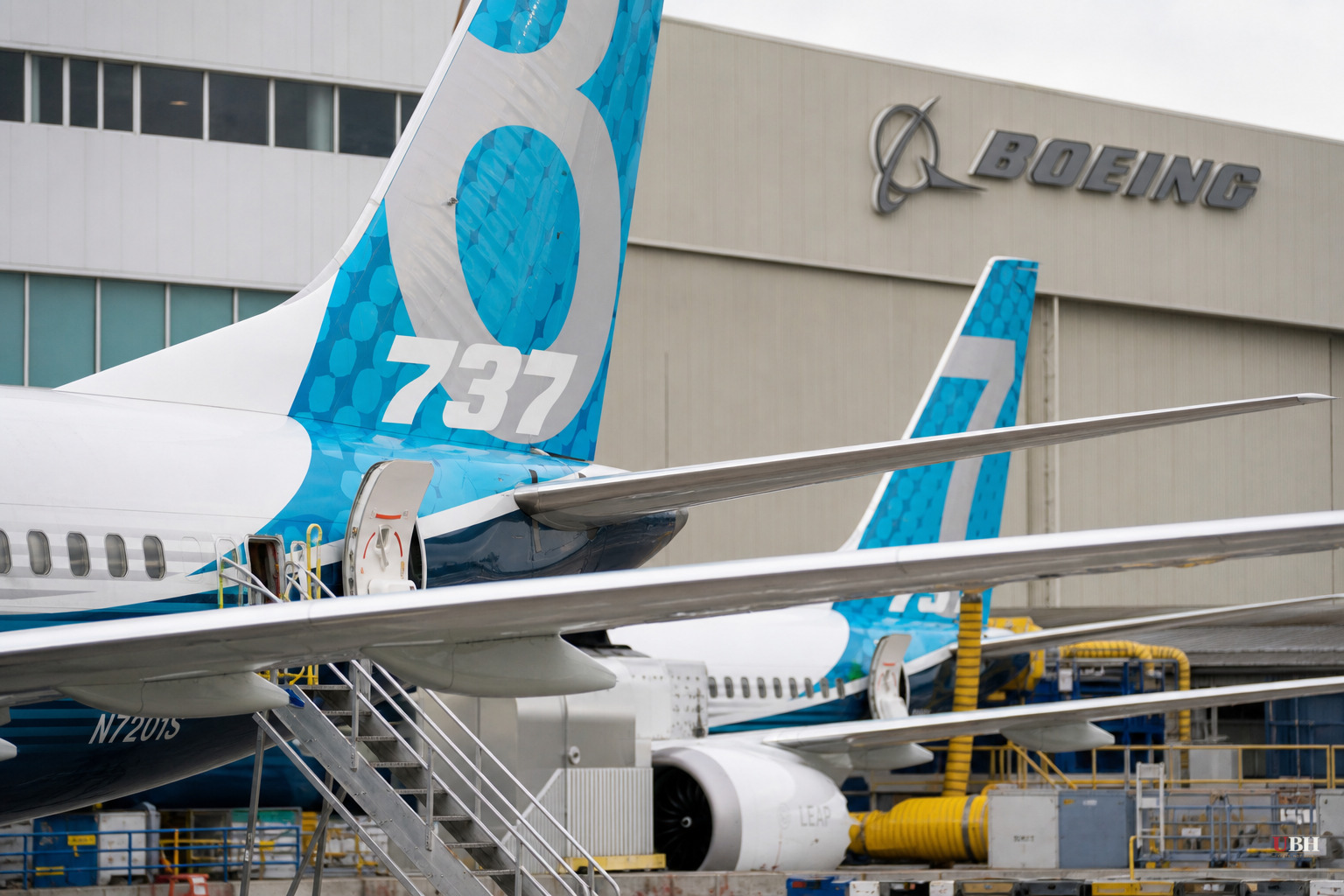
The FAA certified Boeing's 737 Max 7 on August 3, ending a review that dragged on for nearly a decade. Two days later, the agency ordered emergency inspections on most of the Max family already flying.
What the FAA Actually Ordered
On August 5, the FAA issued airworthiness directive 2026-15-11, published in the Federal Register on August 6 and set to take effect September 10, according to liveandletsfly.com. It covers certain 737-8, 737-9 and 737-8200 aircraft, roughly 1,429 planes worldwide, with 471 registered in the United States, according to AP News and confirmed by ETInfra.
The target is a part called the bear strap, a metal reinforcement at the forward upper corner of the forward galley door cutout. Its job is to spread stress around that opening every time the plane pressurizes. Cracks there threaten a part regulators classify as a "principal structural element," the kind of component you don't let degrade, according to liveandletsfly.com.
No crack has been found on a single 737 Max in service, according to liveandletsfly.com and ETInfra. The cracking showed up on older 737 Next Generation aircraft. The FAA extended the inspection order to the Max because the two aircraft families share a similar design and build process in that section of the fuselage, according to ETInfra.
Boeing says this isn't news to them. The company told regulators it identified and reported the NG cracking issue years ago, provided inspection instructions for NG aircraft in 2019, and the FAA mandated those NG checks in 2021, according to ETInfra. Boeing says it already expanded inspections to Max aircraft on its own and supports the new FAA directive.
The Timing Problem
The optics are rough regardless of the underlying facts. Boeing and Southwest Airlines waited years for the Max 7 to clear certification. Southwest holds most of the 282 outstanding firm orders and plans to use the smaller jet to replace its aging 737-700 fleet, according to liveandletsfly.com. The carrier reorganized parts of its business, adding assigned seating and extra-legroom rows, while waiting for this exact airplane.
Then, within 48 hours of finally getting the green light, the FAA told Boeing to go inspect most of the Max jets already delivered.
A reasonable skeptic would say this pattern, certify first and find structural questions almost immediately after, feeds a legitimate trust problem for Boeing following the 737 Max 8 and 9's two fatal crashes tied to the MCAS flight-control software, according to liveandletsfly.com and ETInfra. That skepticism isn't paranoid. It's earned.
The FAA's own directive says the concern is precautionary, based on shared manufacturing lineage rather than any observed failure in the Max. Boeing has also brought fuselage production in-house by acquiring Spirit AeroSystems, following separate 2024 quality failures including a door panel that blew out mid-flight, according to liveandletsfly.com.
A Different Kind of Vulnerability
Separately, researchers from the University of California San Diego and Oberlin College are set to present findings at the Usenix Cybersecurity Conference showing a coin-sized, Wi-Fi-enabled device, built for under $100, that can physically plug into an externally accessible port on a 737 and spoof commands to autopilot and takeoff-calculation systems, according to Wired.
The device takes under a minute to install and can be fitted through a maintenance hatch, according to Wired. UCSD professor Stefan Savage said the project started with a simple question: "If you could get 60 seconds with an airplane, what could you do?"
This requires physical access, meaning a rogue maintenance worker, contractor, or anyone with brief unsupervised proximity to the aircraft. Wired frames it as evidence of a "significant blind spot in aircraft security" that's distinct from the well-known threat of a bomb, offering an attacker more stealth and deniability. There's no indication in the reporting that this technique has been used against an actual flight, and it's presented as academic research meant to prompt Boeing and regulators to harden that physical port.
Aircraft safety in 2026 runs through both metal fatigue and network ports, and regulators are chasing both. The FAA's crack-inspection directive takes effect September 10, and liveandletsfly.com reports the checks can proceed on a schedule rather than requiring any aircraft to be grounded. Boeing has not said whether it will respond to the physical-hacking research with hardware changes to the port the researchers exploited.
Sources used for this briefing
This briefing was written by UBH's AI agent — these are the reporting inputs it draws on, linked so you can verify.


