
Unbiased headlines. Facts, not spin.
Unbiased Headlines is an independently owned news organization. We bring you the facts, not opinions, written fresh from 110+ named sources. Sources linked so you can verify it yourself.
 sports
Notable (5/10)
sports
Notable (5/10)
Exiled Afghan Women's Soccer Team Plays First Games Since FIFA Ruling, 8,000 Miles From Kabul
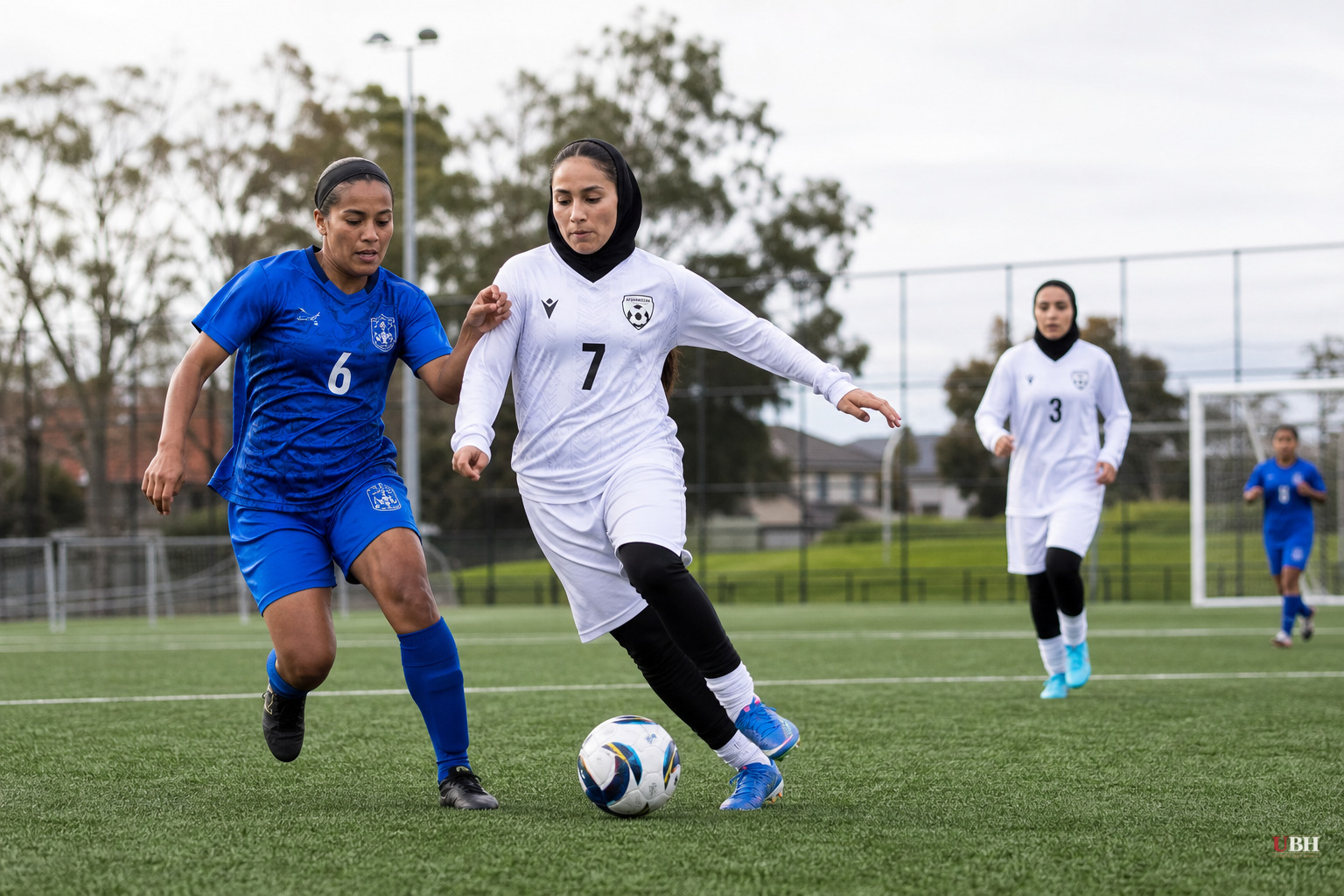
A locker room in Auckland, New Zealand doesn't look like the front line of a five-year fight over women's rights in Afghanistan. But for the 23 players who suited up there this week, it is exactly that.
The team is called Afghan Women United. Its roster is made up of Afghan women's national team players scattered across Australia, the United Kingdom, Portugal and elsewhere after the Taliban retook Kabul in August 2021. According to the BBC, the squad traveled to New Zealand for a training camp and two unofficial friendly matches against the Cook Islands, the first time the full group has trained and played together since the Taliban takeover.
That takeover ended organized women's sport in Afghanistan almost overnight. The Taliban barred women and girls from secondary school, university, most jobs, and organized athletics. Afghanistan's national women's soccer team, formed in 2007, was disbanded in practice. Its players were evacuated and resettled abroad, their careers left in limbo.
For years, that limbo was also bureaucratic. Under FIFA rules, a national team needs sign-off from its country's football federation to play official matches. Afghanistan's federation is now Taliban-controlled, meaning approval was never coming. In April, FIFA ruled that this exiled squad can represent Afghanistan in official competitions, including World Cup and Olympic qualifying, without needing that approval. It's a rare instance of FIFA carving out an exception to let displaced athletes compete under their nation's flag despite their own government's active opposition.
Getting the team physically together has been its own battle. As asylum seekers spread across multiple countries, players have struggled for years just to get travel documents sorted so they could train as a unit. The New Zealand gathering is the first time that logistical wall came down.
Midfielder Fatima Haidari captured the stakes in the locker room before kickoff, telling teammates to "be strong as always because we are representing Afghan women," according to the BBC. Players wept as a patriotic song played beneath a hanging Afghan flag.
One player, Manozh Noori, 23, now living in Australia, told the BBC she grew up playing soccer with boys in the streets of Kabul before secretly joining local clubs, wearing a face covering to avoid being recognized by an older brother she knew would disapprove. Over six years she won league titles, national championships and individual awards before teammates convinced her to remove the covering for a 2018 television interview that made her public.
A government banned half its population from organized sport. An international federation found a legal path around that ban. Women who lost their careers, their teams, and in many cases their homes are now playing again, under their country's name, in matches that count toward actual qualification.
A reasonable question buried in FIFA's ruling deserves airing: what happens when a sports body recognizes a team that the country's actual government does not? FIFA's decision effectively says the Taliban's football federation doesn't get a veto over who represents Afghanistan internationally. That's a defensible call given the Taliban's own actions stripped these women of any path to compete at home. But it also means FIFA is now managing a split-recognition situation with no obvious precedent for how it resolves long-term, particularly if the team qualifies for a major tournament and questions arise over funding, federation credentials, or flag and anthem protocol.
It's unclear from available reporting exactly how Afghan Women United will be funded going forward, who governs roster selection long-term, or whether the Taliban-controlled federation has any formal recourse to contest FIFA's decision.
What is clear: this team now has a real path to World Cup and Olympic qualifying that didn't exist a year ago. The next test is whether that path turns into actual results on the field, and whether FIFA's exception becomes a template other displaced national teams can use.
Sources used for this briefing
1 link from 1 independent newsroom (syndicated copies of the same report count once)
These are the sources it draws on, linked so you can verify.


