
Unbiased headlines. Facts, not spin.
Unbiased Headlines is an independently owned news organization. We bring you the facts, not opinions, written fresh from 110+ named sources. Sources linked so you can verify it yourself.
 tech
Major Story (7/10)
European Commission Proposes €50 Billion Tech Equity Fund and Quantum Act With European Procurement Preference
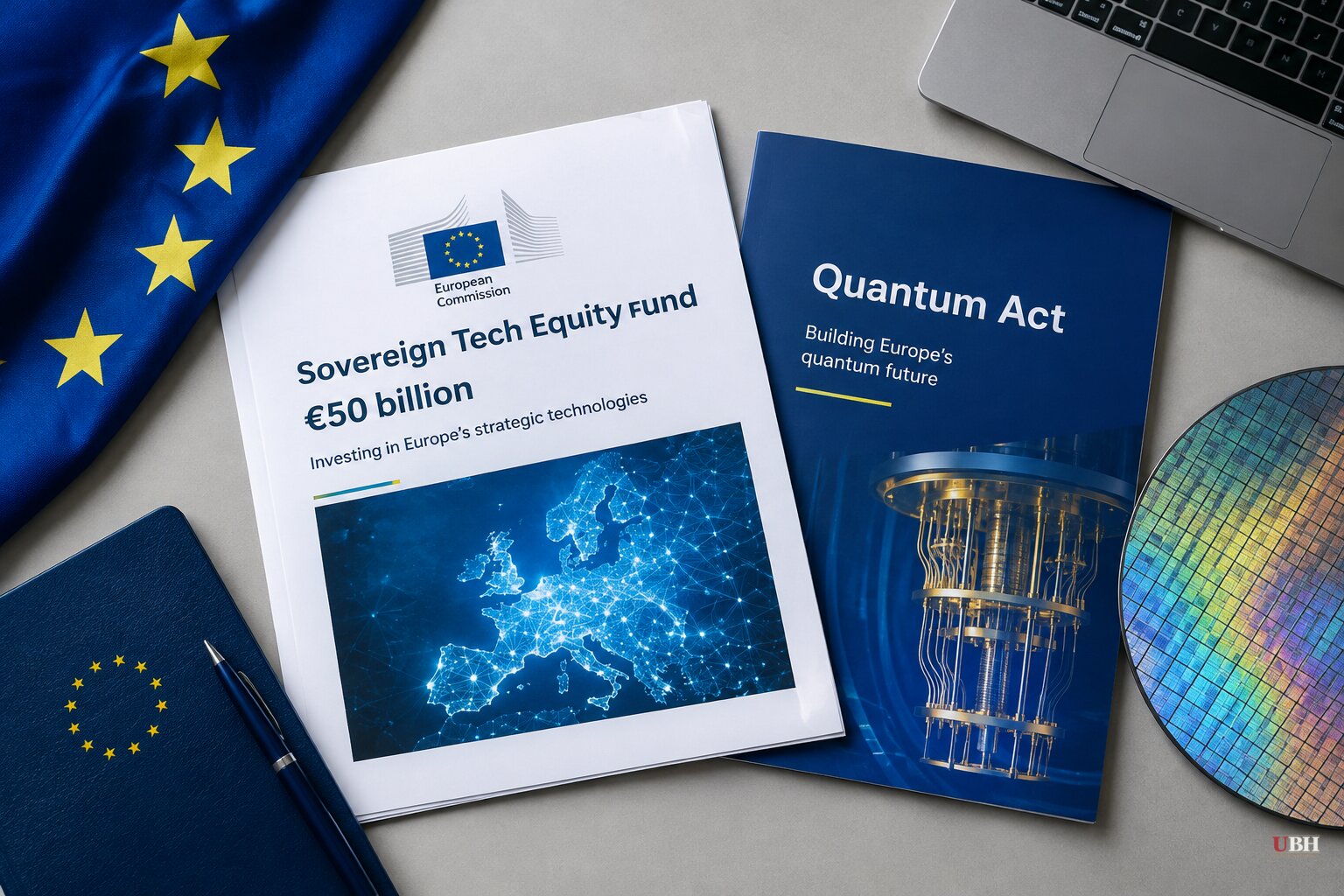
The European Commission on Wednesday, Nov. 25, proposed a €50 billion ($54.7 billion) equity fund for quantum computing, artificial intelligence and other strategic technologies. It came packaged with a draft Quantum Act meant to make Europe a global quantum leader by 2030.
EU tech chief Henna Virkkunen presented both at a press conference at the European Parliament in Strasbourg. The fund's official name is the "Sovereign Tech Equity Fund." She called the initial €50 billion a "sufficient starting point" and said "our target scale is now 50 billion euros."
What the fund would do
Two officials involved in the talks told the Financial Times the fund would write bigger checks, take on more risk and hold its stakes longer than existing EU financing programs.
Money would come from the Commission, the European Investment Bank and member states. The goal is to draw up to six euros of private money for every euro of EU seed funding. The split between public and private cash is undecided, and officials plan to present details in February.
The scale question is open too. Virkkunen said €400 billion to €500 billion would be needed in the coming years. Commission President Ursula von der Leyen said earlier this month the bloc needs at least €500 billion for its tech sovereignty plans. That puts the new fund at roughly 10% of her figure. It is ten times the fundraising target of the existing Scaleup Europe Fund.
The money gap
The Commission's own numbers show where the shortfall sits. Europe's public quantum funding was €8.6 billion last year, against €5.3 billion in the United States and €13.6 billion in China.
Private money is the problem. European quantum startups raised €1.1 billion, compared with €7 billion in the U.S. Virkkunen said European quantum startups draw 5% of global private funding, against 50% for the United States.
"Our industrial ecosystem is fragile due to fragmented support across the member states and also lower access to private capital compared to USA and China," she said.
A European Investment Bank study found European scale-ups raised about half as much capital as their San Francisco peers by their tenth year.
The Commission says one in three quantum companies is based in the EU. It expects the global quantum market to exceed €155 billion by 2040.
Buy European
The draft act would restrict public procurement. "Given the possible impact of quantum technologies for security and the Union's strategic interests and technological autonomy, it is necessary to restrict procurement procedures to products, systems and services that are provided by Union controlled entities," the draft says.
Companies from third countries with reciprocal partnerships, such as those in the Horizon Europe research program, or those covered by the World Trade Organization's government procurement agreement could still bid. The draft names no countries.
The Commission said it is "not a blanket requirement that every component be manufactured in the EU." Virkkunen said Europe stays open to "like-minded international partners."
The push follows worries in Brussels that U.S. companies could use "kill switches" to block their products from working in Europe. "We want quantum technologies developed in Europe to be manufactured here and used here," Virkkunen said.
The cost of preference is a fair question for any procurement rule. The draft does not say what happens when a European supplier is more expensive or less capable than a foreign one.
Encryption deadline
Quantum machines could eventually break current encryption. The act calls for a coordinated switch to post-quantum cryptography and sets security requirements for certain public-sector technology purchases.
An existing EU roadmap recommends member states begin switching by the end of 2026 and secure high-risk systems by the end of 2030. That first milestone is about five weeks away.
The act also foresees hubs and competence centres in each member state. They would give technical support to small and medium-sized companies and act as incubators.
The industry has welcomed the plan. "Europe is starting to understand that technology markets are increasingly winner-takes-most, and in quantum, we play to win," said Théau Peronnin, CEO and co-founder of a Paris- and Boston-based quantum company.
What comes next
None of this is law. The Quantum Act would give the Commission authority to set up the fund, but the European Parliament and EU governments must first negotiate the text. Timing depends on how fast they move.
The next fixed date is February, when officials are due to show how much of the €50 billion would be public money and how much would be private.
Sources used for this briefing
7 links from 7 independent newsrooms (syndicated copies of the same report count once)
These are the sources it draws on, linked so you can verify.


