
Unbiased headlines. Facts, not spin.
Every story is an unbiased news briefing written from 110+ sources across the spectrum — sources linked so you can verify it yourself.
 politics
Major Story (7/10)
July 13, 2026 at 01:25 PM
politics
Major Story (7/10)
July 13, 2026 at 01:25 PM
EU Expert Panel's Child Safety Report Details Screen Bans by Age, Ties to Meta and TikTok Violations Already Found
What the panel actually recommended
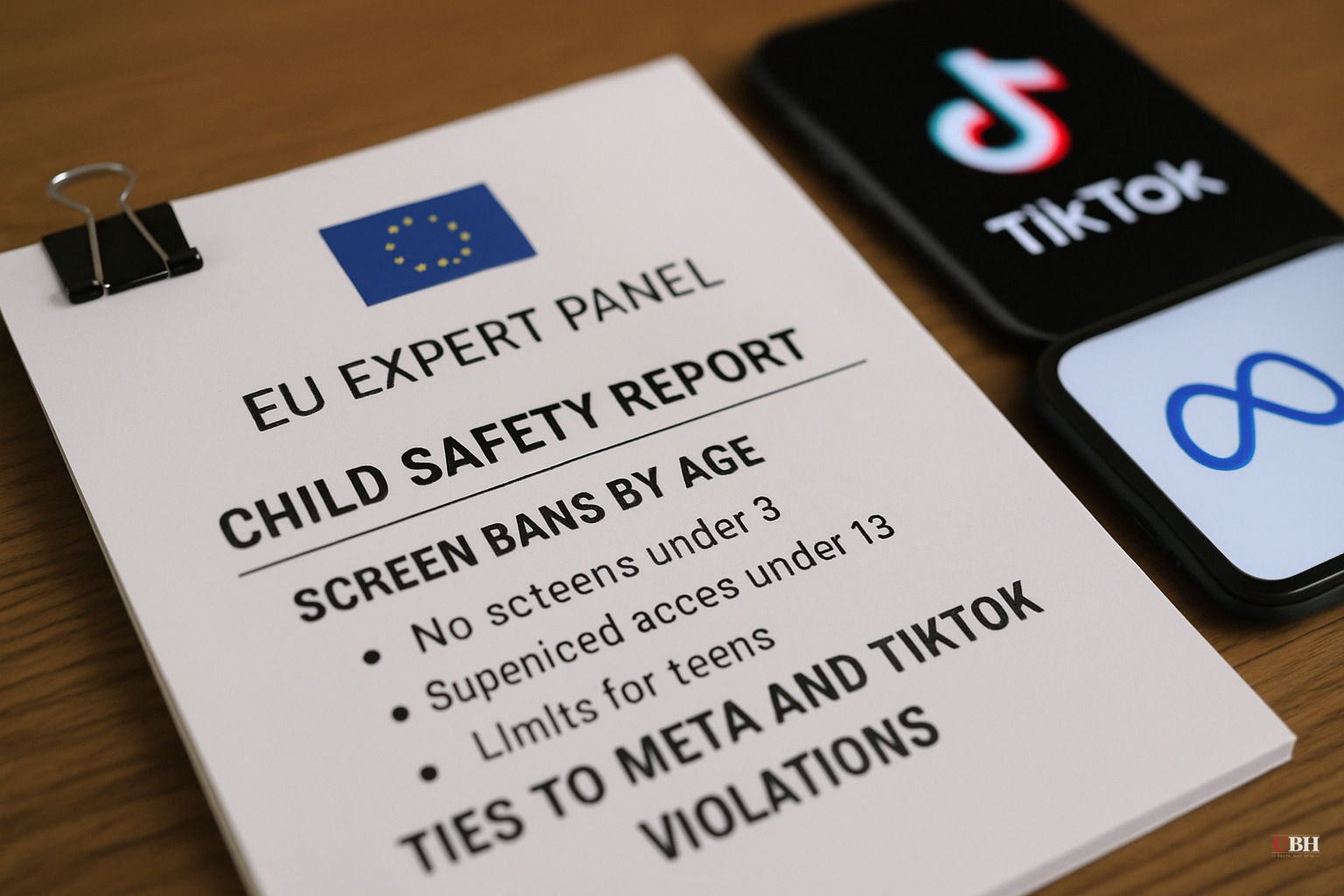
The European Commission's expert panel didn't just call for vague "age-appropriate restrictions." It laid out a phased structure: no screens at all for children under 3, supervised internet use for kids under 13, and specific limits for older teenagers, according to The Verge. It also recommended flipping the burden of proof onto platforms themselves, requiring them to show their services are not harmful before minors can use them at all.
European Commission President Ursula von der Leyen endorsed that burden-shifting approach directly. "This is not about whether children can access social media. It is about when social media can access our children," she said Monday, according to The Verge.
The DSA violations already on the books
The recommendations come against a backdrop of concrete enforcement action, not just theory. A preliminary EU investigation found Meta in breach of the Digital Services Act last week over the "addictive" design of Facebook and Instagram, The Verge reported. A similar preliminary finding was issued against TikTok earlier this year.
Because of these findings, Brussels has something Australia and the UK didn't have when they moved on age limits: an active regulatory record showing specific companies already violated existing law with product design choices aimed at engagement. It's not just a moral argument about screen time. It's a legal one, built on the DSA's existing addictive-design provisions.
The timeline and the hurdles
Von der Leyen said the Commission will review the panel's report and come back with formal legislative proposals "after the summer," meaning sometime in the second half of 2026. Any such law would still need sign-off from the European Parliament and all 27 EU member states before it applies across the bloc, a process that historically takes years, not months.
That puts the EU behind the UK, which already announced an under-16 social media ban in June, and Australia, which has active regulations in place. The EU's approach, if it becomes law, would be broader in scope and paired with the DSA's existing enforcement teeth against companies like Meta and TikTok.
The parental-rights concern deserves a fair hearing
A reasonable objection exists: government mandates on "no screens before age 3" or supervised access under 13 substitute Brussels bureaucrats for parents in decisions that belong at the kitchen table. Parents who know their own kids' maturity levels, not EU panels, should be making calls about phones and apps. The same concern was raised against the UK's under-16 ban and Australia's rules.
But there's a difference between the state telling parents how to raise kids and the state forcing companies to prove their products aren't designed to be addictive before handing them to minors. The panel's recommendation puts the compliance burden on Meta, TikTok, Snap and Discord, not directly on households. Parents would still decide whether and how their kids use whatever platforms clear that bar. Whether the final legislation actually preserves that distinction, or drifts into dictating household screen time by law, will become clear once a formal proposal exists after the summer.
What's actually unresolved
No legislative text exists yet. The panel issued recommendations; the Commission has not drafted a bill. How age verification would be enforced, what penalties platforms would face for noncompliance, and whether member states like Ireland, home to Meta's and TikTok's EU headquarters, would slow-walk enforcement are all open questions the Commission has not answered. Discord's ongoing test of age verification through Incode and Google Wallet, reported by The Verge in late June, shows one possible technical model Brussels could point to, but nothing in Monday's report commits the EU to a specific verification method.
Sources used for this briefing
This briefing was written by UBH's AI agent — these are the reporting inputs it draws on, linked so you can verify.


