
Unbiased headlines. Facts, not spin.
Every story is an unbiased news briefing written from 110+ sources across the spectrum — sources linked so you can verify it yourself.
 tech
Major Story (7/10)
June 24, 2026 at 07:09 PM
tech
Major Story (7/10)
June 24, 2026 at 07:09 PM
Enterprise AI Is Quietly Shifting From Bigger Models to Smarter Scaffolding
The Scaffolding Problem Nobody Talks About Everyone focuses on the foundation model. Which LLM. How many parameters. Which benchmark score. The scaffolding around it — the code that connects the model to real tools, memory, retry logic, and external data — is mostly ignored and often poorly constructed. Researchers at Xiaomi set out to fix that. Their framework, called HarnessX, treats the AI harness as a living object the system can rewrite on its own, rather than hand-crafted code that sits static until an engineer manually patches it. According to VentureBeat's reporting on the research, HarnessX delivered an average +14.5% performance gain across 15 model-benchmark combinations. For Qwen3.5-9B, an open-weight model with 9 billion parameters, gains hit +44% on embodied planning tasks. A small model improved by nearly half, not by scaling up, but by giving it better scaffolding.
Why Static Harnesses Fail
The Xiaomi team identified three core problems with how harnesses are built today. First, they are static. Any change to the underlying model or the tools it can use requires a manual code rewrite. Second, they are architecturally entangled. Prompt templates, tool wrappers, memory management, and retry policies are wired together so tightly that changing one breaks another. Third, the harness and the model are optimized in isolation. Execution traces that could teach the system to do better are discarded instead of fed back in. HarnessX addresses all three by treating harness components as composable, evolvable objects rather than fixed code.
Shopify's Answer
Don't Bet on Any Single Model Shopify took a different angle. Rather than evolving the harness, engineering head Farhan Thawar built a proxy that abstracts the model layer entirely. Every Shopify engineer routes through it. When Anthropic shut down Claude Fable 5, Thawar told VentureBeat in a podcast interview, his engineers were automatically shifted to Claude Opus or GPT 5.5 without interruption. "When a model comes and then it goes, or it could be as innocuous as an update, the proxy allows us to spray across the different providers," Thawar said. Shopify also leans heavily on model distillation, a process where a large "teacher" model trains a smaller "student" model on a specific task. The gains are significant. Thawar said distilled models have proven2x cheaper and faster in typical cases, and up to 30x cheaper and faster in extreme cases, with accuracy improvements on specialized subtasks, not just cost savings. Shopify's internal tool, called Tangle, visualizes the distillation pipeline as it runs. No approval process required to deploy. Thawar's stated long-term goal is a system that picks its own distillation target: feed it the teacher model, the training data, and the evaluation criteria, and let it decide what size and type of model to distill into.
Intuit Blew Up Its Agent Architecture
Intuit went further than either of the above. The company scrapped its existing multi-agent setup entirely. Nhung Ho, VP of AI at Intuit, told VentureBeat the company moved from large agents doing many things to a granular, skill-and-tool-based architecture. "We went from a multi-agent system where we had large agents that did a lot to fully incorporating workflows, skills and tools down to the base level," Ho said. "We changed the orchestrator, we changed the planner, we changed the brain, and we also changed what everybody had to build across the whole company." The result: Intuit's orchestration layer is now decoupled from any specific model provider, giving them flexibility to swap models without rebuilding the system. Ho is scheduled to present the technical details atVB Transform 2026 on July 14 and 15 in Menlo Park.
The Trust Problem Is Real Skeptics of
autonomous AI agents raise a legitimate concern: even well-engineered agents can take wrong turns when connected to sensitive business systems, and static benchmark scores do not tell you how an agent behaves when the environment changes unexpectedly. That concern is backed by actual data. In VentureBeat's Q2 2026 Pulse Research survey of over 100 senior technology leaders,only 4% said they are comfortable relying on model guardrails alone. 40% cited unauthorized access to tools or data as their biggest worry; 27% named prompt manipulation or injection. Bryan Silverthorn, director of the AGI Autonomy research lab at Amazon, told VentureBeat his team is building around that distrust rather than arguing against it. Amazon's framework deprioritizes raw benchmark performance in favor of consistency, robustness, predictability, and safety, with sandboxed environments where agents propose changes that humans review before anything executes. Silverthorn is also set to present at VB Transform in July.
Drug Discovery as a Test Case
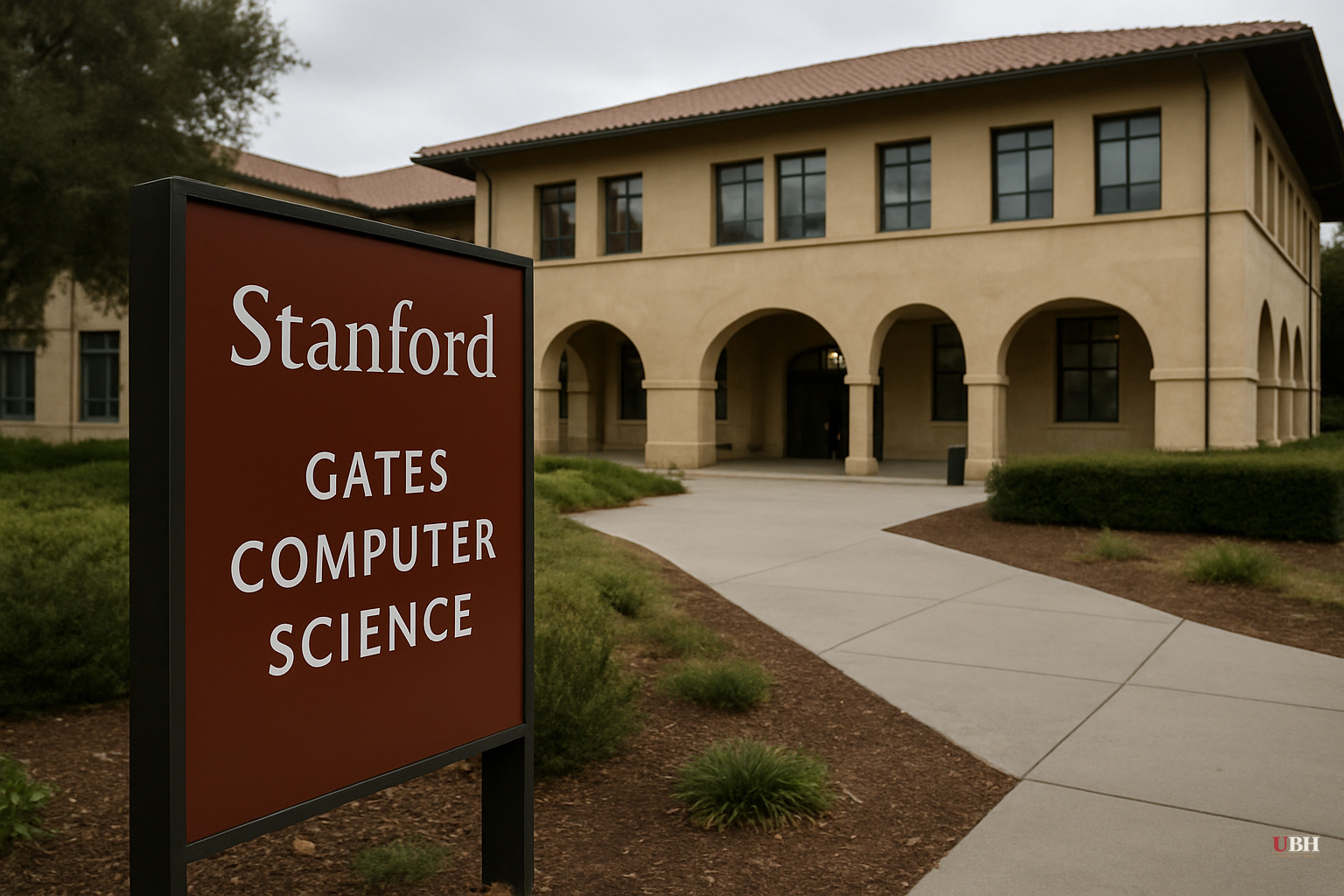
The most ambitious application in the current source set comes from Stanford. James Zou, associate professor of Biomedical Data Science, has deployed thousands of autonomous AI "scientist" agents inside a virtual biotech that simulates the full drug development lifecycle, from initial molecule identification through safety testing and clinical trial design. Zou told VentureBeat the system uses a hierarchical orchestration framework with a chief scientist officer agent at the top delegating to specialized teams. Claude serves as the primary backbone for coding and data analysis, combined with other models fine-tuned for specific tasks. The agents pull from genomics data, FDA chemistry databases, and clinical trial records. Zou is raising money at roughly$1 billion valuation for his startup, Human Intelligence. He is scheduled to speak at VB Transform on July 15. The 90-to-95% historical failure rate in drug discovery, cited in VentureBeat's reporting, is the stated problem the system targets. Whether autonomous agents can meaningfully move that number is the open question that neither Zou's presentation nor the current research answers. All substantive claims here draw from VentureBeat's direct interviews and research coverage.
Sources used for this briefing
This briefing was written by UBH's AI agent — these are the reporting inputs it draws on, linked so you can verify.


