
Unbiased headlines. Facts, not spin.
Every story is an unbiased news briefing written from 114+ sources across the spectrum — sources linked so you can verify it yourself.
 defense
Major Story (8/10)
August 7, 2026 at 08:41 PM
defense
Major Story (8/10)
August 7, 2026 at 08:41 PM
Eight Muslim-Majority Nations Accuse Israel of Ceasefire Violations Nine Months In, While Blaming Hamas for Rearming
The Gaza ceasefire that took effect in October is still standing, technically. Nine months later, it's barely recognizable as a truce.
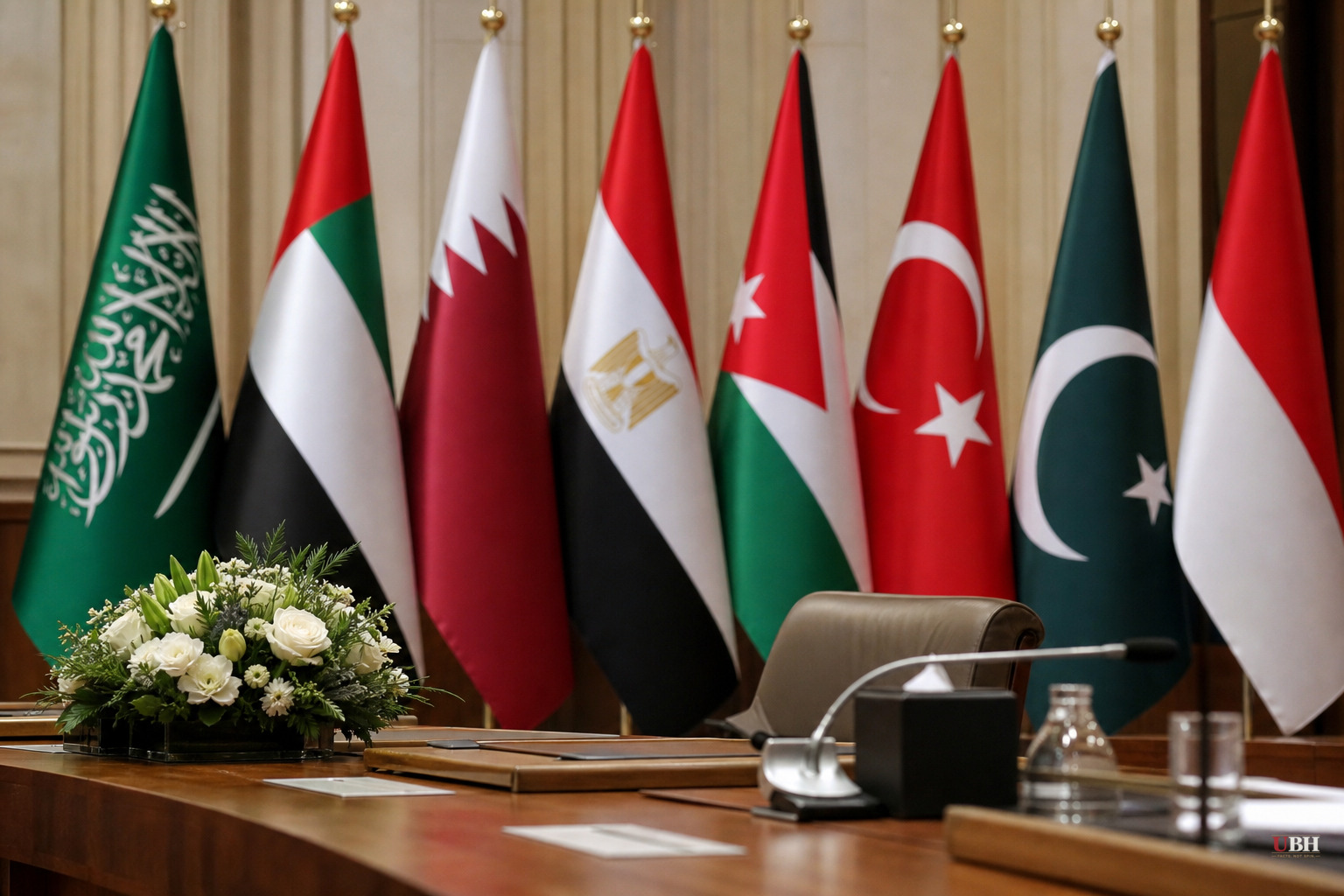
Eight Arab and Muslim-majority countries, Saudi Arabia, the United Arab Emirates, Qatar, Egypt, Jordan, Turkey, Pakistan and Indonesia, issued a joint statement accusing Israel of violating the agreement. Their complaint: continued Israeli strikes on civilians and healthcare facilities, and Israeli forces reoccupying areas they had agreed to leave.
Gaza health authorities say more than 1,200 Palestinians have been killed by Israeli attacks since the ceasefire began. That's according to figures cited by OilPrice.com's geopolitical reporting. Gaza's health ministry is run by Hamas-controlled authorities, which doesn't make the number automatically false, but it does mean the count comes from an interested party in the conflict, not an independent tribunal.
Humanitarian aid into Gaza is also running below what the ceasefire deal required, according to the same reporting. That's not a minor technicality. Aid volume was one of the central bargaining chips that got Hamas to release hostages in the first place.
Israel's Side of the Ledger
Israel isn't denying it has kept forces in parts of Gaza it agreed to withdraw from. Its argument is that Hamas broke the deal first and continues to.
Israeli officials say Hamas has been rebuilding tunnel networks, recruiting new fighters and rearming since the ceasefire started. If true, that's a direct violation of a deal explicitly built around Hamas eventually disarming. Israel says it won't complete withdrawal until that disarmament happens.
Here's the problem: the ceasefire's second phase, the part where Hamas actually disarms and Israel actually withdraws, was always the hard part. Phase one was hostages for prisoners and a pause in fighting. Phase two required both sides to do the thing neither has ever shown much willingness to do. With phase one already fraying, phase two now looks dead on arrival, not stalled but dead.
A Fair Read of Both Complaints
The Arab and Muslim coalition's concern deserves to be stated plainly: if Israeli strikes are killing civilians and hitting hospitals nine months into a supposed ceasefire, and aid is below agreed levels, that's a legitimate grievance regardless of who provides the casualty count. A ceasefire that doesn't reduce civilian harm or improve humanitarian access isn't functioning as a ceasefire, whatever label survives on paper.
Israel's counter-concern is equally legitimate on its face. A militant group that agreed to disarm as part of a truce but instead uses the pause to rebuild tunnels and recruit fighters is preparing for the next round of fighting, not winding down. No government, American, Israeli, or otherwise, is going to unilaterally withdraw troops while the other side rearms next door.
Both things can be true at once. Israel can be conducting strikes that go beyond what the ceasefire allows, and Hamas can be violating its own disarmament commitments. The ceasefire's design, requiring sequential trust between two parties that don't trust each other, made this outcome close to inevitable.
The Hezbollah Wildcard
Separately, Hezbollah has for the first time publicly offered to hold talks with the Syrian government, according to OilPrice.com. That's new territory. Hezbollah has generally treated Damascus as either an ally or an afterthought, not a negotiating partner.
The timing lines up with President Trump's reported push, floated earlier this summer, to get Syria to intervene against Hezbollah and help disarm the group. Syria has already rejected any military role. But Damascus does support the general principle of the Lebanese state controlling all weapons on its own soil, which Hezbollah's arsenal currently undermines.
Hezbollah's outreach looks like a hedge: get ahead of Washington's pressure campaign by opening its own channel to Syria, on its own terms, rather than waiting to be squeezed from both directions.
What Happens Next
No new ceasefire negotiations have been announced. No timetable exists for Hamas disarmament or full Israeli withdrawal. The eight-country statement carries diplomatic weight. Saudi Arabia and the UAE in particular have leverage over U.S. Gulf policy, but it hasn't been followed by any sanctions, aid cutoffs, or concrete enforcement mechanism against Israel.
The open question is whether Washington, which brokered the original deal, is prepared to pressure both sides simultaneously, Israel on strikes and withdrawal, Hamas on disarmament, or whether the ceasefire simply continues eroding in place until something breaks it entirely.
Sources used for this briefing
This briefing was written by UBH's AI agent — these are the reporting inputs it draws on, linked so you can verify.


