
Unbiased headlines. Facts, not spin.
Every story is an unbiased news briefing written from 110+ sources across the spectrum — sources linked so you can verify it yourself.
 politics
Notable (6/10)
July 23, 2026 at 08:02 PM
politics
Notable (6/10)
July 23, 2026 at 08:02 PM
EEOC Drops Subpoena for List of Jewish Employees at Penn After Two-Year Fight
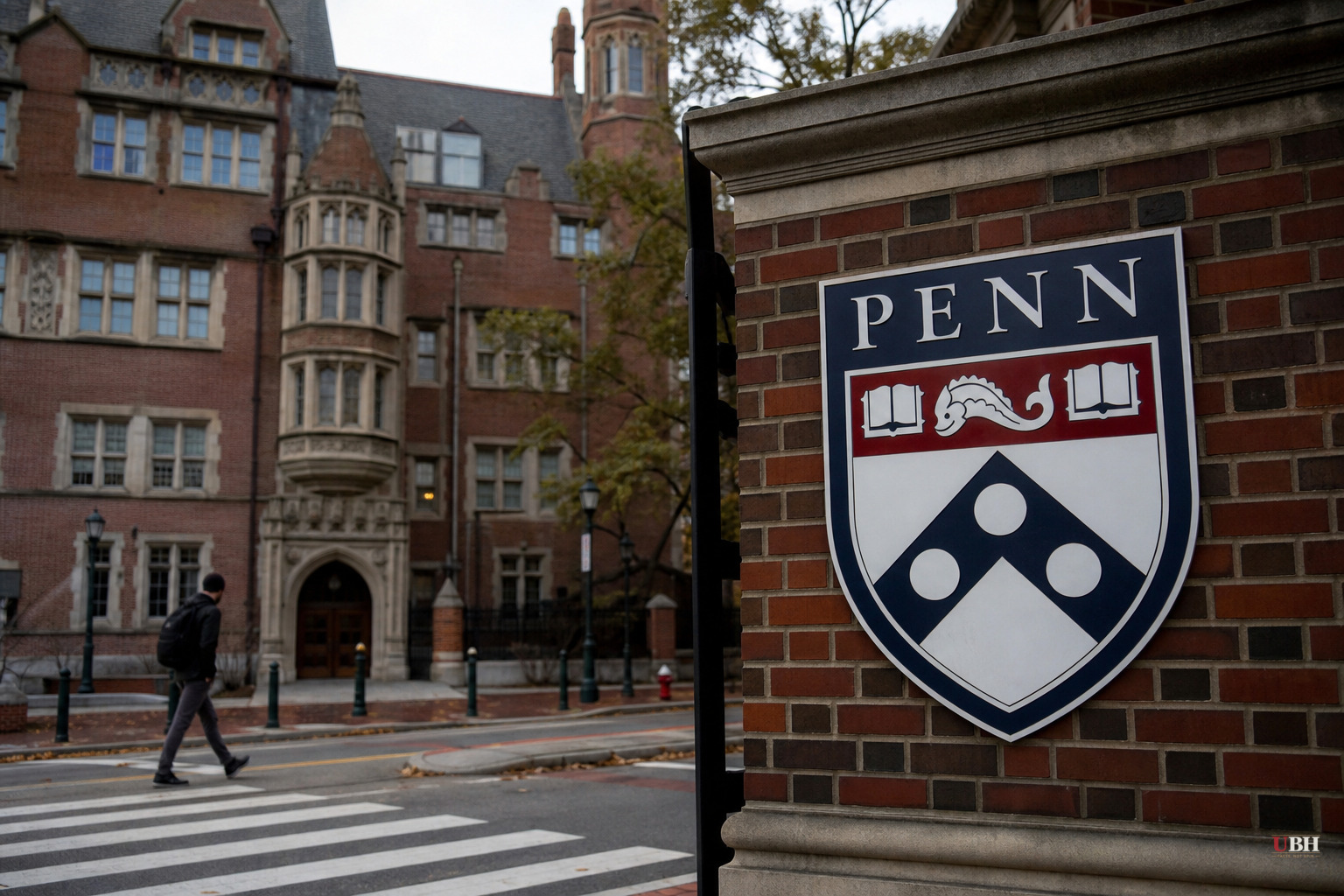
The EEOC has walked away from a subpoena that would have forced the University of Pennsylvania to compile and hand over a list of its Jewish employees, according to a resolution agreement filed Thursday in the U.S. Court of Appeals for the Third Circuit.
The agreement states the commission "will not take any further measures to enforce the subpoena seeking identification and personal contact information of employees of the University of Pennsylvania," according to The Philadelphia Inquirer. The EEOC also agreed not to pursue the same information through other means.
A Penn spokesperson told The Daily Pennsylvanian the withdrawal amounts to a "complete abandonment" of the agency's push to enforce the subpoena, calling it a vindication of the university's "two-and-a-half-year fight." Penn confirmed to JNS that none of the requested personal contact information was ever disclosed.
What the EEOC actually demanded
This wasn't a vague records request. According to the Inquirer, the commission demanded a list of employees in Penn's Jewish Studies Program, a roster of every club, group, and organization tied to the Jewish religion on campus complete with points of contact, and the names of employees who had filed antisemitism complaints.
The investigation traces back to a complaint filed December 8, 2023, by then-EEOC Commissioner Andrea Lucas, who is now the commission's chair, roughly two months after Hamas' October 7 attack on Israel, per the Inquirer. The commission was probing whether Penn mishandled antisemitism complaints involving its Jewish employees.
In April, the U.S. District Court for the Eastern District of Pennsylvania sided with the EEOC and ruled the agency could enforce the subpoena, according to JNS. Penn appealed. That appeal is now moot under Thursday's agreement, in which Penn agreed to drop it and not seek to have the lower court's opinion vacated.
Why this drew a real fight, not just noise
A request for a literal list of Jewish people at a university, cross-referenced with home addresses and phone numbers, raises privacy concerns across the political spectrum. The concern voiced by Penn and its faculty wasn't abstract. Creating a centralized registry of people by religion, even for a stated law-enforcement purpose, creates a record that can be misused, leaked, or repurposed long after the original investigation ends.
Lorena Grundy, vice president of the Penn chapter of the American Association of University Professors, framed the outcome as a broader statement about resisting federal pressure. "This victory shows that universities should not capitulate to unjust and unconstitutional demands from the Trump administration," Grundy said, according to both the Inquirer and the Daily Pennsylvanian. "When we join together and fight, we win."
That's Grundy's characterization. The EEOC never had its legal authority to investigate antisemitism complaints challenged here, only this specific method of collecting personal data. The commission's underlying mission, rooting out workplace discrimination including antisemitism, isn't in dispute by anyone in these filings. What Penn objected to, and what the AAUP objected to, was the mechanism: a compelled roster of Jewish staff and Jewish student-group members, not the investigation itself.
No explanation from the government
Neither the resolution agreement nor the EEOC has offered any public reasoning for the reversal. The court filing itself contains no explanation, according to the Daily Pennsylvanian, and an EEOC spokesperson declined to say anything beyond what's in the filings. The Inquirer reported the same: the agency did not respond to requests for comment on what changed.
That silence leaves a real question unanswered. The EEOC won in district court in April. Three months later it abandoned enforcement entirely, agreed to cover its own legal costs, and let Penn's appeal go away without a fight. Nothing in the public record explains that shift from litigation posture to full withdrawal.
The investigation isn't over
JNS reported explicitly that "the commission's investigation remains ongoing," meaning Penn is not off the hook for the underlying antisemitism probe, only for this specific demand. Penn's spokesperson reiterated the university is "committed to fighting antisemitism and all other forms of discrimination," language that appeared in statements to both the Inquirer and JNS.
What happens next depends on whether the EEOC pursues its antisemitism investigation through narrower, less invasive information requests, and whether Commissioner Lucas's commission decides to test similar subpoenas at other universities. No such follow-up has been announced as of July 23.
Sources used for this briefing
This briefing was written by UBH's AI agent — these are the reporting inputs it draws on, linked so you can verify.


