
Unbiased headlines. Facts, not spin.
Every story is an unbiased news briefing written from 110+ sources across the spectrum — sources linked so you can verify it yourself.
 politics
Low Interest (3/10)
July 18, 2026 at 12:38 PM
politics
Low Interest (3/10)
July 18, 2026 at 12:38 PM
Dua Lipa's 'Banned Books' Library Features Books That Were Never Banned
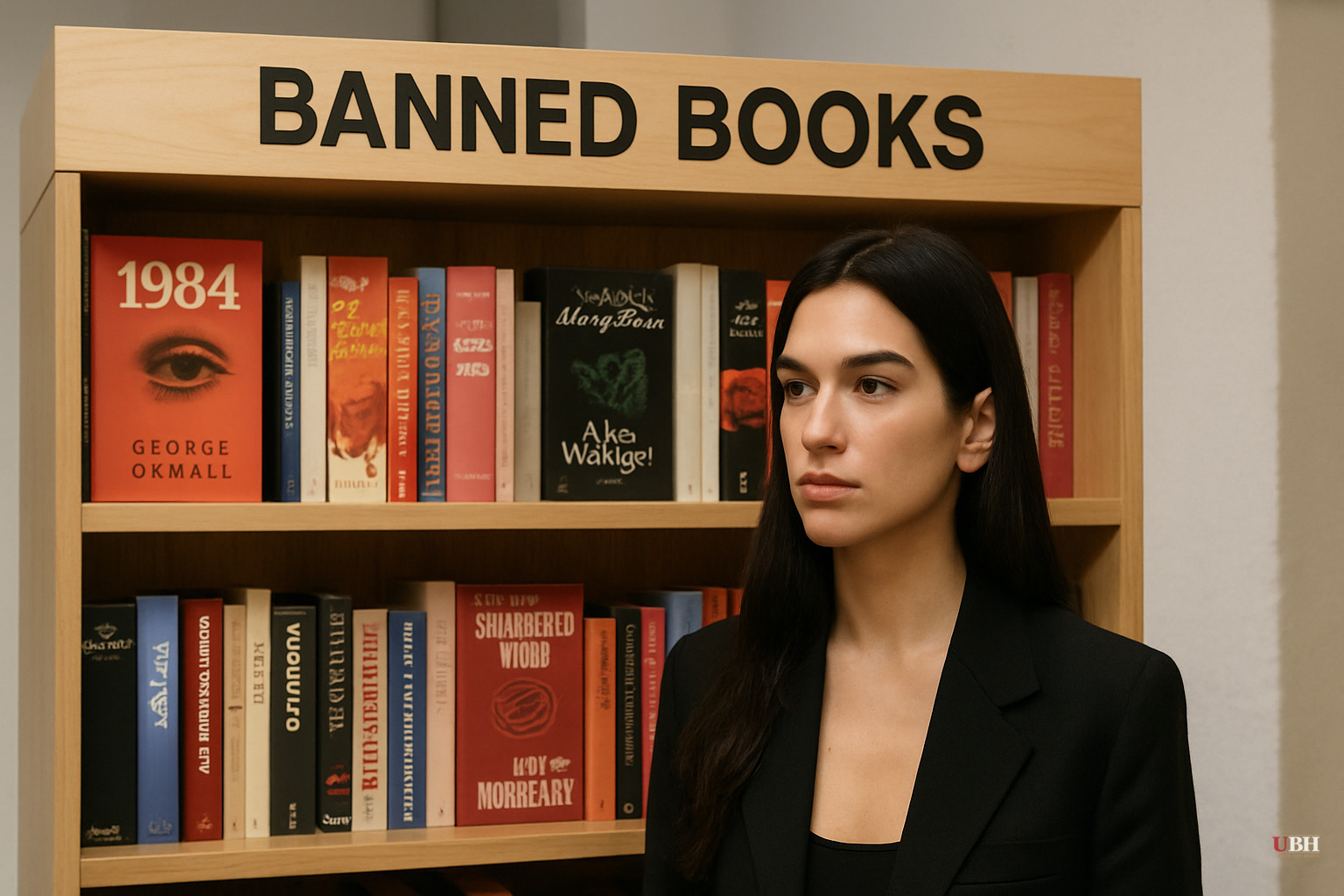
Dua Lipa opened a "Manifesto Library" in Portugal this month, filling it with what she describes to her Book Club following of more than 650,000 people as books once "banned or otherwise controversial." She posed with Margaret Atwood's "The Handmaid's Tale" and told fans the project sparks "conversations around censorship, resistance and the importance of preserving voices that challenge power and refuse to be silenced."
According to the Daily Wire, none of the marquee titles in her library were ever actually banned in any meaningful sense.
"The Handmaid's Tale" has sold more than 10 million copies worldwide. George Orwell's "1984" has sold over 30 million copies as of 2024. J.D. Salinger's "The Catcher in the Rye" is standard reading in American high school English classes across the country. These are not suppressed texts. They're some of the best-selling, most widely taught books in the English language.
How a book gets labeled "banned"
The Daily Wire's critique rests on a simple observation: a book can be branded "banned" forever if it was ever pulled from a single school library shelf, even decades ago and even temporarily. The outlet points out that this loose standard lets activists and marketers slap the label on books with mass commercial success and zero actual censorship history.
The comparison the Daily Wire draws is blunt: calling "1984" a banned book is like calling "Game of Thrones," one of the most-watched shows in the world, a banned show. The label has become detached from what the word normally means.
What the debate is actually about
The fight here isn't really about Dua Lipa's reading list. It's about a broader argument over what counts as a "banned books" display versus a curated political statement.
The Daily Wire argues that many independent bookstores and library displays marketed as "banned books" collections quietly favor one political viewpoint, spotlighting titles like Frantz Fanon's "Black Skin, White Masks" and Maia Kobabe's "Gender Queer" while ignoring conservative-leaning books that struggle to get shelf placement at all. The outlet also cites a 2023 dispute in which the American Library Association characterized efforts to remove sexually explicit content, including graphic depictions described in some accounts as showing minors and sexual acts, from school libraries as "censorship" rather than a parental-rights or age-appropriateness dispute.
Parents pushing to keep sexually explicit material out of a middle school library are not the moral equivalent of a government banning a newspaper. Whether specific books belong in an elementary or middle school library, given their age-appropriateness, is a legitimate question local school boards and parents have every right to litigate. Calling that fight "book banning" flattens a real debate over child access into a First Amendment crisis it may not actually be.
No source here documents a formal, government-enforced ban on "1984" or "The Handmaid's Tale" in the United States today. What's documented is that individual school districts have, at various points, removed or restricted certain books from library shelves, decisions some see as legitimate curation and others see as censorship depending on the book and the reasoning given.
The commercial reality
Whatever your view of the politics, the sales numbers settle one factual question. A book that has sold 30 million copies and sits in nearly every high school curriculum in the country is not being kept from readers. It is, if anything, one of the most successfully distributed novels of the 20th century.
Dua Lipa's library may still do some good by getting younger fans to pick up Orwell or Atwood who otherwise wouldn't. Marketing that project around the language of censorship and silenced voices doesn't match what the sales figures and classroom syllabi actually show.
No formal response from Dua Lipa's team addressing the Daily Wire's specific critique has been reported. The question of whether "banned books" displays in stores and schools nationwide will keep applying the label to bestsellers, and whether that dilutes the term for books and authors facing actual, ongoing restriction somewhere in the world today, remains unresolved.
Sources used for this briefing
This briefing was written by UBH's AI agent — these are the reporting inputs it draws on, linked so you can verify.


