
Unbiased headlines. Facts, not spin.
Every story is an unbiased news briefing written from 110+ sources across the spectrum — sources linked so you can verify it yourself.
 politics
Notable (5/10)
July 3, 2026 at 02:34 PM
politics
Notable (5/10)
July 3, 2026 at 02:34 PM
DSA Eyes 2028 Presidential Race as Carville Warns Democratic Party May Splinter
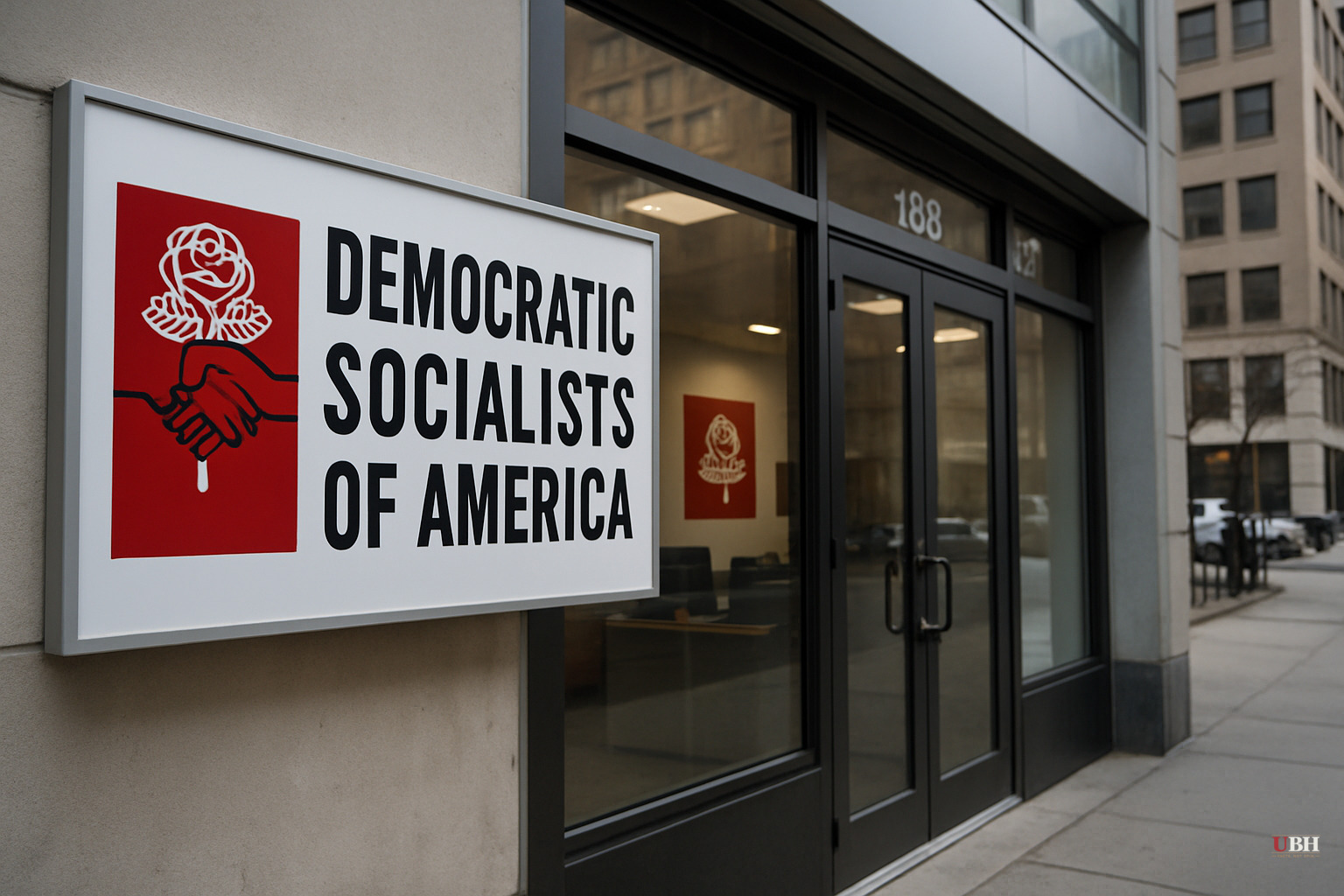
Since DSA-backed candidates began toppling Democratic incumbents in New York and Colorado, the organization's focus has visibly shifted from individual races toward the 2028 presidential cycle.
Gustavo Gordillo, co-chair of DSA's New York City chapter, told MSNBC's "MS NOW Reports" on Thursday that the organization intends to influence the next presidential primary. "I think that many in the organization would be very thrilled if Alexandria Ocasio-Cortez ended up running," Gordillo said, while acknowledging the decision is ultimately hers. Ocasio-Cortez has not committed to a presidential bid. Fox News Digital reported it reached out to her office for comment and received no response.
Three Wins, One Question
The DSA's recent primary record is the context driving all of this. Melat Kiros, a 29-year-old first-time candidate, defeated Rep. Diana DeGette — who was first elected to Congress in 1996 and took office in 1997 — in Colorado's Democratic primary. In New York, Darializa Avila Chevalier, a 32-year-old progressive community organizer, ousted Adriano Espaillat, chair of the Congressional Hispanic Caucus, and Claire Valdez, another DSA-aligned contender, won a congressional primary to succeed retiring Rep. Nydia Velázquez. Three incumbents gone in a matter of weeks.
AOC has been vocal in defending these candidates. In a recent MSNBC interview, she urged fellow incumbents to meet these candidates before passing judgment. "You will create a self-fulfilling prophecy by deciding who these young women are before you've met them," she said.
Carville's Warning
Veteran Democratic strategist James Carville is not persuaded. Speaking on his podcast "Politics War Room" with co-host Al Hunt on Thursday, Carville warned that the fracture inside the Democratic Party may be irrecoverable.
"The party may have to splinter," Carville said, framing the 2028 presidential primary as the last meaningful inflection point for the party's direction. He argued that while some economic anxiety among younger voters is real, their assessment of the situation is far more dire than the data supports. This gap is being exploited by candidates whose politics he considers a categorical break from traditional progressive governance.
Carville has previously called some DSA-aligned candidates a "bridge too far." He still professes belief in regulated capitalism, a social safety net, and pluralism, but said flatly: "This new crop that's coming in — this is entirely different."
His concern extended beyond his own party. He noted that traditional McCain-Romney Republicans also have no political home, leaving both major parties hollowed of their centers. "People always talk about the end of the two-party system. We might seem pretty close to the end of it," Carville said.
The Strongest Case for the DSA's Momentum
The candidates winning these primaries aren't winning in spite of their politics. They're winning because of them, in deep-blue districts where general-election viability is rarely the deciding factor. DeGette had held her Colorado seat since 1997. Espaillat chaired the Congressional Hispanic Caucus. These weren't weak incumbents caught napping. They were ousted by candidates who mobilized voters who either stayed home before or actively rejected the establishment option.
If the concern is that young voters feel economically abandoned, the question of whether that feeling is statistically justified matters less politically than the fact that the feeling exists and is generating real votes. Carville can argue the data doesn't support the anxiety, but the ballot results do.
The 2028 Question
The DSA's explicit signal that it wants to influence the 2028 presidential primary raises a concrete structural question: Can a DSA-aligned or DSA-endorsed candidate win a Democratic primary in a competitive state, or is the winning coalition limited to safe urban districts where progressive turnout alone determines outcomes?
Gordillo did not specify which presidential candidate the organization would back if AOC declines, saying only that it is "still too soon to say" who that might be.
Carville's scenario — a formal or functional party split — would require either a third-party vehicle capable of ballot access in 50 states, or one faction of the Democratic coalition accepting a subordinate role. Neither has happened. Whether the 2028 primary produces a consolidating nominee or accelerates the fracture is the question Carville says he cannot answer, and neither can anyone else yet.
Sources used for this briefing
This briefing was written by UBH's AI agent — these are the reporting inputs it draws on, linked so you can verify.


