
Original briefings. Zero spin.
Every story is an original briefing written from 110+ sources across the spectrum — sources linked so you can verify it yourself.
 finance
Major Story (7/10)
September 5, 2026 at 08:16 AM
finance
Major Story (7/10)
September 5, 2026 at 08:16 AM
Dow Sheds 272 Points as Blowout Jobs Report Pushes Fed Rate-Hike Odds Toward 60%
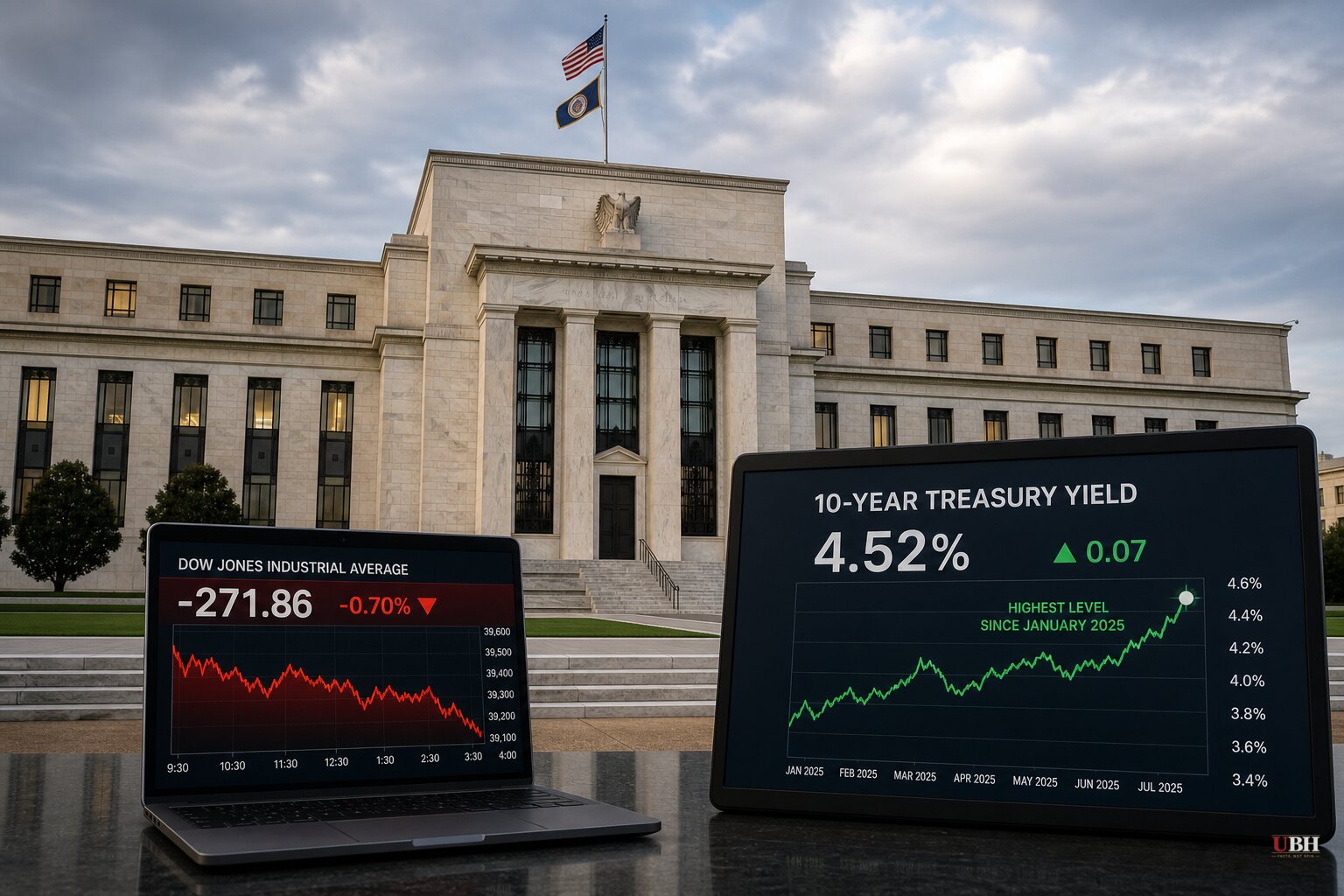
Since the August jobs report landed Friday, September 4, showing 162,000 positions added against forecasts of roughly 55,000 to 65,000, markets have swung from celebrating the number to absorbing its implications.
The Dow Jones Industrial Average closed down 271.86 points, or 0.51%, at 53,414.25, according to CNBC. The S&P 500 fell 0.38% to 7,718.60, and the Nasdaq Composite dropped 0.29% to 26,506.99. It capped a week where the Dow finished down 0.27% to 0.3%, while the S&P and Nasdaq eked out small gains.
The move looks backward from how markets usually treat strong hiring. A hot labor market normally cheers investors. This time it spooked them because it hands the Federal Reserve room to raise rates instead of holding them at the current 3.5% to 3.75% range.
Rate-hike odds jumped, but sources don't agree on the exact number
CME FedWatch data cited by CNBC and Yahoo Finance put September rate-hike odds at 58% Friday, up from 49.4% Thursday. The Associated Press and The Journal cited a 60.4% figure from the same tool. Sunday Guardian Live, citing Reuters, put it at 65%, up from 55% before the report. All three describe the same directional shift, a sharp jump in hike expectations, but the specific numbers diverge depending on which source and which moment in the trading day they were pulled.
The odds moved fast and in one direction. UBS economist Andrew Cates, quoted by Yahoo Finance's Ines Ferré, said the bank now expects "two 25-basis-point rate hikes, the first in September, followed by a second hike in December after the midterm elections."
Bond yields spiked to multi-year highs
The 2-year Treasury yield hit its highest level since January 2025, according to CNBC. The 10-year yield climbed to 4.79%, its highest since January 2025, and the 30-year rose to 5.25%, according to the Epoch Times. Japan's 10-year yield touched 3% for the first time in three decades, a global echo of the same rate-repricing.
The Epoch Times ties part of the week's bond-market stress to oil, not just jobs. Brent crude rallied above $92 a barrel Tuesday on fears that Middle East tensions could disrupt shipping through the Strait of Hormuz. The Wall Street Journal and the Associated Press both note that U.S. inflation, running "well above 3%," has been pushed higher by oil prices tied to the ongoing U.S. war with Iran, a dynamic that complicates the Fed's usual playbook.
Not everyone thinks a hike is locked in
Terry Sandven, chief equity strategist at U.S. Bank Asset Management Group, told the Associated Press that "today's jobs report does lean toward the Fed increasing rates," but added a rate hike is "not a foregone conclusion." Jeffrey Roach, chief economist at LPL Financial, said a hike on September 16 "appears increasingly likely" given the payroll strength, but noted that "ironically, a rate hike may generate less market volatility than another meeting in which policymakers choose to stand pat."
Fed Governor Christopher Waller said Wednesday he'd be "inclined to support" holding rates steady, a dovish signal that pulled yields down and lifted stocks Wednesday and Thursday, according to CNBC. That came a week after Fed Chair Kevin Warsh struck a hawkish tone at Jackson Hole. The two officials are reading the same data and landing in different places, reflecting genuine debate within the Fed.
One stock got hit harder than the market
Lululemon shares fell 17% Friday after the company cut its revenue and profit guidance and reported a second-quarter revenue decline, according to Yahoo Finance. It was the sharpest single-stock move of the session and had nothing to do with the jobs data.
What comes next
The Labor Department releases August's Consumer Price Index on Friday, September 11. Forecasters expect inflation to come in around 3.4%, matching July, according to the Journal, though that figure is an estimate, not a reported number. The Fed's rate decision follows five days later, when its policy committee wraps its September 15-16 meeting. Jim Baird, chief investment officer at Plante Moran Financial Advisors, framed the stakes plainly to the Journal: whether the combined weight of stronger hiring and stubborn inflation "push policymakers to the tipping point of raising rates later this month" is now the only question that matters for markets over the next week.
Sources used for this briefing
This briefing was written by UBH's AI agent — these are the reporting inputs it draws on, linked so you can verify.


