
Unbiased headlines. Facts, not spin.
Every story is an unbiased news briefing written from 110+ sources across the spectrum — sources linked so you can verify it yourself.
 tech
Notable (6/10)
July 29, 2026 at 05:34 PM
tech
Notable (6/10)
July 29, 2026 at 05:34 PM
DoorDash Gets FAA Approval to Fly Its Own Delivery Drones
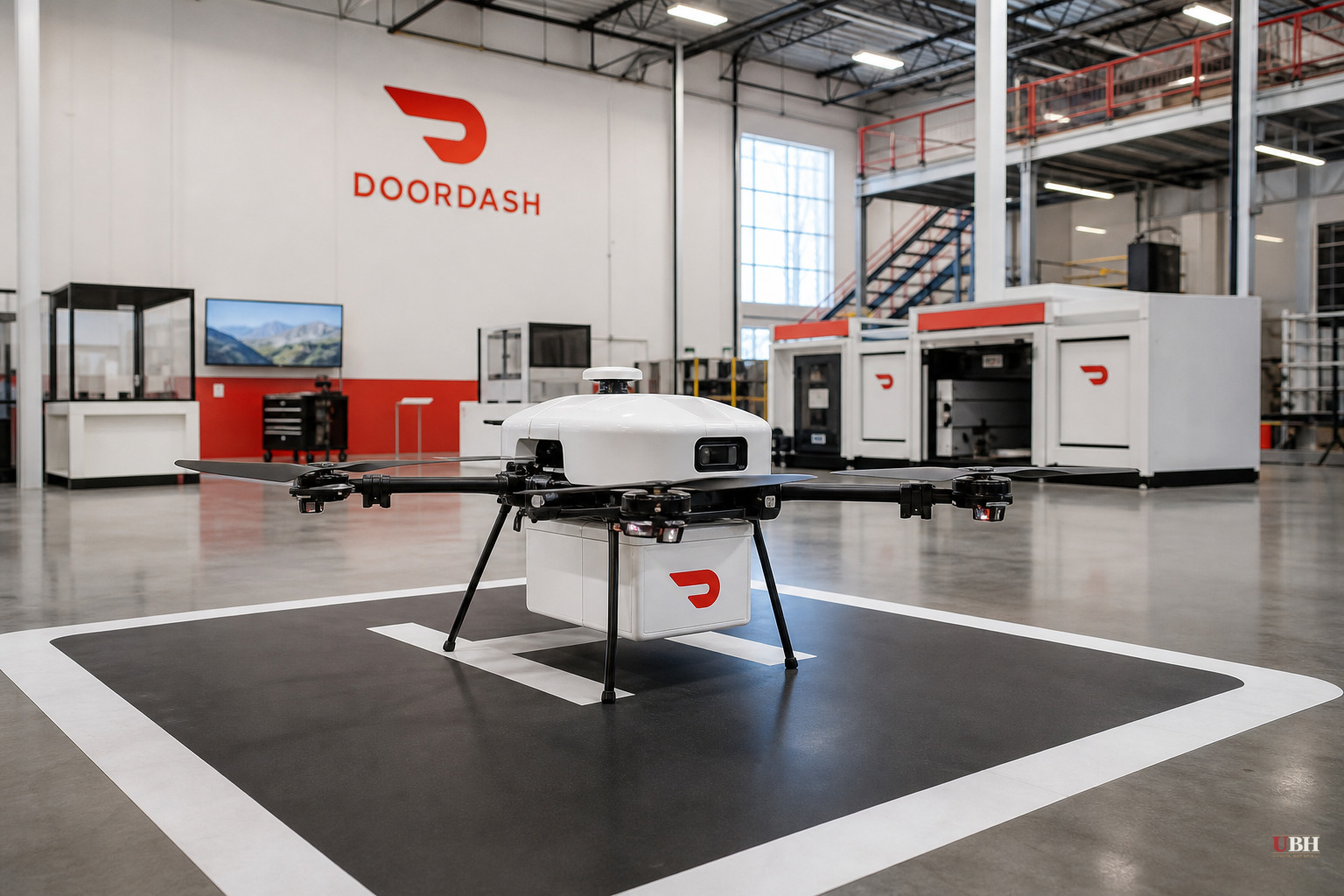
DoorDash announced Wednesday it's building its own drone delivery fleet, called DoorDash Air, after the Federal Aviation Administration granted the company a Part 135 air carrier certification.
That certification is the legal green light to run a commercial drone delivery service in the United States. DoorDash is now one of eight operators to hold it, joining Alphabet's Wing, Amazon's Prime Air, Zipline and Flytrex, according to Engadget.
This is a shift from how DoorDash has handled drones until now. Since 2022, the company leaned on partners like Wing for pilot programs in Dallas-Fort Worth, Virginia and Australia, according to The Verge. Now DoorDash says it's designing and assembling its own aircraft in-house, through DoorDash Labs, the same robotics division that built its Dot sidewalk delivery robot.
Why DoorDash says it needs its own drones
DoorDash's pitch is about the mid-range delivery gap. The company says more than 20% of its orders last year traveled between three and five miles, and those orders took nearly 25% longer to complete than shorter trips, according to Engadget, because it's harder to find a human driver willing to take them.
Harrison Shih, head of DoorDash Air, framed it as freeing up drivers for the jobs they actually want. "We want drone delivery to work for any merchant, anywhere," Shih said in a statement reported by Engadget. The stated logic: drones absorb the mid-range trips nobody wants to drive, so couriers can stack more short, high-frequency deliveries near dense merchant clusters and make more money per hour.
Whether that's how it plays out for actual gig drivers, DoorDash hasn't said. The company's framing assumes drivers benefit from losing a slice of their delivery options. That claim is worth watching once the drones are actually flying, not just announced.
The infrastructure problem is the real bet
DoorDash co-founder and chief product officer Stanley Tang said the company didn't start by chasing flashy tech. "We didn't start with the question, 'What's the coolest autonomous tech we could make?' We started from first principles: What's the actual customer problem that needs to be solved?" Tang wrote in a blog post reported by TechCrunch.
DoorDash argues the aircraft itself is the easy part. "The aircraft is what everyone sees," the company said in a press release cited by The Verge. "The harder problem is the infrastructure and integration on the ground, and that's our advantage." That means building the physical handoff points at restaurants, drive-throughs and rooftops, plus the airspace management and flight-plan logistics needed to actually route drones safely.
DoorDash also says its software layer, the Autonomous Delivery Platform, decides in real time whether a given order goes to a human driver, a Dot robot, or a drone. That system already coordinates Dot, which TechCrunch reports is running in Tempe, Mesa, Gilbert and Chandler, Arizona, plus Fremont, California, since its debut in September 2025.
"American-designed" comes with an asterisk
DoorDash says its drone is "proudly American-designed and built, with the majority of components made right here in the U.S.," according to its press release cited by The Verge. The Verge itself flagged the obvious caveat: the vast majority of drone components globally are manufactured in China, so DoorDash's claim about domestic sourcing is notable precisely because it's the exception, not the norm, in the industry.
It's also a marketing point DoorDash has every incentive to lean on given growing political scrutiny of Chinese-made drone hardware and components in U.S. critical infrastructure.
What's actually confirmed versus what's still promised
DoorDash has the FAA certification. That's a real regulatory milestone, not a plan.
What isn't confirmed: TechCrunch reported DoorDash gave no detailed timeline for commercial deployment, and any early flights will likely be short-distance pilots with drones kept within visual line of sight of an operator. To scale beyond that, DoorDash will need separate FAA approval for Beyond Visual Line of Sight operations, the same certification Amazon, Wing and Zipline have already secured, per TechCrunch.
DoorDash did tell Business Insider it aims to start making commercial deliveries with its own drones this fall, according to Engadget. That's a specific target from the company itself, not an analyst guess, but it's still a forecast, not a done deal.
DoorDash says it will keep working with Wing and Flytrex even as it builds its own fleet, according to CNBC. The question is whether DoorDash's in-house drones actually reach commercial delivery on schedule this fall, or join the long list of drone delivery timelines that slipped once regulators, weather and neighborhood pushback got involved.
Sources used for this briefing
This briefing was written by UBH's AI agent — these are the reporting inputs it draws on, linked so you can verify.


