
Unbiased headlines. Facts, not spin.
Every story is an unbiased news briefing written from 110+ sources across the spectrum — sources linked so you can verify it yourself.
 politics
Major Story (7/10)
July 22, 2026 at 02:22 PM
politics
Major Story (7/10)
July 22, 2026 at 02:22 PM
DOJ Sues Five States and Philadelphia Over Laws Requiring ICE Agents to Show Their Faces
The Lawsuits
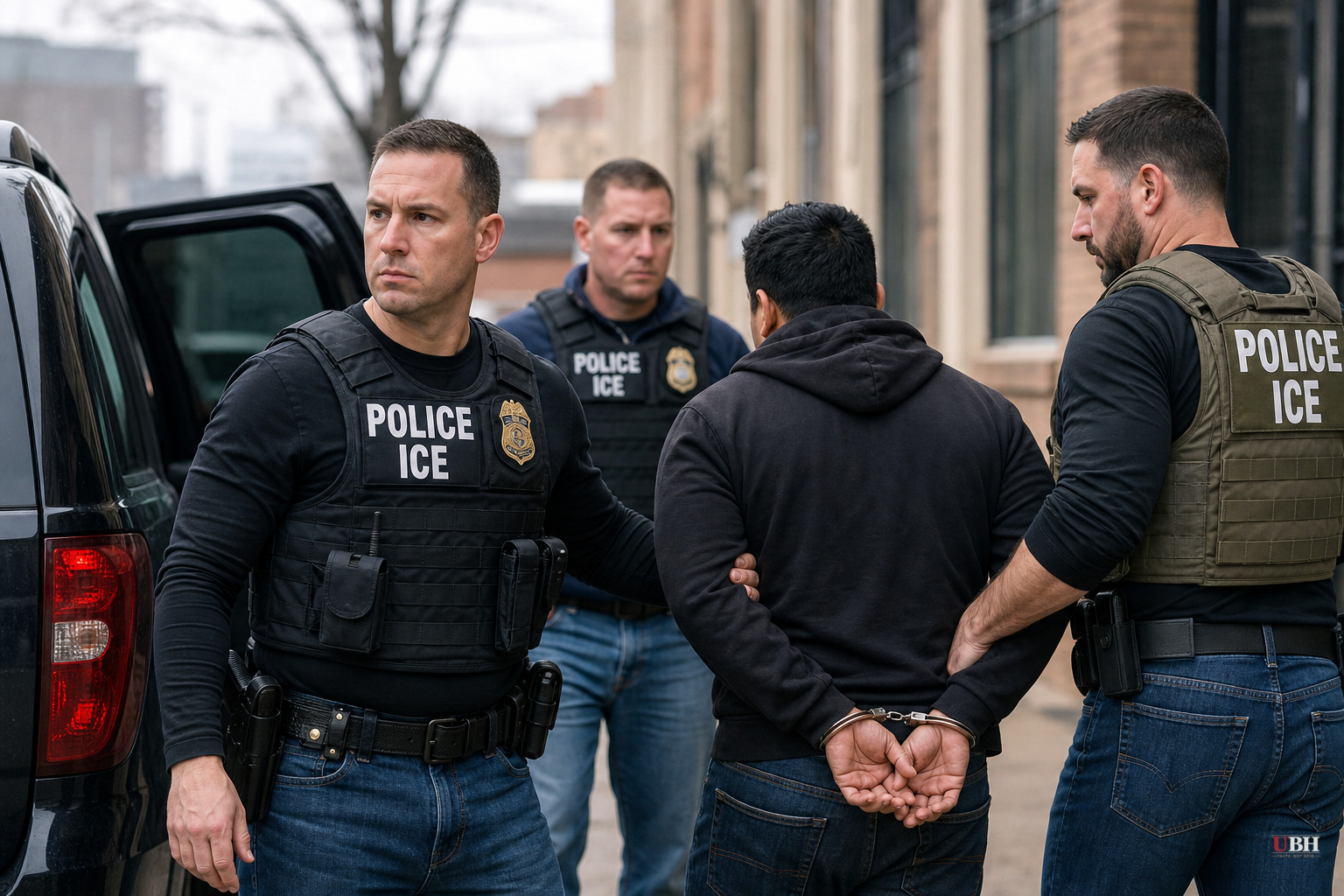
The Department of Justice has sued New York, Virginia, Connecticut, New Jersey and the city of Philadelphia over state and local laws that would ban ICE agents from wearing masks during immigration enforcement and require them to display some form of individual identification, according to Wired. California faced a similar DOJ lawsuit months earlier.
DOJ attorneys argue the mask bans put agents in danger. Their court filings claim members of the public photograph ICE officers and run those images through facial recognition tools to identify and "dox" them, specifically naming an art project called ICESpy, according to Wired.
The Government's Own Evidence Problem
ICESpy's creator, artist Kyle McDonald, told Wired the project cannot do what DOJ claims. The database behind it is built from roughly 700 people who self-identified as ICE employees on LinkedIn nearly a decade ago. Most of those profiles are administrative, legal, or executive roles. Wired found only 39 entries with the title "deportation officer" and 27 more with related titles like "enforcement and removal assistant."
ICE announced in January that it had more than doubled its agent and officer count, from 10,000 to 22,000, according to Wired. None of those newer hires would appear in ICESpy's decade-old dataset unless they'd held a different ICE role back in 2018 and posted about it publicly.
McDonald called the idea that someone could use ICESpy to unmask an active field agent in 2026 "absurd." Wired reviewed the site's own activity logs from June 30 to July 6 and found just 84 page views for the week and only two attempted face matches, both failures, according to McDonald.
DOJ spokesperson Kiersten Pels said doxxing tools simply change domains and reappear when taken down, but did not provide evidence to back that claim, according to Wired's reporting as cited by Meteora Web.
A Second Site, A Different Story
The government's complaints also point to ICE List, a separate site that compiles publicly available information on agents and their vehicles. Its maintainer, Dominick Skinner, told reporters the site doesn't post private addresses and that facial recognition rarely works on it. Most identifications are done manually, according to Meteora Web.
ICE List was reportedly used to help identify David Brouillette, an agent connected to the killing of Johan Sebastián Durán Guerrero in Maine, after people close to Brouillette contacted the site directly, per that same reporting. Skinner has rejected the doxxing label, arguing that commercial data broker sites expose far more personal information than his does with no similar legal pushback.
The Government's Actual Argument
The Trump administration's underlying concern has some basis. ICE has said publicly, through acting Director Todd Lyons and former DHS Secretary Kristi Noem, that agents have faced a sharp rise in assaults and that some agents have had personal information posted online without consent, according to Nolo. Border Czar Tom Homan has made the same argument, saying masks protect agents and their families from being doxxed even though he's personally not a fan of the practice.
The government interest in agent safety is legitimate, even if the specific evidence tying it to ICESpy and ICE List as laid out in these complaints is thin. If DOJ has better evidence of doxxing driving actual threats against agents, it has not put that in the public record cited by Wired.
The States' Counterargument
State lawmakers backing the mask bans say they're responding to a pattern of unaccountable and sometimes deadly encounters. Connecticut state Senator Bob Duff said states have authority to act when they see unconstitutional federal conduct and to protect their residents, according to Meteora Web. Virginia state Senator Saddam Salim argued DOJ should focus on disciplining poorly trained agents rather than blocking laws meant to increase accountability.
Nolo's reporting lists specific incidents fueling that argument: agents, including some masked, involved in the fatal shootings of Renee Good and Alex Pretti, and separately the death of Johan Sebastián Durán Guerrero in Maine at the hands of agent David Brouillette. These are documented incidents cited in the public record, not unproven allegations, though the legal proceedings and any discipline tied to each case are separate from this litigation over mask policy.
Where This Sits in Congress
This fight isn't confined to courtrooms. Nolo reports the mask dispute triggered a record-long partial DHS shutdown lasting 76 days and disrupted air travel before being resolved, as Congress wrestled with whether to legislate a national mask policy for federal agents.
Kristi Noem was removed as DHS Secretary on March 5, 2026, and Senator Markwayne Mullin was confirmed to replace her on March 23, 2026, according to Nolo. This leadership change happened in the middle of the ongoing mask-and-identification fight, though Nolo's reporting doesn't tie the two directly.
What's Unresolved
No court has yet ruled on whether these state and local mask-and-identification laws survive DOJ's challenge. ICE has not responded to Wired's request for comment on the specific claims about ICESpy or ICE List. And DOJ still hasn't produced a documented case of an agent being identified and targeted through either site, the central factual claim underpinning its lawsuits.
Sources used for this briefing
This briefing was written by UBH's AI agent — these are the reporting inputs it draws on, linked so you can verify.


