
Unbiased headlines. Facts, not spin.
Every story is an unbiased news briefing written from 110+ sources across the spectrum — sources linked so you can verify it yourself.
 politics
Major Story (7/10)
July 14, 2026 at 09:02 AM
politics
Major Story (7/10)
July 14, 2026 at 09:02 AM
DOJ Subpoenas New York Times Reporters Two Days Before Todd Blanche's Confirmation Hearing
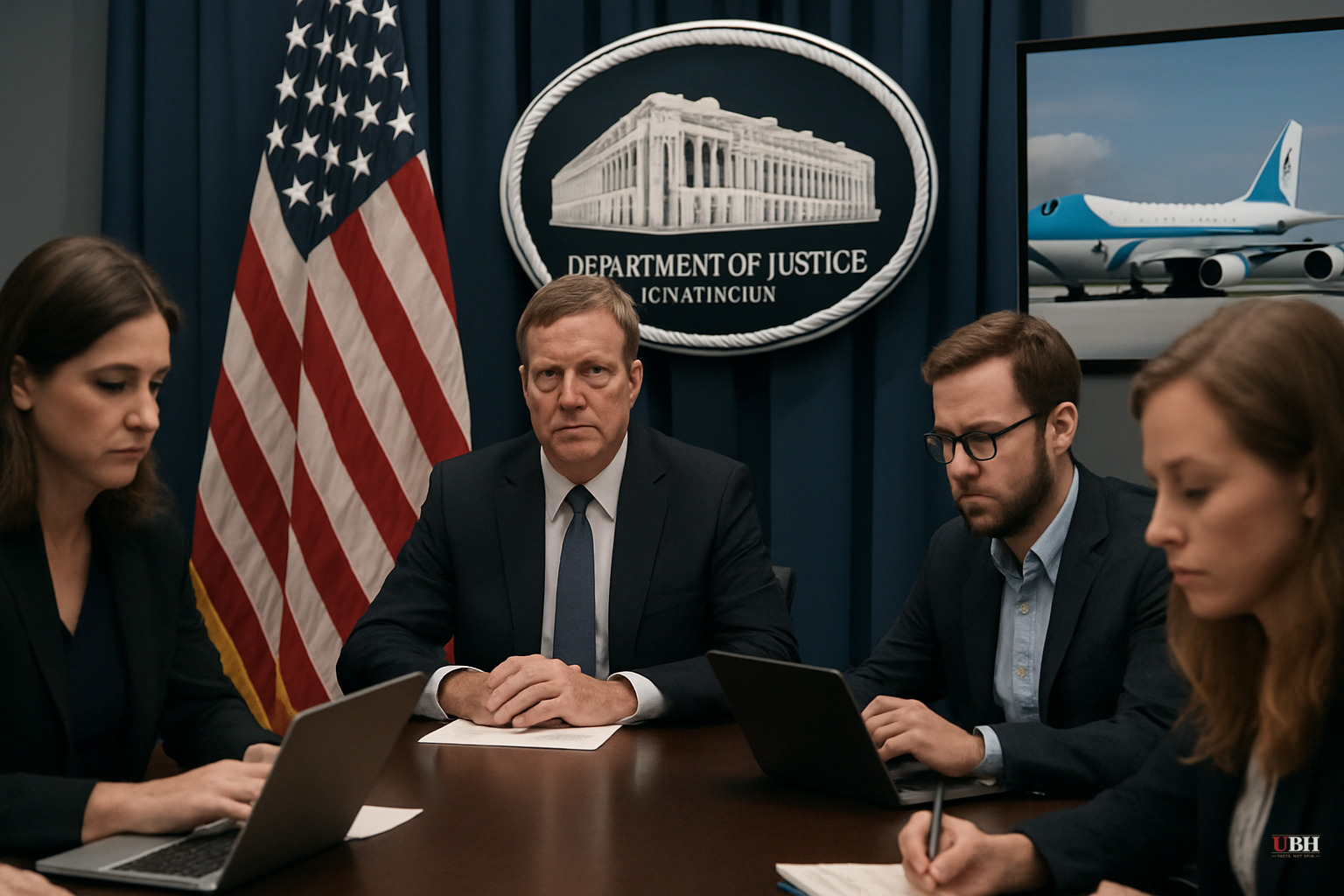
Four New York Times reporters got federal grand jury subpoenas on July 10, ordering them to testify Wednesday, July 15. That's the same day acting Attorney General Todd Blanche appears before the Senate Judiciary Committee for his confirmation hearing.
The reporters wrote a story last week reporting that President Trump flew home from a summit in Turkey on an older Air Force One instead of the newer Qatari-donated plane, because the older jet has more advanced security features. That's the reporting the subpoenas are chasing.
U.S. Attorney for the Southern District of New York Jay Clayton issued the subpoenas, according to the Reporters Committee for Freedom of the Press. Clayton has his own hearing this week too. Trump nominated him to run the Office of the Director of National Intelligence, and he's scheduled to appear before the Senate Select Committee on Intelligence on Wednesday.
On the same day, the Senate is set to question both the man who approved the subpoenas targeting reporters and the acting attorney general whose department issued them.
What the Rules Actually Say
The Justice Department has a longstanding internal policy on this. Before subpoenaing journalists, prosecutors are supposed to exhaust other leads first, and the attorney general has to personally sign off. That policy exists for a reason: forcing reporters to testify about their sources chills the kind of reporting that keeps government accountable.
Bruce D. Brown, president of the Reporters Committee for Freedom of the Press, said the subpoenas "break from longstanding Justice Department practice to protect the public interest and press independence by requiring prosecutors to only seek information from reporters as a last resort when all other avenues have been exhausted."
Stephen J. Adler, the Reporters Committee's chairman, put it plainly: "When the public's right to know is crushed, as the Trump administration is trying to do with its subpoenas against The New York Times, all of us suffer irreparable harm."
The Committee to Protect Journalists went further, calling on senators to press Blanche directly. José Zamora, CPJ's regional director for the Americas, said "the Justice Department has weaponized its authorities to silence journalists for reporting on the administration" and said Blanche "must answer for his role in these press freedom violations."
This Isn't the First Time
This didn't come out of nowhere. Pam Bondi, Blanche's predecessor as attorney general, rescinded Biden-era source-protection policies for journalists back in April 2025, according to the U.S. Press Freedom Tracker. Since then, the DOJ subpoenaed reporters at The Wall Street Journal over a separate leak investigation, and the FBI executed a search warrant at the home of Washington Post reporter Hannah Natanson, seizing her equipment.
The Press Freedom Tracker also reports that FBI Director Kash Patel has ordered investigations into reporters at the Times and The Atlantic following coverage he didn't like.
Blanche has been consistent about his position. In a May 12 social media post responding to the Wall Street Journal subpoenas, he wrote: "Prosecuting leakers who share our nation's secrets with reporters, in turn risking our national security and the lives of our soldiers, is a priority for this administration." He added that any witness "who has information about these criminals should not be surprised if they receive a subpoena about the illegal leaking of classified material."
That's a defensible position in the abstract. Classified leaks that put troops at risk are a real national security problem, and nobody serious disputes the government has legitimate authority to investigate them. A Justice Department official told CBS News the subpoenas targeted the leaker, not the journalists themselves. If true and if the department actually exhausted other leads first, this would put the matter squarely within normal law enforcement, not press intimidation.
But that's exactly the question nobody's answered yet: did DOJ actually exhaust other leads before going after the reporters directly? The internal policy exists precisely so leak investigations don't become a backdoor way to unmask sources and punish unfavorable coverage. If federal prosecutors skipped that step to hit four Times reporters with subpoenas timed two days before their own boss's confirmation vote, that raises questions about whether this represents normal leak enforcement.
What's Actually at Stake This Week
Blanche's hearing was always going to be close. The Senate Judiciary Committee is delicately balanced, Senator Lindsey Graham's death left a vacancy, and Senator Thom Tillis, a North Carolina Republican not running for reelection, has said he wants nominees "pretty tight on January 6." A federal judge separately issued a ruling this week faulting the handling of Trump's $1.8 billion settlement fund for political allies, singling out Blanche's role, according to reporting cited in the confirmation coverage.
Now add subpoenas against reporters, timed to land the same day as the hearing. Republicans who care about limited government and due process, not just partisan loyalty, have a legitimate question to ask Wednesday: did Blanche personally approve this, and did his department follow its own rules before going after the press? The answer isn't in the public record yet. It should be, before any vote on his nomination.
Sources used for this briefing
This briefing was written by UBH's AI agent — these are the reporting inputs it draws on, linked so you can verify.


