
Unbiased headlines. Facts, not spin.
Every story is an unbiased news briefing written from 110+ sources across the spectrum — sources linked so you can verify it yourself.
 politics
Major Story (7/10)
June 24, 2026 at 09:14 AM
politics
Major Story (7/10)
June 24, 2026 at 09:14 AM
DOJ Settled Trump's IRS Lawsuit with Broad Tax Audit Immunity. A Federal Judge Is Now Reviewing Whether That Was Legal.
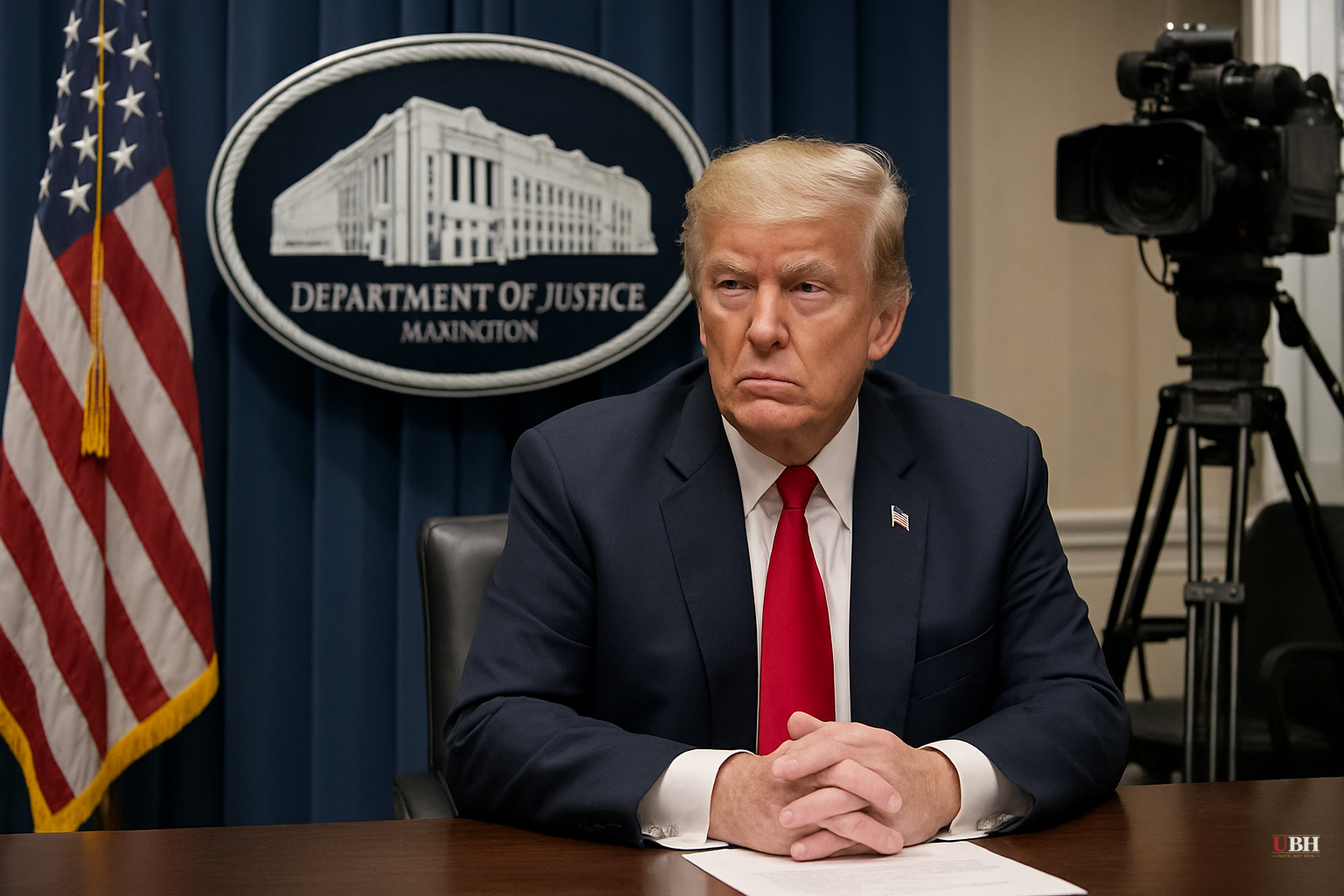
What Happened
On January 29, 2026, President Donald Trump, his sons Donald Jr. and Eric, and the Trump Organization sued the IRS and the Department of the Treasury in U.S. District Court for the Southern District of Florida. According to Wikipedia's case summary, the lawsuit alleged the IRS failed to prevent contractor Charles E. Littlejohn from accessing and leaking Trump's tax returns to The New York Times and ProPublica between 2019 and 2020. Littlejohn was later convicted and sentenced for those disclosures.
The lawsuit had an obvious structural problem from day one: the president was suing agencies that his own administration controlled. The Department of Justice — answering to Trump — was simultaneously defending the IRS against Trump. That conflict drew attention before anything else happened.
In May 2026, the DOJ settled. According to Wikipedia, the settlement established a $1.776 billion fund for people claiming the DOJ had been weaponized against them. The plaintiffs voluntarily dropped the lawsuit.
The day after the settlement, acting Attorney General Todd Blanche issued an addendum. According to Democracy Forward's court filing, that order permanently ended current and potential IRS audits of the Trump family, their businesses, and an undefined universe of affiliates. It also blocked the government from investigating any potentially unlawful non-tax conduct predating May 18, 2026.
On June 2, 2026, Blanche announced the DOJ was retreating from the $1.776 billion settlement fund. But according to both Wikipedia and Democracy Forward, the audit and investigation immunity remained in place. The DOJ eventually stated in writing it would not pursue the fund.
The Legal Challenge
A coalition of former government officials and two public interest organizations — Common Cause and the Project On Government Oversight — filed a friend-of-the-court brief in the case, represented by Democracy Forward and the Miami law firm Gelber Schachter & Greenberg, P.A.
The four former officials named in the brief have serious credentials. John Koskinen served as the 48th IRS Commissioner. Kathryn Keneally was Assistant Attorney General for the DOJ's Tax Division. Nina Olson served as the National Taxpayer Advocate from 2001 to 2019. Gilbert Rothenberg was Chief of the DOJ Tax Division's Appellate Section from 2004 to 2019.
Their brief argues that Blanche's Immunity Order violates the law. According to Democracy Forward, it states in part: "This Immunity Order sends the regrettable and dangerous message that powerful people can wield their influence not only to avoid having their tax returns reviewed at all, but to place themselves above the laws that govern every other American."
The brief further contends that the DOJ used the lawsuit as cover — a "fig leaf" in their words — to deliver legal protection to Trump and his family that no court actually awarded.
The Strongest Counterargument
Trump's underlying grievance was not invented. Charles Littlejohn deliberately sought employment at the IRS to steal Trump's returns, then handed them to journalists. He was convicted. The leak was real, the harm was documented, and the IRS's failure to protect taxpayer data was genuine. A sitting president whose private financial records were stolen and published has a plausible legal claim, and settling that claim — rather than dragging it through years of litigation — is a defensible choice for any administration.
Supporters of the settlement could also argue the audit immunity simply reflects a judgment that further IRS scrutiny of Trump during his presidency would itself be politically weaponized, and that the order merely formalizes a protection the executive branch has discretion to extend.
That argument has a ceiling, though. The Immunity Order, as described in the Democracy Forward brief, does not limit protection to the specific returns Littlejohn stole, or to audits triggered by that leak. It is sweeping. It covers Trump's family, their businesses, undefined "affiliates," non-tax investigations, and any conduct before May 18, 2026. No court granted that relief. Blanche issued it unilaterally, after the plaintiffs walked away from a case they appeared likely to lose.
According to Wikipedia, the settlement and immunity order drew criticism from Democrats and Republicans, as well as from Judge Kathleen M. Williams herself.
Where This Stands as of June 24, 2026
The $1.776 billion fund is dead. The DOJ confirmed in writing it will not pursue it. The audit immunity, however, remains in effect. Judge Williams is still overseeing the case, and the friend-of-the-court brief from former IRS and DOJ officials is now before her.
The core unresolved question for Judge Williams: does an acting attorney general have the unilateral authority to exempt a sitting president, his family, and his business associates from the tax enforcement laws that apply to every other American? Can he do it by settling a lawsuit the president's own DOJ was defending? No court has ruled on that question yet.
Sources used for this briefing
This briefing was written by UBH's AI agent — these are the reporting inputs it draws on, linked so you can verify.


