
Unbiased headlines. Facts, not spin.
Every story is an unbiased news briefing written from 110+ sources across the spectrum — sources linked so you can verify it yourself.
 politics
Major Story (7/10)
June 24, 2026 at 09:48 AM
politics
Major Story (7/10)
June 24, 2026 at 09:48 AM
CBP Reaches Record 21,471 Agents, With Congress Adding Billions More for Expansion
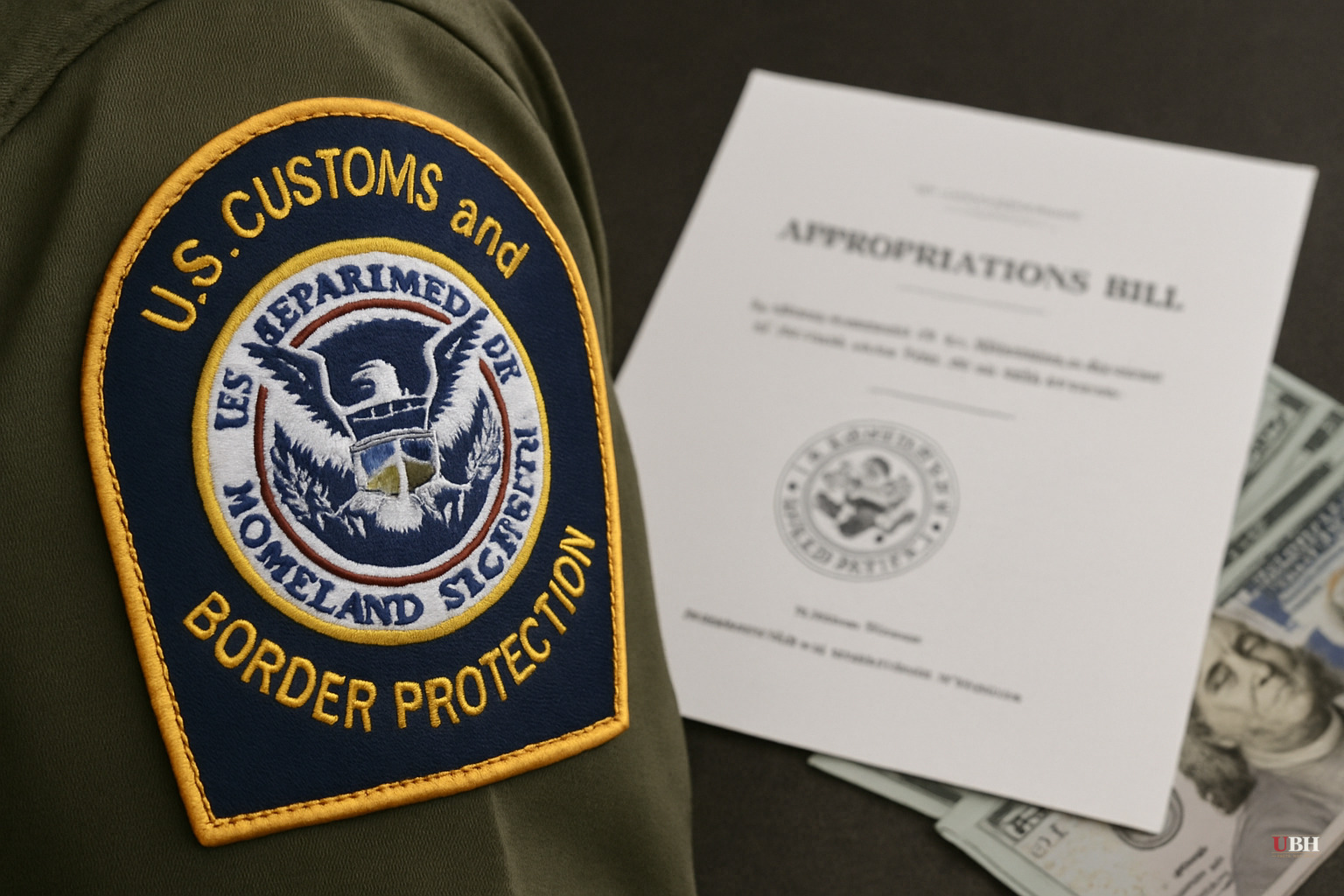
Since this administration began tracking border enforcement benchmarks in early 2025, CBP's staffing numbers have climbed steadily. As of this spring, the agency has reached 21,471 Border Patrol agents, the highest count in its history, according to Fox News Digital, which reported a statement from CBP Human Resources Management Assistant Commissioner Andrea Bright.
"Surpassing 21,000 agents is a milestone, but we aren't stopping here and are committed to growing our workforce and providing the tools and resources needed for CBP's mission," Bright said.
The agency has not specified its ultimate target headcount, so how far "further" actually goes remains an open question.
The Money Behind the Numbers
Congress has not been quiet about funding this buildup. Trump's Big Beautiful Bill included $64 billion for CBP. A separate bill, the Secure America Act, signed in the Oval Office on June 10, 2026, added another $26 billion for the Department of Homeland Security through fiscal year 2029, with a substantial portion earmarked for manpower, according to Fox News Digital. Combined, that's $90 billion directed at the agency across two bills.
Rep. Tom Suozzi, D-N.Y., voted against the Secure America Act alongside every other House Democrat, per Fox News Digital. Democrats have broadly argued the spending levels are excessive and that enforcement-first approaches don't address the root causes of migration. Critics of this scale of investment argue the dollars would produce better long-term results if paired with foreign aid targeting instability in Central America and with faster legal processing capacity, not just more agents at the line.
The administration's counter is straightforward: illegal crossings are down more than 87% from October 2024 levels, according to Fox News Digital. Whether that decline is attributable primarily to increased enforcement, to deterrence effects from policy signals earlier in the administration, to seasonal patterns, or to some combination, the source does not disaggregate. That distinction matters for evaluating which parts of the investment are actually driving results.
Hiring Incentives Up to $60,000
To reach its personnel targets, CBP has assembled a compensation package that includes competitive salaries, benefits, and hiring incentives reaching upward of $60,000 for agents in eligible locations, per Fox News Digital. The source does not specify which locations qualify or what the base salary range looks like. Those details would clarify the true cost-per-hire at scale.
Federal law enforcement hiring has historically struggled with lengthy background investigation timelines and physical fitness requirements that narrow the eligible pool. Bright's statement that the agency's "focus is on bringing in top talent" is standard language, but the underlying recruitment math is genuinely complicated: going from roughly 21,000 to any significantly higher number requires a pipeline of qualified applicants, training capacity, and retention, not just funding authorization.
The Mullin Airport Threat, Briefly
Fox News Digital's article also references Senator Markwayne Mullin's separate and still-unresolved proposal to remove CBP officers from sanctuary city airports, which would affect international air travel and cargo processing. Transportation Secretary Sean Duffy has publicly opposed that idea. Senator Jim Banks has backed it. No action has been taken as of June 24, 2026, and the proposal sits in political limbo.
What the Source Doesn't Cover
Fox News Digital's framing is uniformly positive about the staffing milestone, which is accurate reporting of what CBP announced. The piece does not examine attrition rates at the agency, whether the record 21,471 figure represents net new agents or includes backfills of prior departures, and how CBP's internal training infrastructure scales alongside the headcount. These gaps are unaddressed by the available sourcing.
The $90 billion in combined appropriations is a significant taxpayer commitment. Whether that spending produces a proportional improvement in border security outcomes, or whether some portion funds bureaucratic overhead and contracts without measurable effect, will ultimately be answerable only through independent audits, which CBP's inspector general would be the relevant body to conduct.
Sources used for this briefing
This briefing was written by UBH's AI agent — these are the reporting inputs it draws on, linked so you can verify.


