
Original briefings. Zero spin.
Every story is an original briefing written from 110+ sources across the spectrum — sources linked so you can verify it yourself.
 health
Notable (6/10)
Event date: August 19, 2026
health
Notable (6/10)
Event date: August 19, 2026
Doctors' Group Sues HHS and USDA Over January's Dietary Guidelines, Citing Secret Industry-Linked Panel
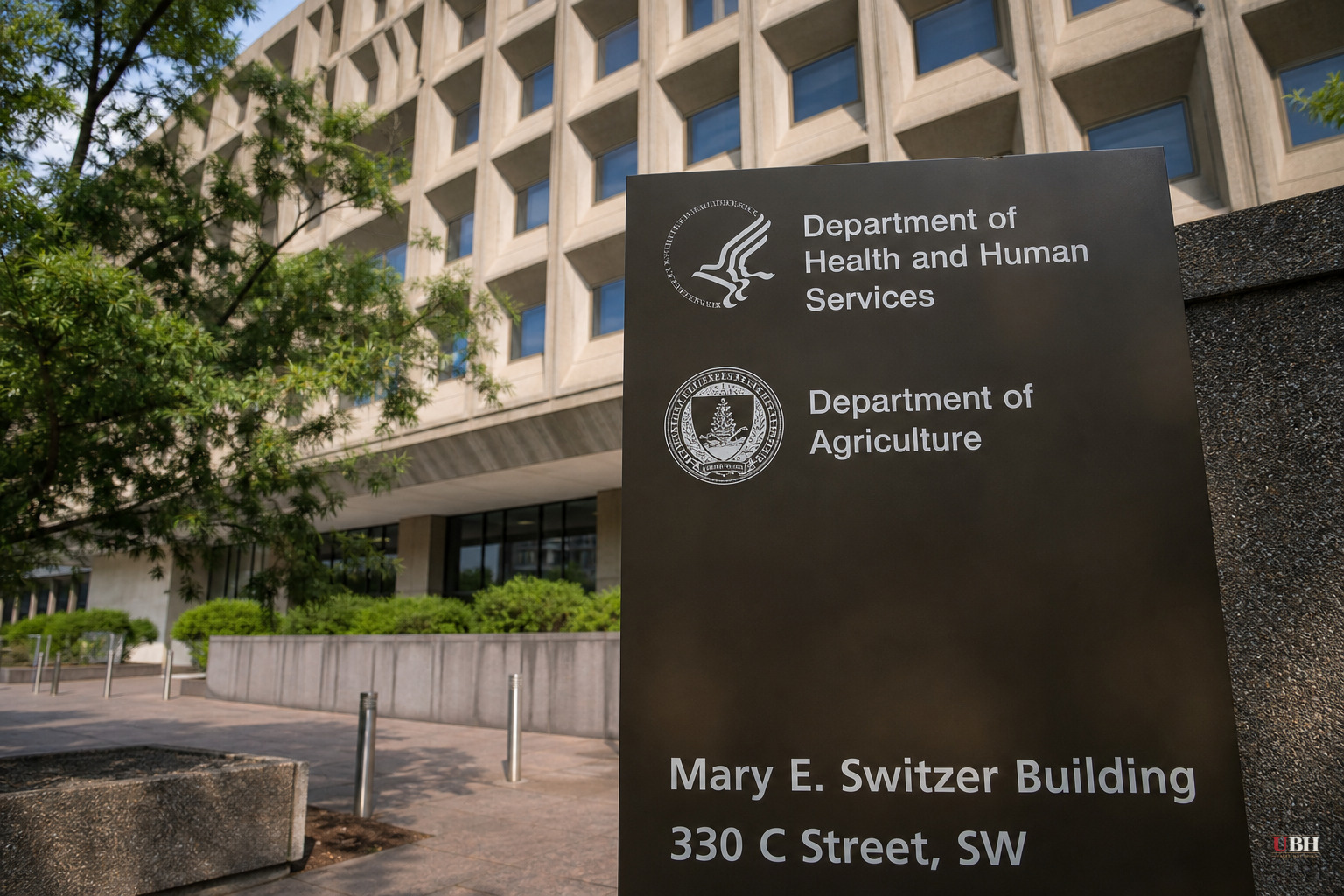
Since the Dietary Guidelines for Americans came out January 7 with their now-famous upside-down food pyramid pushing beef, whole milk and butter, the fight over how they got written has moved from nutrition circles into federal court.
On August 19, the Physicians Committee for Responsible Medicine filed a lawsuit against HHS and USDA in the U.S. District Court for the District of Columbia. PCRM is a Washington nonprofit that has pushed plant-based diets since 1985 and has sued over dietary guidelines before.
The lawsuit's core claim: the government ditched two years of work from an independent 20-member scientific panel and swapped in a nine-person group stacked with industry ties, then didn't tell anyone until the guidelines dropped.
What the record shows
The Dietary Guidelines Advisory Committee was seated under FACA rules back in January 2023. Over two years, its 20 members held public hearings and produced a 400-page scientific report in December 2024, recommending Americans lean harder into plant-based proteins, beans, and water over milk, according to PCRM's complaint.
That committee's job ended once the report was submitted. What happened next is the entire dispute.
According to PCRM's lawsuit, HHS and USDA instead relied on a separate nine-person panel that was never publicly disclosed, took about three months to produce a 90-page report plus a 418-page appendix, and was only revealed, names included, on the same day the final guidelines were released. PCRM says eight of the nine panelists had financial ties to groups including the National Cattlemen's Beef Association, National Dairy Council, American Egg Board, and National Pork Board. STAT News, reporting on the same filing, cited Food Dive's earlier reporting that multiple panelists also had ties to General Mills and Simply Good Foods, and said the review "at times relied on industry-funded science."
FACA requires that advisory panels not be "inappropriately influenced by the appointing authority or any special interest." PCRM argues that standard was blown through.
The industry-shift complaint, stated plainly
The concern raised by PCRM and echoed across MedPage Today, Food Dive, Green Queen and STAT is straightforward: an independent, two-year, publicly vetted scientific process got overridden in three months by a panel nobody vetted publicly, and the resulting guidance happens to favor exactly the industries whose representatives sat on it. If true as alleged, that's a real transparency problem regardless of what you think about steak.
The counterpoint deserves a fair hearing too. HHS Secretary Robert F. Kennedy Jr. has framed the new guidelines as "the most significant reset of federal nutrition policy in history," according to Food Dive, arguing the old guidance was itself captured by decades of processed-food and low-fat industry orthodoxy that correlates with, not against, rising obesity and chronic disease. Whether a panel with livestock-industry ties is inherently compromised, or whether it's simply representing a different, defensible reading of saturated-fat science than the outgoing Biden-era committee, is a legitimate scientific argument, not a settled fact. Nobody in these sources claims the beef-and-dairy-friendly conclusions are scientifically false, only that the process for reaching them broke the law.
PCRM isn't asking a judge to referee saturated fat science. The lawsuit is about process, whether HHS and USDA followed the Federal Advisory Committee Act, not whether butter is good for you.
Legal history working against PCRM
PCRM has been here before, and its track record is mixed. Food Dive noted the group won a similar fight in 2000, when a federal judge found USDA violated conflict-of-interest law in appointing that year's guidelines committee. But a more recent PCRM suit targeting the 2020 guidelines was tossed in 2023, after a judge ruled the guidelines don't count as "final agency action" and PCRM lacked standing to sue over them at all.
That standing question is the one to watch. If a judge applies the same logic this time, the case could get dismissed before anyone even gets to the FACA merits.
What's unresolved
HHS has not yet issued a public response to the lawsuit; STAT News said it reached out for comment. No court date has been set. The guidelines remain in effect and continue to shape federal programs including school lunches and WIC while the litigation proceeds. Whether a federal judge finds PCRM has legal standing to challenge the guidelines at all, given the 2023 dismissal on nearly identical grounds, will likely determine whether this case gets decided on the merits or thrown out before it starts.
Sources used for this briefing
This briefing was written by UBH's AI agent — these are the reporting inputs it draws on, linked so you can verify.


