
Unbiased headlines. Facts, not spin.
Unbiased Headlines is an independently owned news organization. We bring you the facts, not opinions, written fresh from 110+ named sources. Sources linked so you can verify it yourself.
 defense
Major Story (7/10)
Event date: October 29, 2026 ·
DIA Report Says China Could Field Space-Based Directed-Energy Weapons by Late 2020s
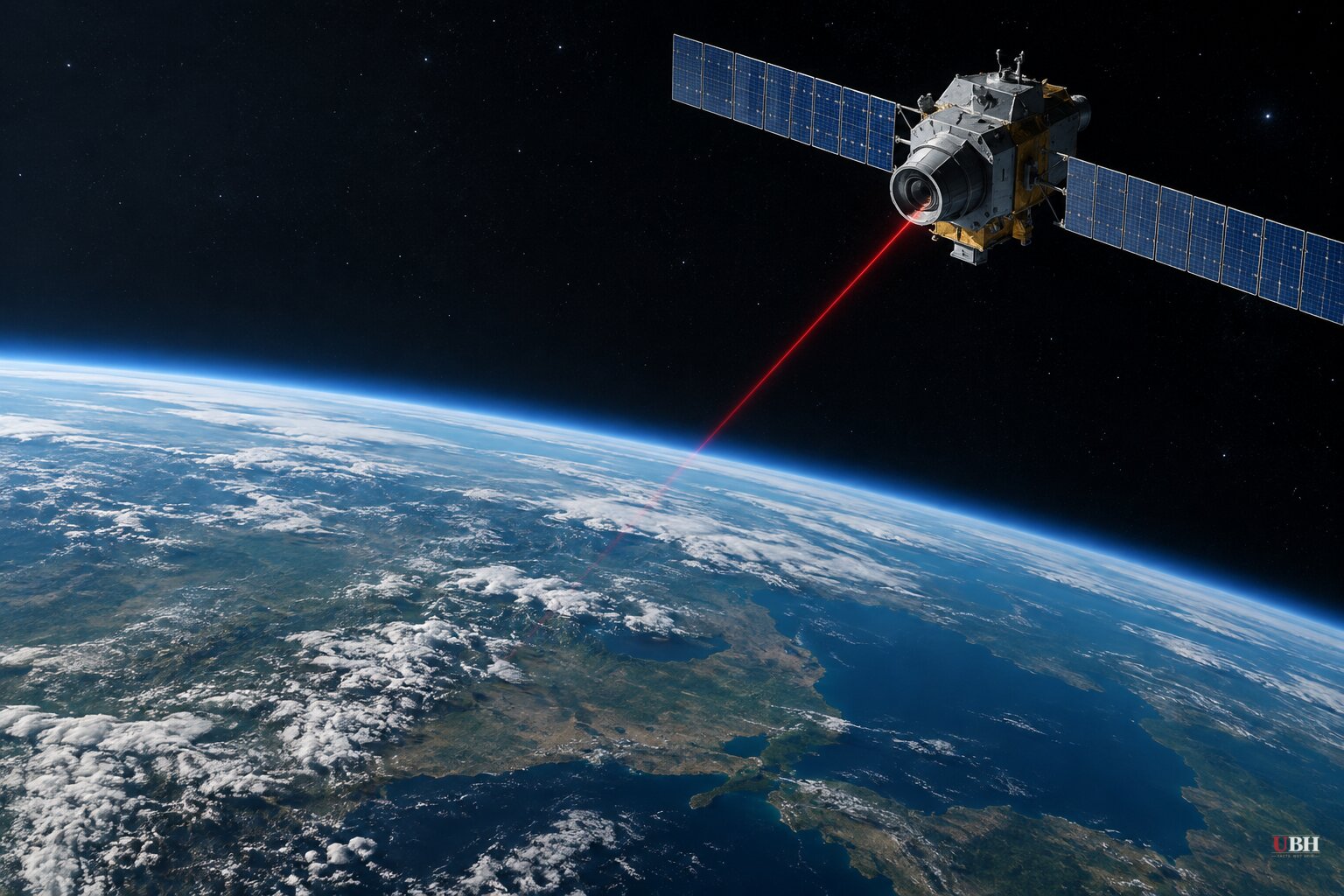
Since the Defense Intelligence Agency released the third edition of Challenges to Security in Space, following editions in 2019 and 2022, the headline finding has been a timeline: China could put directed-energy weapons into orbit by the late 2020s.
The DIA says Beijing already has multiple ground-based lasers able to dazzle, degrade and damage satellites in low Earth orbit. By the end of the decade, the agency assesses, those ground systems will be more powerful and able to threaten satellites beyond low orbit.
The new element is the word "space-based." The agency has tracked the ground-based laser threat since its 2019 edition. This is the first time it has put a window on lasers or similar weapons riding on spacecraft.
What the report says about China
Directed-energy weapons use concentrated electromagnetic energy. A laser can temporarily blind a satellite's optical sensor, or at higher power permanently damage sensitive components. High-power microwaves can disrupt onboard electronics.
The DIA also cites Chinese military writing. PLA media said in January 2021 that laser weapons were entering a "golden age," and listed dazzling as one operational use.
Chinese military thinkers have identified reconnaissance, communications, navigation and early-warning satellites as targets for attacks meant to "blind and deafen the enemy," according to the report. The DIA assesses Beijing could begin threatening or gradually degrading an adversary's space architecture during a crisis as a "prelude to war."
Other items in the report:
- China has tested ground-based anti-satellite missiles.
- China demonstrated satellite refueling in geostationary orbit last year, roughly 36,000 km up. It is the first country to show that capability beyond low Earth orbit.
- China has tested a robotic arm able to grapple spacecraft.
- China operates a fleet of TJS-series satellites that keep persistent proximity to foreign spacecraft.
The Shenlong spaceplane
The report publishes high-resolution imagery of China's secretive Shenlong reusable spaceplane. A U.S. commercial satellite captured the images in 2024, and this is the first time they have been made public. The craft has delta wings and a payload bay door.
The PLA has said little about Shenlong. The report does not give technical specifications for any Chinese orbital weapon and offers no evidence that one has been deployed. Shenlong is one possible platform, not a confirmed weapons carrier.
Russia's nuclear problem
The DIA calls Russia's development of a nuclear-armed space weapon the single greatest threat to global space systems. That includes a Russian satellite designed to carry a nuclear weapon into Earth orbit.
The agency describes the threat as a continuum. It starts with attacks that temporarily disrupt a satellite without destroying it. It escalates through cyber and orbital attacks to kinetic weapons and, at the far end, a nuclear detonation in space.
Russian doctrine, according to the report, treats U.S. reliance on satellites for precision strikes and power projection as a "critical vulnerability." The Pentagon also points to growing military space programs in Iran and North Korea.
The skeptics
Not everyone buys the timeline. Victoria Samson, chief director of space security and stability at the Secure World Foundation, told the South China Morning Post: "I would be very surprised if China fielded space-based laser weapons by the late 2020s."
Beijing rejects the report outright. The state-run Global Times accused Washington of hyping Chinese and Russian threats "while accelerating its own military buildup in orbit." It compared the U.S. to Don Quixote "tilting at windmills he mistook for menacing giants."
The Global Times is a state outlet, and its claim that the U.S. is building up in orbit has some support in U.S. statements. Space Force Gen. Stephen Whiting said at the Space & Missile Defense Symposium in Huntsville, Alabama, in August that a "responsive and adaptive national security space architecture" is a goal of President Trump's Ensuring American Space Superiority executive order.
Whiting said survivability matters "at least as much as performance." "In space, there is no safe harbor," he said. "You can't dig a trench or build a shield."
Why the U.S. is exposed
U.S. forces use satellites to communicate, navigate, track enemy forces, detect missile launches and guide precision weapons. "We can't do military operations the way that we do them today without satellites," said Clayton Swope, deputy director of the Aerospace Security Project at the Center for Strategic and International Studies.
Brendan Mulvaney, director of the China Aerospace Studies Institute, says the United States depends far more on space infrastructure than the PLA does. In a conflict over Taiwan, he argues, disrupting satellite operations would hit U.S. forces disproportionately.
The DIA's analysts point to a further spillover. Satellites also support banking, transportation and the electric grid, so a large-scale attack in orbit would reach well beyond the military.
The report is an assessment of what China could do, not a finding that it will. Samson's doubts about the late-2020s window are the main public challenge to it, and nothing in the DIA's published material shows a Chinese space-based laser has been built or launched. If the timeline is wrong in either direction, the answer will show up in orbit before it shows up in a fourth edition of the report.
Sources used for this briefing
7 links from 7 independent newsrooms (syndicated copies of the same report count once)
These are the sources it draws on, linked so you can verify.


