
Unbiased headlines. Facts, not spin.
Unbiased Headlines is an independently owned news organization. We bring you the facts, not opinions, written fresh from 110+ named sources. Sources linked so you can verify it yourself.
 defense
Notable (6/10)
Starmer, in First Speech Since Leaving No 10, Says US Shift on European Defence Is Permanent
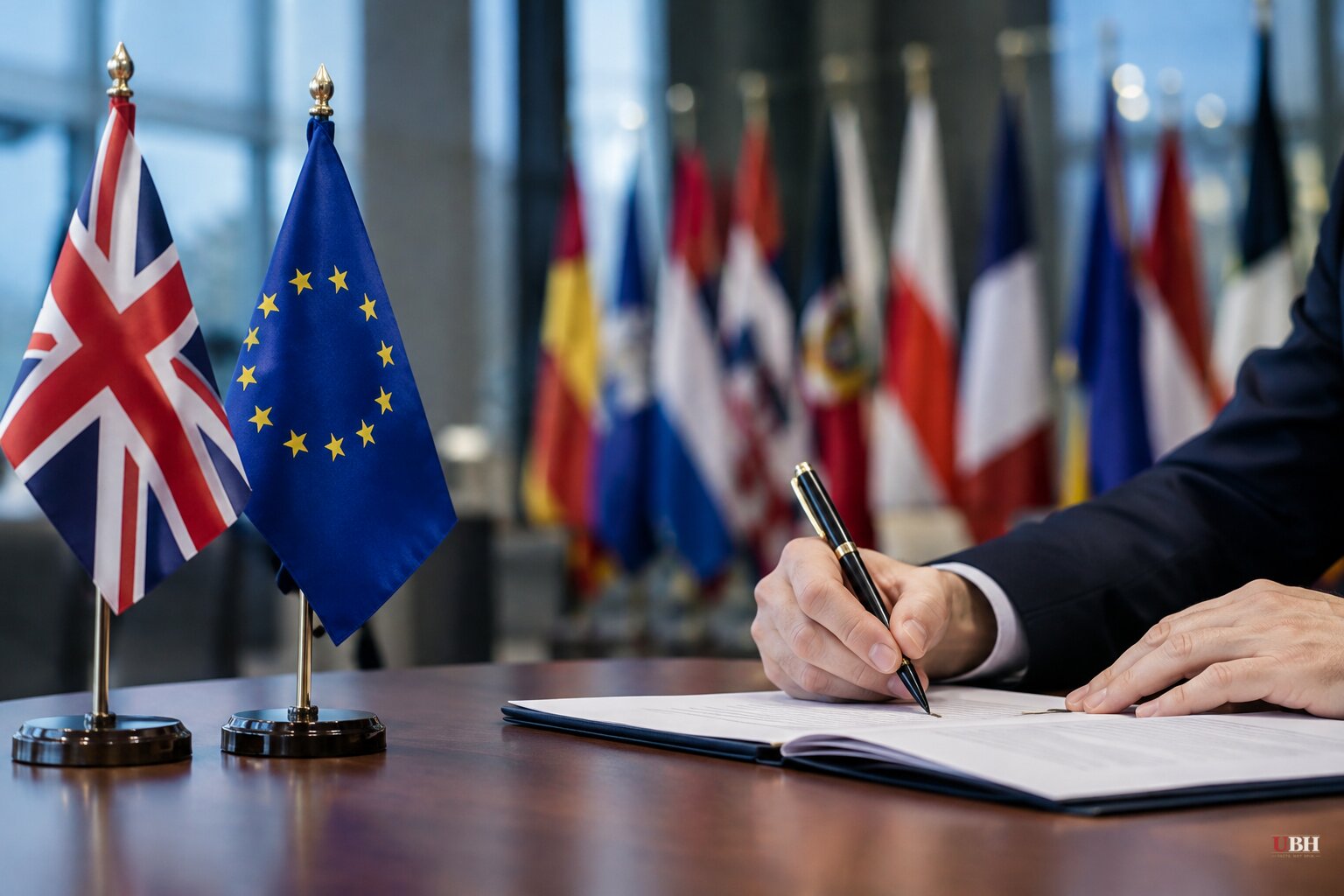
Since stepping down as prime minister in July, Keir Starmer has stayed out of the political arena. On Friday evening, Oct. 30, he broke that silence in Dublin with his first significant political intervention since leaving Downing Street.
Speaking at a British Irish Chamber of Commerce dinner at Dublin City Hall, Starmer said Europe has "twice been caught asleep." The first time was Russia's attack on Ukraine, which "exposed long-standing European weaknesses on defence and security." The second was when "President Trump made clear, once and for all, that the US will no longer bankroll our European security."
"We have to catch up," he said.
A permanent change, in Starmer's words
The core of the speech was a prediction about what comes after Trump. "This is about responding to a permanent change of affairs, not an aberration of the Trump presidency," Starmer said. "Things will not go back to the way they were before."
He said he had told European leaders the same thing in private.
Starmer did not write off Washington. "That doesn't mean the US relationship is no longer important," he said. "On the contrary, the military, security and intelligence alliance is far too strong for that." What it does mean, he argued, is enabling Europe to take on "far more responsibility for its own defence and security."
He said higher spending is only part of the answer. The challenge, he said, "goes far beyond that." He called for "pan-European co-operation and co-ordination" and "a common security framework as much as a common market," with the UK at its centre. The EU is changing to respond, he said, but "it cannot be the EU alone when Europe's periphery is core to its defence."
Starmer was at the dinner to receive honorary life membership from the chamber. He also met Taoiseach Micheál Martin, with whom he set up the annual UK-Ireland summit.
What the numbers look like
The spending gap is the backdrop. NATO members signed the Hague Commitment in 2025, pledging to raise defence and security-related spending to 5% of GDP. Trump has pushed that figure and says it stops American taxpayers from funding the defence of sovereign European nations.
The US accounts for more than $1 trillion of NATO's roughly $1.8 trillion in combined military spending, according to figures cited by Breitbart. The other 31 members together spend about $777 billion.
Washington has also started moving troops. The Pentagon announced in April that it would withdraw about 5,000 of the 36,000 US troops in Germany, around 15%, over six to 12 months. The Pentagon is also reportedly weighing further withdrawals of thousands of troops from European bases, according to International Business Times.
Trump had called NATO a "paper tiger" weeks before the Germany announcement. He has also voiced frustration over what he sees as thin European support for the US war with Iran and European resistance to his Greenland plans. Denmark struck a deal with the US in September that Trump says significantly expands American military access to the Arctic territory.
Europe's own line is less final
Not everyone in Europe is describing the shift in Starmer's terms. After a meeting of the E5 defence ministers from France, Germany, Italy, Poland and Britain in Paris this week, the group issued a joint statement.
"The United States is and will remain an indispensable Ally, and continued United States engagement in European security is essential to a strong and credible NATO," it said. The ministers pledged to coordinate closely with Washington as Europe takes on more responsibility.
French minister Catherine Vautrin said the five countries would work toward "a stronger Europe within an equally stronger NATO" through a plan developed in full transparency with the US. EU foreign policy chief Kaja Kallas, who took part, said Europe must keep modernising its forces.
The statement is a more cautious public posture than Starmer's. He is a private citizen now, and the E5 ministers are serving officials who have to keep Washington on side.
The Trump history
Starmer's own dealings with Trump are part of the context. The two built a positive relationship early in his premiership, which his team called one of his biggest successes. It soured when the UK refused to allow its bases to be used for the initial US-Israel strikes on Iran.
Trump then mocked Starmer as "no Winston Churchill" and repeated his criticism of Britain's response to the conflict. In July, Starmer said Trump had wished him well on his way out and that the two would "stay in touch."
Starmer left office amid falling approval ratings, poor local election results and a large internal rebellion from Labour MPs, according to International Business Times.
What comes next
Starmer's successor, Andy Burnham, said soon after taking office that he intended to be bolder about closer ties with the EU, according to The Guardian. Burnham has also said he wants a public debate on how the UK could move to a closer relationship with the EU after the next election.
Starmer has argued that Brexit did "deep damage" to the UK economy and said he wanted to be "more ambitious," including "closer economic cooperation" and "closer security cooperation."
The first scheduled test comes next month. Burnham will attend an EU-UK summit where new agreements on food standards, energy and youth mobility will be the main focus. Defence Secretary Wes Streeting, speaking at the meeting of European defence ministers in Paris this week, said they were "united and unwavering" in support for Ukraine in the face of Russian hostility.
Sources used for this briefing
7 links from 6 independent newsrooms (syndicated copies of the same report count once)
These are the sources it draws on, linked so you can verify.


