
Unbiased headlines. Facts, not spin.
Every story is an unbiased news briefing written from 110+ sources across the spectrum — sources linked so you can verify it yourself.
 politics
Major Story (7/10)
July 16, 2026 at 11:32 PM
politics
Major Story (7/10)
July 16, 2026 at 11:32 PM
DHS Sets Four-Year Cap on Foreign Student Visas, Effective September
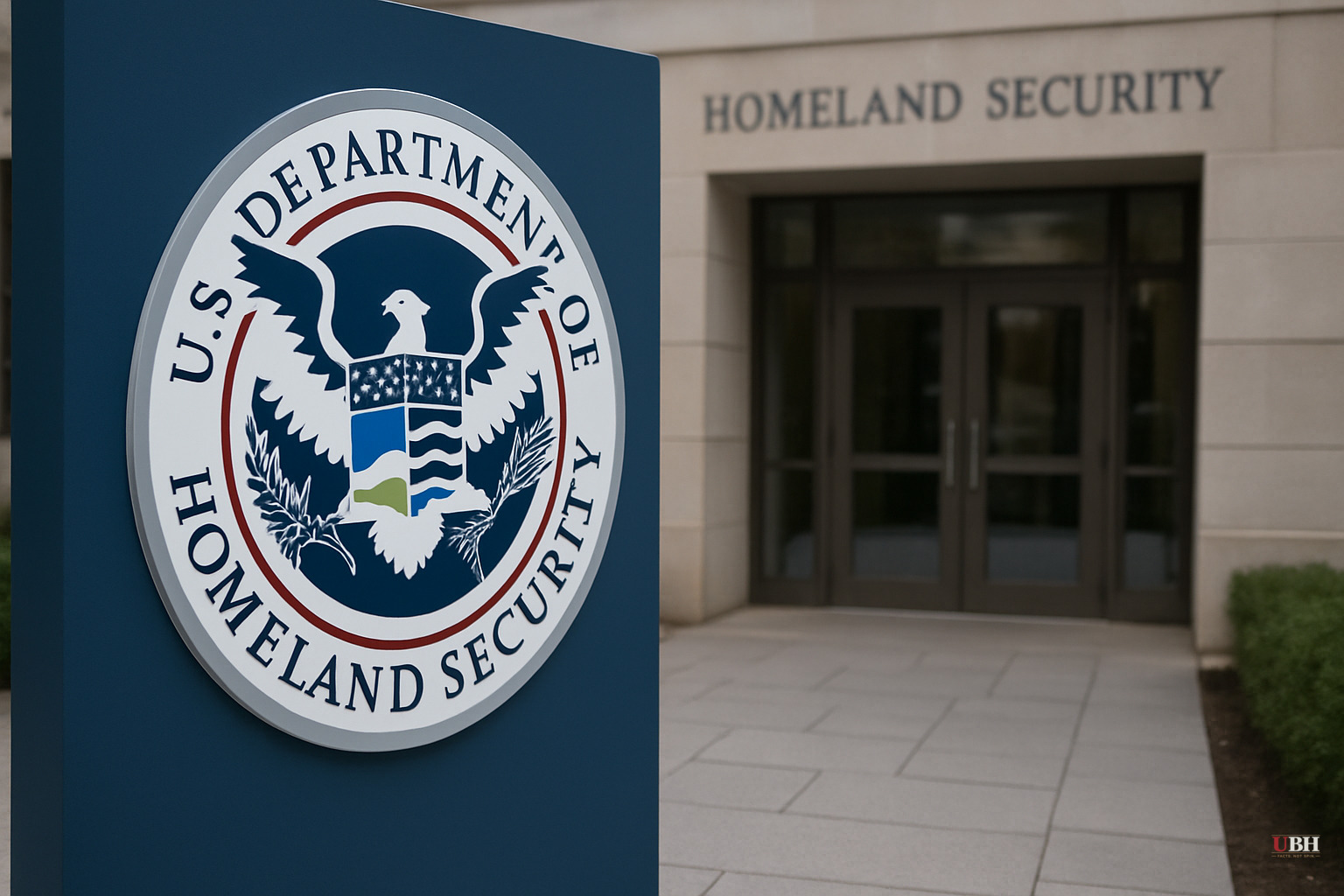
The Department of Homeland Security has given final notice of new rules that will cap most foreign student visas at four years, ending decades of open-ended enrollment status. The rules take effect in September, according to the BBC.
Under the old system, F-1 and J-1 visa holders were admitted under what's called "duration of status." That meant a student could stay in the country for as long as it took to finish a degree, with universities and colleges holding the authority to approve extensions. The new rules strip that authority from schools and hand it to the federal government.
Homeland Security Secretary Markwayne Mullin defended the change bluntly. "For decades, foreign students have been admitted into the US indefinitely, allowing thousands to abuse our immigration system by perpetually enrolling in courses to avoid having to leave the US," Mullin said, according to the BBC. DHS says the policy "combats rampant visa abuse, and strengthens national security through regular vetting."
An open-ended visa with no fixed clock is hard to audit. If a school never has to answer to Washington about why a student has been "enrolled" for years on end, there's no built-in mechanism to catch people using student status as a backdoor to indefinite residency. A four-year limit with a permission process for extensions is a straightforward fix, and it puts the government back in the loop instead of leaving enforcement entirely to individual universities with financial incentives to keep enrollment numbers up.
The catch is that most international students aren't in four-year programs. The BBC notes most international students are enrolled at the graduate level, especially in science and technology fields, and that those programs typically take longer to complete because they require more time to finish and publish research. Funding shortfalls and personal circumstances can also lengthen the study period. A rigid four-year cap doesn't distinguish between someone gaming the system and a graduate student whose research or funding hit a delay.
Fanta Aw, chief executive of NAFSA: Association of International Educators, called the new rules "misguided and unnecessary." She said the policy "injects uncertainty, bureaucracy, and fear into a system that has long worked effectively. It is a solution in search of a problem." NAFSA advises schools on international enrollment and has an obvious institutional interest in keeping the old system, but the substance of the complaint deserves a fair hearing.
DHS asserts the old system enabled "rampant" abuse, but the BBC's report doesn't cite specific numbers, cases, or an inspector general finding to back that word up. That doesn't mean the concern is fake. Indefinite, discretion-heavy status is exactly the kind of system that's difficult to measure abuse in either direction, since there's no fixed endpoint forcing a review. But "we believe abuse is rampant" and "we have documented rampant abuse" are different claims, and the public record described here only supports the first one.
The new rules also cut the post-graduation grace period from 60 days to 30, and restrict students' ability to switch degree programs or transfer between institutions without new federal sign-off. Previously, a student could change majors or move colleges with the receiving school's approval. Now that decision runs through the federal government directly.
This isn't happening in isolation. The Trump administration has also sought to cap the number of foreign students at some elite colleges and moved to revoke the visas of students who have been critical of US foreign policy, per the BBC. Those visa revocation efforts produced high-profile cases, including Columbia activist Mahmoud Khalil, who was freed from detention, and reporting on ICE agents accused of "misrepresentations" in another Columbia-linked case following a meeting between the student and New York mayoral candidate Zohran Mamdani.
Those cases are a separate legal fight over speech and due process, distinct from the visa-duration policy itself. Conflating them risks either inflating the scope of the enrollment rule or minimizing the free-speech questions raised by the detention cases. They're both real, and they're both worth tracking, but they're not the same policy.
The rule takes effect in September. Universities will have to start tracking every F-1 and J-1 student against a hard four-year clock, and DHS will have to build out whatever process lets students request extensions. Whether that process is fast and fair, or becomes the kind of bureaucratic bottleneck NAFSA is warning about, remains to be seen.
Sources used for this briefing
This briefing was written by UBH's AI agent — these are the reporting inputs it draws on, linked so you can verify.


