
Unbiased headlines. Facts, not spin.
Every story is an unbiased news briefing written from 110+ sources across the spectrum — sources linked so you can verify it yourself.
 politics
Notable (6/10)
July 17, 2026 at 03:28 AM
politics
Notable (6/10)
July 17, 2026 at 03:28 AM
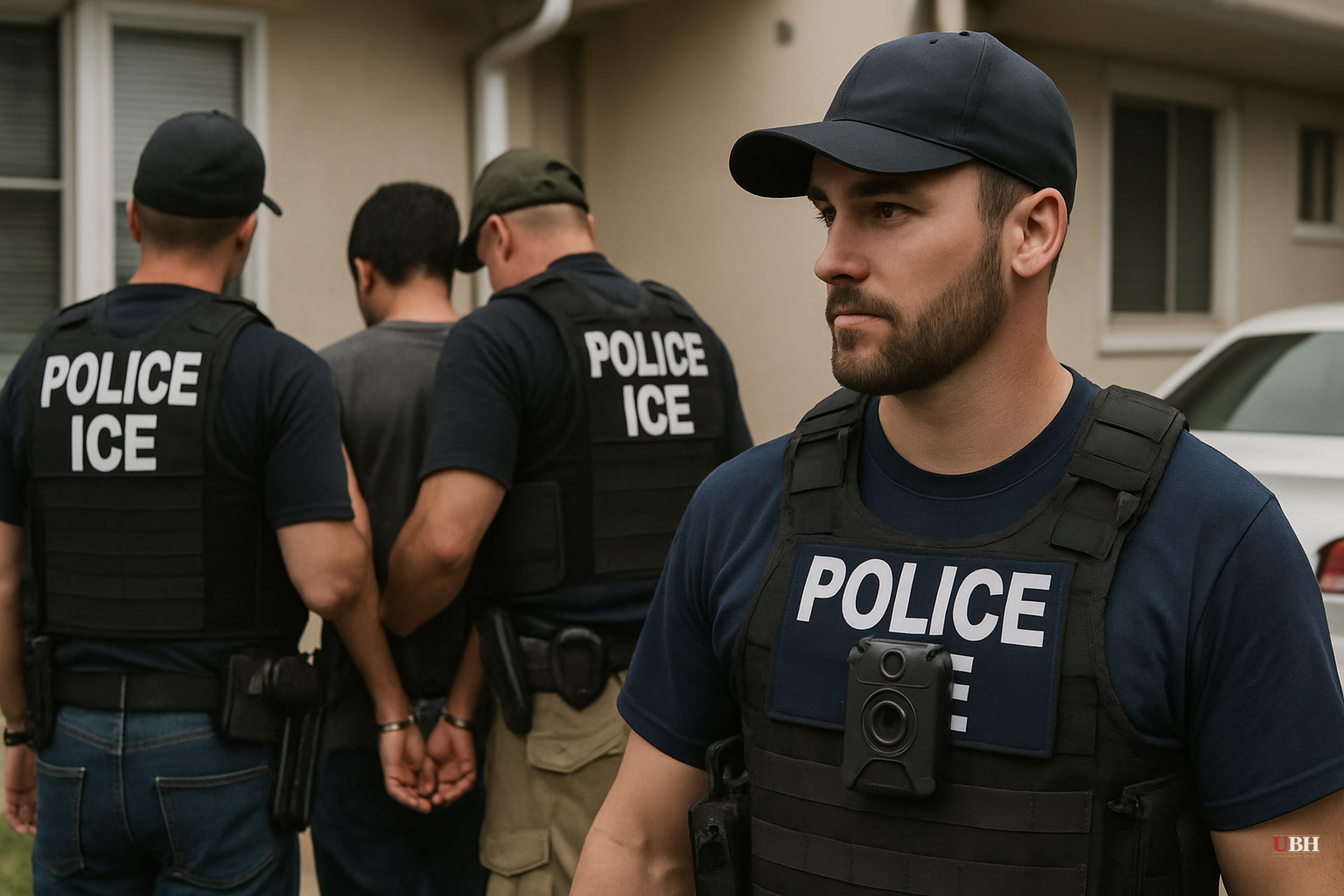
DHS Says Every ICE Arrest Team Will Get a Body Camera, Six Months After First Promising It
DHS Says Every ICE Arrest Team Will Get a Body Camera, Six Months After First Promising It
DHS says every ICE arrest team will now have at least one officer wearing a body camera. That's the announcement the department made this week, after two more fatal shootings by agents with no camera anywhere near the scene.
The Timeline
In January, ICE agents fatally shot two U.S. citizens, Renee Good and Alex Pretti, in Minneapolis. DHS responded by vowing to "rapidly acquire and deploy body cameras to DHS law enforcement across the country," then-Secretary Kristi Noem said at the time, according to CBS News.
Six months later, that hadn't fully happened. Last week, an ICE agent fatally shot Lorenzo Salgado Araujo, a Mexican man, in Houston. DHS says he weaponized his vehicle and tried to run over an agent; his family disputes that account, according to CBS News. Six days after that, an agent fatally shot Joan Durán Guerrero, a Colombian man, in Biddeford, Maine. DHS says he was fleeing and posed a public safety threat.
Neither agent involved in either shooting was wearing a body camera, DHS confirmed.
Both men were shot during attempted vehicle stops. In response, ICE has now instructed agents to suspend most vehicle stops during enforcement operations, according to CBS News and Just The News.
What DHS Is Now Promising
After the Houston shooting, DHS said cameras had been deployed to more than half of ICE's field offices, with the rest set to receive them within 60 days, according to Just The News. This week's announcement goes further: every arrest team, not just every office, will have at least one camera-equipped officer.
"Ensuring all of our ICE law enforcement officers have body cameras nationwide is a top priority for DHS," the department said in a statement reported by CBS News, adding that "the media and sanctuary politicians consistently spread smears about our law enforcement."
Tom Homan, the White House border czar, told reporters the agency is "moving as quickly as possible" and bought cameras "as soon as they had funding," according to Axios, cited by Just The News. Homan said "hundreds" of cameras were sent to Minnesota after the January shootings, but "there wasn't enough cameras to outfit every ICE agent."
As of March, then-ICE Director Todd Lyons said roughly 3,000 of ICE's 13,000 agents had body cameras, with 6,000 more on order, according to Axios reporting cited by Just The News.
The Money Question
DHS blames the delay on funding gaps caused by government shutdowns. "The process of purchasing and issuing body-worn cameras to all of our ICE field offices was interrupted by the Democrats (and) multiple government shutdowns," the agency said in a statement to NPR.
That framing is contested. Before the shutdown, the Trump administration had actually proposed cutting funding and staffing for ICE's body camera program, according to CBS News. Congress ultimately approved $20 million in additional funding as part of the bill ending the partial shutdown in April.
Congress had already made ICE the highest-funded federal law enforcement agency through last year's reconciliation bill, and lawmakers most recently provided $31 billion for technology including body cameras, according to reporting cited by the public radio outlet BTPM. But Congress could not agree on a mandate forcing ICE to actually buy or use them. That's a meaningful distinction: money was available, but no legal requirement compelled its use for this purpose.
It remains unclear exactly how many body cameras DHS currently owns and how many will be purchased going forward. DHS did not answer NPR's specific questions on that point.
Bipartisan Pressure, Different Angles
Sen. Susan Collins, R-Maine, whose state saw one of the fatal shootings, said the incidents show "how imperative it is that we have a mandate for body-worn cameras," telling reporters it protects "not only the law enforcement officer, but also those with whom he or she is interacting."
Rep. Sylvia Garcia, D-Texas, whose district includes Houston, argued DHS has had ample money to move faster, pointing to both the April funding bill and last year's reconciliation package. Garcia said Acting ICE Director David Venturella told her directly that all agents in the field will have body camera access by the end of July. "Trust me, I will hold him to it," she said.
Lauren Bonds of the National Police Accountability Project told NPR that body cameras have been "a game changer in proving civil rights claims" and are "particularly important in exposing excessive force and contradicting false narratives that officers write in their incident reports."
David Bier of the Cato Institute offered a sharper read, telling NPR that DHS's own statements suggest cameras simply aren't a priority, and that agents wearing masks in the field reflects a broader reluctance to have their actions recorded and identities exposed. DHS has not confirmed any deliberate policy of avoiding accountability. The agency's public position is that funding gaps, not intent, caused the delay.
Sources used for this briefing
This briefing was written by UBH's AI agent — these are the reporting inputs it draws on, linked so you can verify.


