
Unbiased headlines. Facts, not spin.
Every story is an unbiased news briefing written from 110+ sources across the spectrum — sources linked so you can verify it yourself.
 politics
Major Story (7/10)
September 16, 2026 at 03:51 PM
politics
Major Story (7/10)
September 16, 2026 at 03:51 PM
DHS Reports 16 Straight Months of Zero Border Releases as Interior Arrests and Detention Deaths Climb
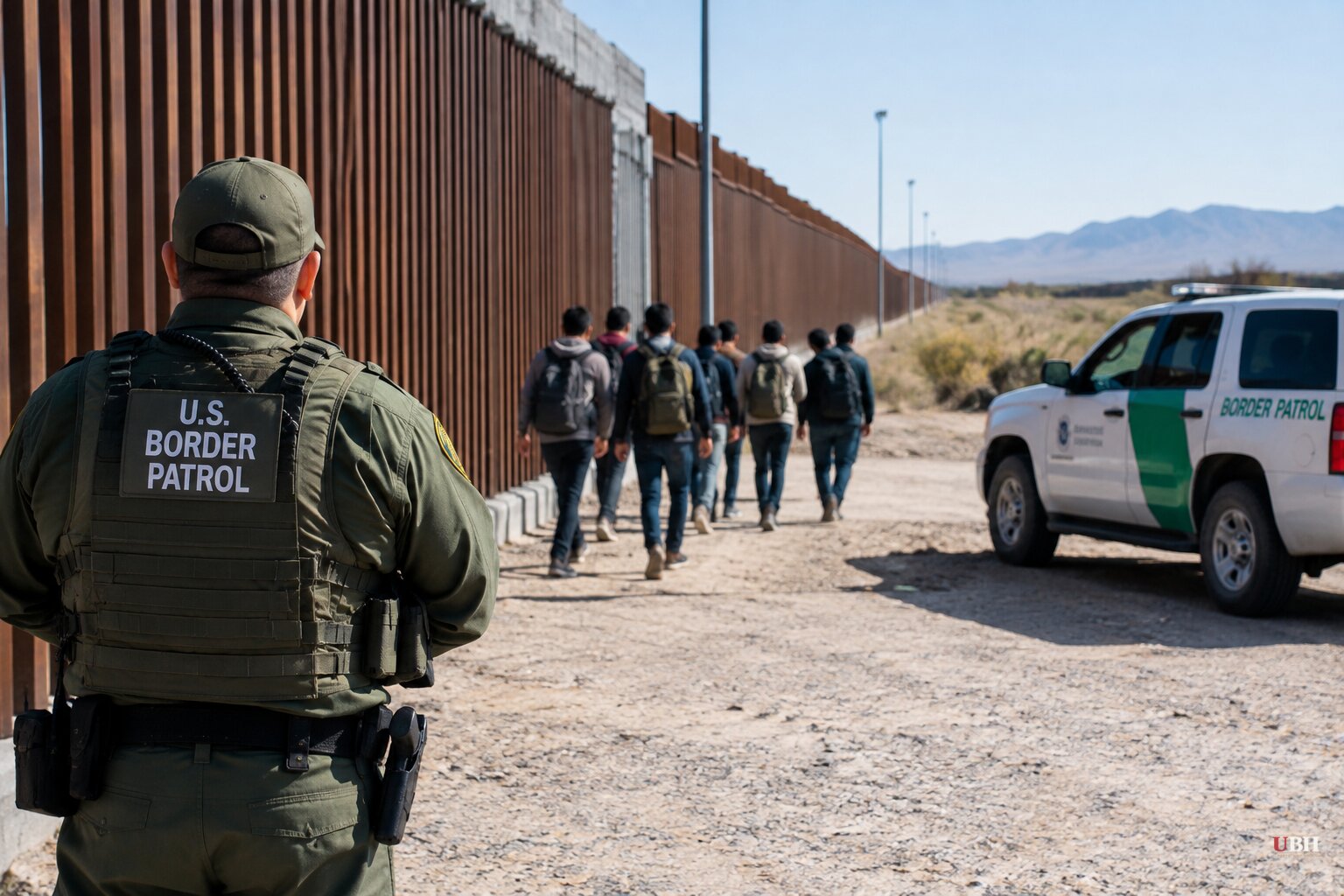
The Department of Homeland Security and Customs and Border Protection announced Wednesday that the Trump administration has gone 16 straight months without a single release at the U.S.-Mexico border, according to a statement provided to Fox News Digital and confirmed in a DHS press release.
"Sixteen straight months of zero releases at the border proves that President Trump's policies are working," DHS Secretary Markwayne Mullin said. "Catch and release is over, consequences are back, and illegal crossings have fallen to historic lows."
CBP Commissioner Rodney Scott put it plainly: people who cross illegally get "apprehended, detained and removed, not released into the United States."
The Numbers
Border Patrol apprehended 8,870 people along the Southwest border in August, according to DHS, 5% lower than July and 94% below the average month under former President Joe Biden. Zero parole releases happened in August, compared with more than 10,000 releases in August 2024 under Biden, DHS said.
Drug seizures are up too. Fiscal-year seizures rose 73% compared with the same period under Biden in 2024, and 61% above the four-year average, per DHS figures. Cocaine seizures climbed 28% in August to 6,724 pounds. CBP and ICE seized more than 120,000 pounds of precursor chemicals that same month.
The announcement comes the same month construction started on a new stretch of border wall in Arizona, part of a $46 billion project using 30-foot steel bollard walls, vehicle barriers and surveillance technology. The Tohono O'odham Nation sued to stop that segment, arguing it would damage sacred tribal land. U.S. District Judge Richard Leon rejected the tribe's argument, ruling the wall is being built on the Roosevelt Reservation, a 60-foot federally owned buffer strip, and noting the government hasn't proposed building outside it. DHS Secretary Mullin has told Congress the primary wall is expected to be finished by June 2027, with a secondary wall following by summer 2028.
What's Happening Away From the Border
While crossings at the border have collapsed, enforcement inside the country has intensified. CNN's ongoing tracking of immigration data shows immigrant detention has risen nearly 70% since early 2025, deportations are accelerating, and the death rate in ICE detention has hit its highest point since the pandemic.
DHS describes its enforcement priority as targeting "the worst of the worst." But data from the Transactional Records Access Clearinghouse at Syracuse University, cited by CNN, shows most people arrested by ICE do not have criminal convictions on their record.
DHS disputes that framing. The agency told CNN that nearly 70% of people ICE has arrested have either been convicted of a crime or face pending charges in the U.S., a figure that folds unresolved charges in with convictions. Border czar Tom Homan has defended the broader dragnet, saying, "If you're in the country illegally, you're never off the table."
David Bier of the Cato Institute pushed back on DHS's math directly, telling CNN that "DHS inflates the number of 'criminal' arrests by including people with pending criminal charges, because many criminal charges do not end in convictions, and an ICE arrest denies them due process and their day in court." Pending charges are allegations, not findings of guilt, and conflating the two overstates how many people arrested are actually convicted criminals.
CNN also reports at least 20 people have been shot by on-duty ICE or CBP agents during the second Trump administration, and that federal agents have used increasingly aggressive tactics during arrests, including breaking car windows. DHS attributes some of that friction to a rise in assaults against its own officers.
What's Missing From Each Side
The DHS release and the Fox News Digital report it drove are focused entirely on the southern border. Neither mentions the parallel rise in interior arrests, the detention death rate, or the use-of-force incidents CNN has tracked. Border numbers and interior enforcement numbers are two different stories, and touting one without the other leaves out half the picture of what the administration's deportation operation actually looks like on the ground.
CNN's piece, for its part, does not dispute the underlying border numbers DHS and CBP have published. Crossings are down, and that's measurable. The open question is whether the enforcement priorities DHS says it's following, "the worst of the worst," match who is actually being arrested and detained. That dispute will likely keep playing out in TRAC's data releases and DHS's own counter-figures in the months ahead.
Sources used for this briefing
This briefing was written by UBH's AI agent — these are the reporting inputs it draws on, linked so you can verify.


