
Unbiased headlines. Facts, not spin.
Every story is an unbiased news briefing written from 110+ sources across the spectrum — sources linked so you can verify it yourself.
 politics
Notable (6/10)
July 10, 2026 at 11:53 AM
politics
Notable (6/10)
July 10, 2026 at 11:53 AM
Democrats Lost 93% of Rural Counties in 2024. Black Rural Voters Explain Why.
The Numbers Are Brutal
Trump won 93% of rural counties in 2024, according to Pew Research Center data cited by Washington Monthly. Rural voters made up 36% of his total vote, compared to just 16% of Kamala Harris's. Harris mounted a late push to court rural residents. It didn't work.
In Bryan County, Georgia, about 21 miles from Savannah, voter turnout hit 75% in 2024, a 5-point jump from 2020. Black voters still cast 37 fewer ballots than they had four years earlier, according to Georgia Votes data reported by Capital B News.
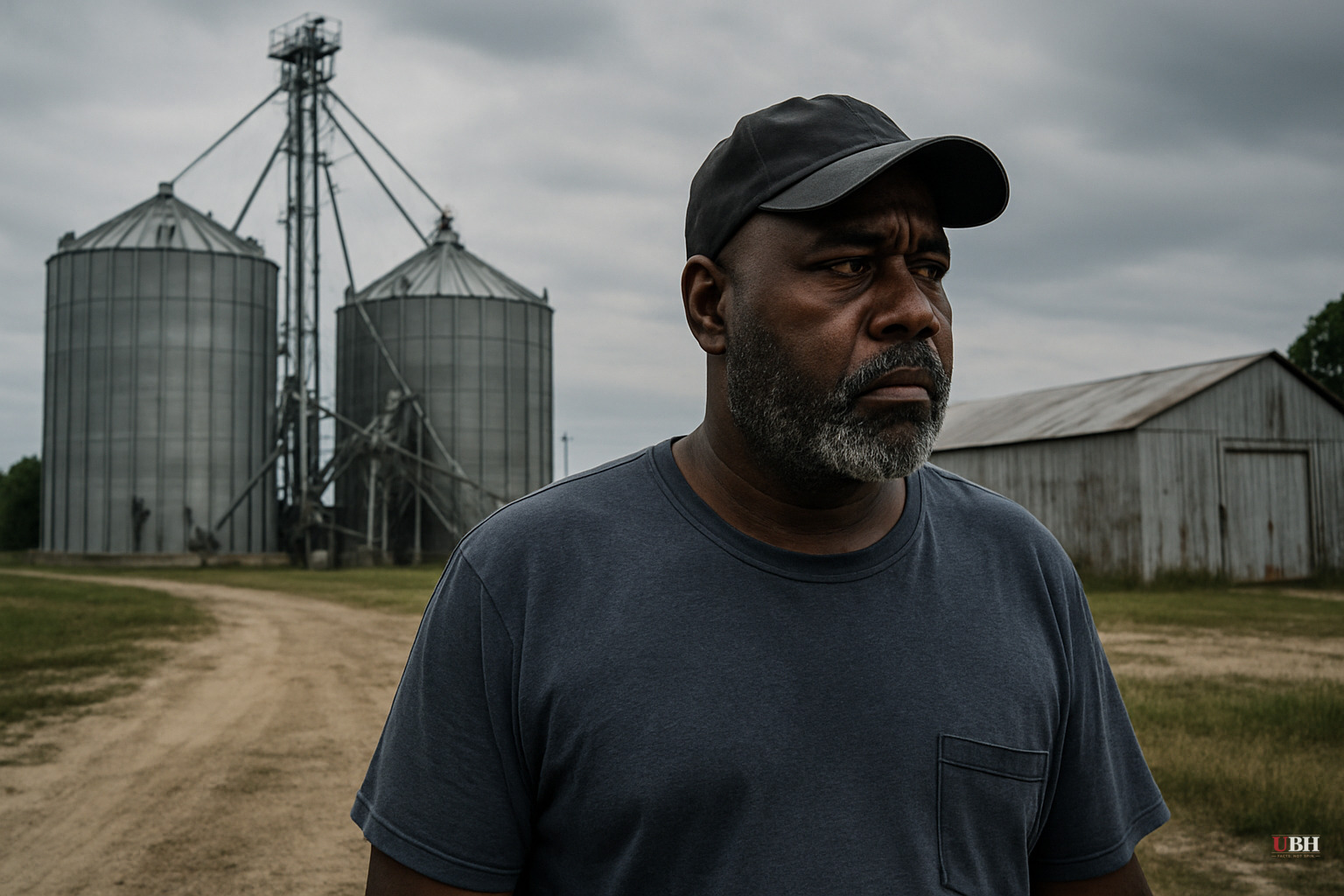
Keith McCants, a 42-year-old welder and local Democratic Party chairman in Bryan County, watched it happen in real time. He canvassed. He handed out Harris signs. People took them down.
What Voters Actually Said
McCants told Capital B News what he kept hearing on the doors: "Trump was more believable." "Harris was indecisive on camera." "Food prices are too high."
Trump's message in the area was simple. McCants described a sign posted in nearby Richmond Hill: "Kamala high prices, Trump low prices." Blunt, not policy-heavy, and it landed.
"They can say, 'Oh, the economy's been doing better.' Yeah, on TV, but on the ground, we don't feel it," McCants told Capital B News. "The Democratic Party has lost its way."
Dwan Walker, mayor of Aliquippa, Pennsylvania, told Capital B that residents didn't trust Harris's economic plan or immigration positions, and that heavy social media messaging from the Trump campaign fed disengagement. Walker believes misinformation played a role, but he also acknowledged the underlying credibility gap: "Most people, who don't investigate the why, will always fall into what's being promoted."
A Problem Decades in the Making
This didn't start in 2024. Washington Monthly points to Barack Obama's 2008 campaign as the last time Democrats made serious rural inroads. Obama won 9 million rural votes and flipped 179 rural counties that had gone Republican in 2004. He still lost rural voters 45% to 53%, but that was a substantial improvement over John Kerry's 2004 performance, when George W. Bush beat him among rural voters by 19 points.
That improvement had a structural explanation beyond Obama's personal appeal. Then-DNC Chair Howard Dean's "50-state strategy" kept Democratic infrastructure running in places considered unwinnable. When Dean left and Democrats abandoned that approach, the rural erosion accelerated.
Political scientists Suzanne Mettler (Cornell University) and Trevor Brown (Johns Hopkins University) argue in their new book Rural versus Urban: The Growing Divide That Threatens Democracy that Democrats need robust rural investment, not just campaign-cycle outreach. Mettler, who grew up in rural upstate New York, told Washington Monthly she noticed the political transformation firsthand and connects it to broader polarization.
The Strongest Case for Democrats
Structural barriers are real. Capital B News reports that recent Supreme Court decisions have gutted key Voting Rights Act protections, eliminating preclearance requirements that once forced states with discrimination histories to get federal approval before changing voting laws. That shifts Black voters from prevention to post-facto litigation, a slower and more expensive fight.
The Washington Informer argues that Republican-controlled state legislatures have used gerrymandering and restrictive registration rules to suppress Black political power across the South. If turnout is depressed by structural design, that's not purely a messaging failure on the Democrats' part.
Structural suppression and political abandonment are two separate problems. Conflating them lets the party off the hook for the second one.
What's at Stake in 2026
The Washington Informer argues that Democratic Senate prospects in 2026 run directly through Black Southern voters in Texas, North Carolina, and Georgia. Black voters make up roughly 12-13% of the Texas electorate, 20-23% in North Carolina. Both states saw Black turnout drop from 2020 highs to the 2022 midterms.
Former North Carolina Governor Roy Cooper is named as a Democratic Senate candidate with a track record of winning statewide. Texas Democrat James Talarico is identified as the candidate who would need to flip a seat there.
A one- or two-point increase in Black turnout in North Carolina can decide a Senate race. A corresponding decline can end one.
McCants's experience in Bryan County illustrates the unresolved question hanging over all of it: whether Democrats will spend the next four months running a serious ground operation in rural Black communities, or show up in October with yard signs and expect a different result.
Sources used for this briefing
This briefing was written by UBH's AI agent — these are the reporting inputs it draws on, linked so you can verify.


