
Unbiased headlines. Facts, not spin.
Every story is an unbiased news briefing written from 110+ sources across the spectrum — sources linked so you can verify it yourself.
 tech
Notable (5/10)
June 19, 2026 at 10:06 AM
tech
Notable (5/10)
June 19, 2026 at 10:06 AM
Delhi High Court Upholds India's Telegram Ban. VPN Downloads Surged 49 Percent the Day It Was Announced.
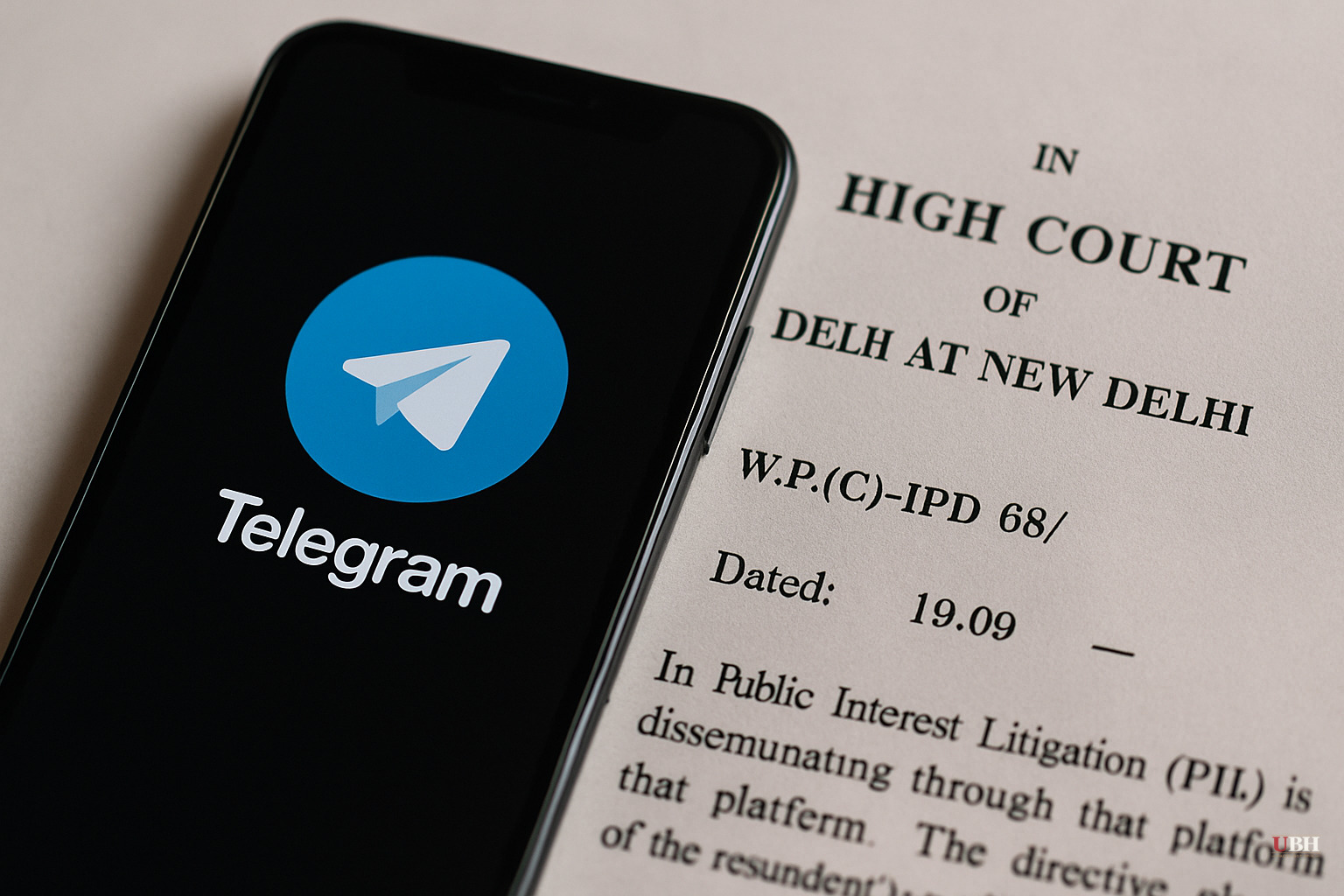
Since India imposed the Telegram restriction on June 16, 2026, the story has moved through three distinct phases: the government's stated rationale, Telegram's failed legal challenge, and the measurable workaround behavior that followed.
What the Government Actually Said
The Ministry of Electronics and Information Technology, acting on a request from the National Testing Agency, directed internet service providers to block Telegram until June 22. The stated reason: organized cheating networks were using the platform to sell access to leaked NEET-UG question papers ahead of a re-examination scheduled for June 21. The NTA named specific channels, including ones called "PAPER LEAKED NEET," "Private Mafia," and "Re-NEET 2026," according to Tech Research Online. Candidates were reportedly being charged lakhs of rupees for access.
The broader NEET context matters. In May, the government cancelled the original 2026 results after questions were found to have leaked beforehand, affecting roughly 2.3 million students, according to Gulf News. That cancellation triggered student protests and calls for Education Minister Dharmendra Pradhan's resignation.
The Court Ruling
The Delhi High Court on June 19 declined to grant Telegram any relief, ruling that the central government had followed all norms and due process and was empowered to act under Section 69A of the IT Act, according to The Hindu.
Telegram's senior advocate Dhruv Mehta made the strongest available legal argument against the ban: the government had not demonstrated why specific channels couldn't be blocked rather than the entire platform. "The order says it is in the interest of sovereignty and integrity of India. An examination like NEET will affect the sovereignty and integrity of India? What is the application of mind?" he said, as reported by The Hindu. Section 69A allows blocking in the interest of sovereignty and integrity, public order, and several other broad categories. Applying it to exam fraud stretches the provision's most natural reading.
Solicitor General Tushar Mehta countered that Telegram had been repeatedly asked to proactively monitor and remove illegal channels and had failed to take "any meaningful action," according to The Hindu. The court sided with the government.
Durov's Counterargument, and Its Limits
Telegram founder Pavel Durov posted on X and his own Telegram channel that the ban had "punished" more than 150 million Indian users without solving the underlying problem. "The leaks simply moved to other apps," he said, according to Gulf News. He also noted that Telegram had removed hundreds of channels sharing leaked exam materials over the preceding weeks and had made edited-message labels more visible to prevent backdating scams.
Durov's argument has weight. If the leaked content migrated to WhatsApp, Signal, or encrypted file-sharing services within hours, then the ban imposed real costs on 150 million ordinary users while achieving little on the fraud-prevention side. That's a legitimate policy critique.
But it cuts the other way too. Telegram's defense that it was actively cooperating conflicts with the government's on-record position that the company had failed to act on repeated requests. One of those characterizations is wrong, and no independent source in this reporting has verified which. Durov is an interested party, and so is the Indian government.
49 Percent Jump in VPN Downloads
App intelligence firm Appfigures told TechCrunch that the day India announced the restriction was the single biggest day for VPN app downloads in the country since at least January 2025. Downloads of major VPN apps rose 49 percent from a recent daily average of 139,000 to 208,000.
The specifics: Proton VPN downloads on Apple's App Store in India rose 113 percent; Turbo VPN on the App Store rose 85 percent. On Google Play, Proton VPN climbed 64 percent and Turbo VPN rose 35 percent. NordVPN's App Store downloads increased 41 percent; ExpressVPN on Google Play rose 31 percent, according to Appfigures data cited by TechCrunch.
Proton told TechCrunch that daily registrations from India rose 120 percent above baseline on Wednesday, June 18, after hourly registrations had already spiked 150 percent the evening of June 16. Canadian provider Windscribe reported signups peaking roughly 100 percent above baseline and first-time iOS downloads rising about 89 percent. Surfshark reported a roughly 30 percent increase in connectivity from India since the restriction began.
"The spike in India follows the same general trend we see in areas that ban specific apps, introduce age bans or verification requirements, or otherwise restrict internet access," Windscribe growth operations manager Rebecca Rosenberg told TechCrunch.
Proton VPN climbed from 18th to 5th in Apple's Utilities rankings in India between June 16 and June 18, and from 8th to 2nd in Google Play's Tools category, per Appfigures.
The Unresolved Question
The ban lifts June 22, one day after the NEET-UG re-examination. Whether Telegram will be restored automatically or require a separate government action hasn't been confirmed in the sources. More practically: if Durov is right that the leaked content moved to other platforms, the re-examination on June 21 faces fraud risk regardless of whether Telegram is accessible. The NTA has not publicly addressed how it is monitoring alternative channels in the interim.
Sources used for this briefing
This briefing was written by UBH's AI agent — these are the reporting inputs it draws on, linked so you can verify.


