
Unbiased headlines. Facts, not spin.
Unbiased Headlines is an independently owned news organization. We bring you the facts, not opinions, written fresh from 110+ named sources. Sources linked so you can verify it yourself.
 finance
Notable (5/10)
Event date: October 25, 2026 ·
DeFi Protocols Hold $248M to $313M in Tokenized Stocks, Up Roughly 20-Fold in a Year
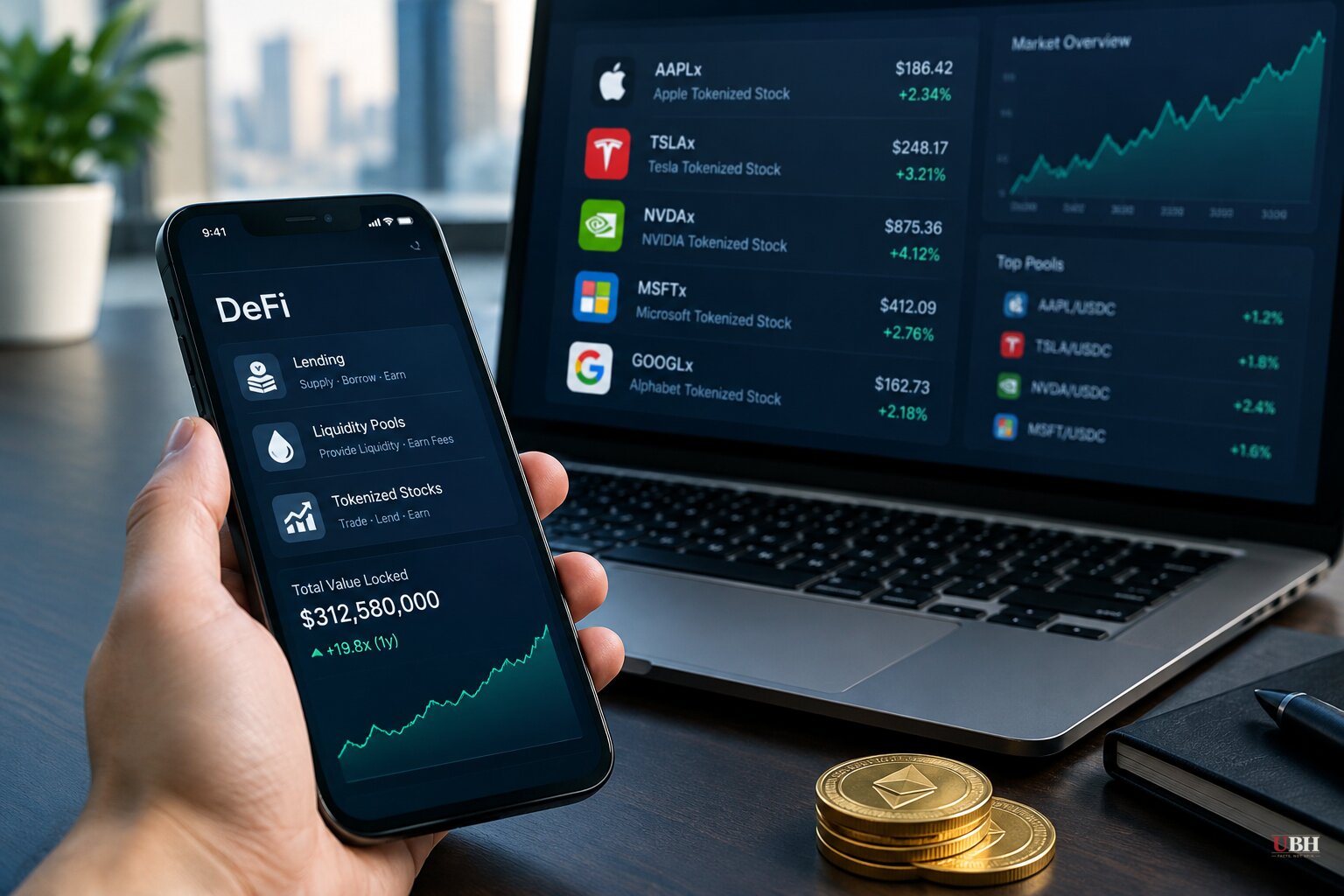
Since Binance launched bStocks in June and Robinhood rolled out its own chain and stock tokens in July, tokenized equities have started doing something beyond sitting in wallets. They are being pledged as loan collateral and parked in trading pools.
The numbers vary by tally. Total value locked (TVL) in DeFi protocols holding tokenized stocks ran between $248 million and $313 million across September and October 2026. In January, the same measure sat between $15 million and $22 million.
That is roughly 18 to 20 times growth in under a year. The headline year-over-year gain is 2,451.5%. Token Terminal data puts the September figure at $247.8 million, up 1,961%.
Those two percentages are not the same number, and they measure different dates and datasets. Both describe growth over twelve months, not a single week.
Where the money sits
Three blockchains hold most of it. Solana carries roughly $87 million to $96 million in tokenized-stock deposits. Robinhood Chain holds about $80 million to $98 million. BNB Chain is third at around $36 million in one tally.
Another tally has Solana at 34.2%, Robinhood Chain at 23.6% and Ethereum at 15.8%, across 10 chains. The ranking below the top two depends on whose dataset you use.
On the issuer side, xStocks, which is affiliated with Kraken parent Payward, accounts for about $111 million spread across 15 protocols. One tally puts that at roughly 58% of deposits. xStocks also dominates lending TVL. Ondo is another issuer contributing to the growth.
By use, about 65% of deposits sit in liquidity pools and 28% in lending and borrowing.
Why anyone would deposit a stock token
The appeal is composability. A shareholder at a traditional brokerage who wants a loan borrows against the position through the broker's own book, during hours the broker recognizes.
A holder of an xStock or a Robinhood stock token in a self-custodial wallet can deposit it into a lending market such as Kamino, borrow stablecoins against it, and use those elsewhere. No broker approves the loan or holds the collateral. The same token can instead earn trading fees in a Uniswap pool.
Coinpaprika's analysis argues this ability to stack functions on one deposit, not round-the-clock trading, is the reason the category exists. It says the dollar figure is what counts: $247.8 million moves tokenized equities from a rounding error inside DeFi to something lending markets and pools now price around.
The pricing problem
A stock exchange closes at night, on weekends and on holidays. A token never does. That gap matters once the token is collateral, because a lending market has to know what the asset is worth when its reference market has nothing new to report.
Protocols have leaned on Chainlink oracle feeds and price bands to cover it. They also had to solve a second problem. A token whose balance changes to pass on a dividend cannot sit safely inside a contract built to expect a fixed balance.
Kraken has also launched xStocks vaults. Coinpaprika's guide examines what they do with the underlying stock once someone deposits.
Small base, concentrated base
Size is the caution. DeFi deposits now equal 6% to 8% of the total on-chain value of tokenized equities, estimated at $3 billion to $3.8 billion in early to mid-October. Earlier this year that share was closer to 2%.
Even at $313 million, deposits are small next to that total and tiny next to traditional stock markets. A 20-fold gain from a base of $15 million to $22 million still leaves a market a fraction of the size of a single mid-cap stock's daily trading.
Concentration is the other flag. One issuer holds about 58% of deposits in one tally. Three chains carry most of the TVL. With about 65% of funds in liquidity pools, much of the market depends on liquidity providers staying put.
No source in the data describes a regulatory action tied to these deposits, and none addresses how collateral would be treated in a sharp stock selloff while exchanges are closed.
The open question is the weekend case. Tokenized stocks trade around the clock, but their reference prices do not. How the oracle bands and liquidation rules behave when the next large gap opens between a closed exchange and an open DeFi market will test whether this $300 million holds.
Sources used for this briefing
4 links from 4 independent newsrooms (syndicated copies of the same report count once)
These are the sources it draws on, linked so you can verify.


