
Unbiased headlines. Facts, not spin.
Every story is an unbiased news briefing written from 110+ sources across the spectrum — sources linked so you can verify it yourself.
 tech
Major Story (7/10)
August 4, 2026 at 06:05 PM
tech
Major Story (7/10)
August 4, 2026 at 06:05 PM
DeepSeek Undercuts Rivals on Price as Trump Team Drafts Ban on Chinese Data Center Gear
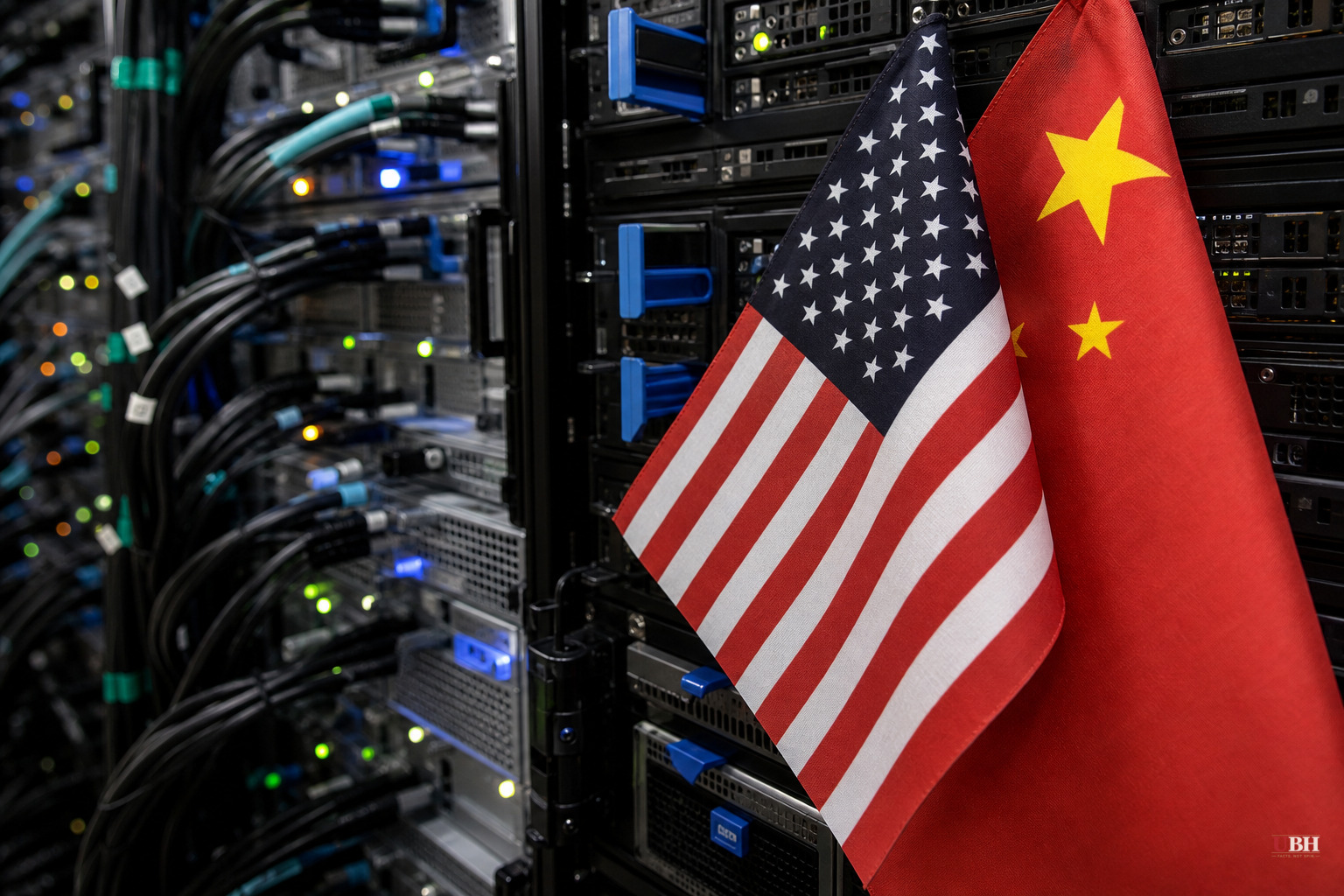
DeepSeek just proved it can still win on price. The Chinese AI startup released its V4-Flash model last Friday, and according to research firm Artificial Analysis, it's now the cheapest well-known AI model on the market by a wide margin.
The numbers are stark. V4-Flash costs 14 cents per million input tokens and 28 cents per million output tokens. Artificial Analysis calculated its average cost per benchmark test at three cents. Compare that to 86 cents for Moonshot AI's Kimi K3, $1.86 for OpenAI's GPT-5.6 Sol, and $3.15 for Anthropic's Claude Fable 5. That means DeepSeek is running the same tests for roughly one-hundredth the cost of Anthropic's flagship model.
Cost-per-test matters more than headline pricing because it accounts for how many steps a model needs to grind through to get an answer. A cheap model that takes forever to think isn't actually cheap. DeepSeek's version is both cheap and fast, according to the benchmark data.
But cheap doesn't mean smartest. V4-Flash scored 50 out of 100 on Artificial Analysis's Intelligence Index, a composite of nine benchmarks covering coding, reasoning, and workplace tasks. That ties Google's Gemini 3.6 Flash and lands one point behind Meta's Muse Spark 1.1 and Z.AI's GLM-5.2. Moonshot's Kimi K3 scored a 57. Anthropic's Claude Opus 5, Claude Fable 5, and OpenAI's GPT-5.6 all beat V4-Flash by nine points or more.
So the tradeoff is obvious: DeepSeek is giving up some raw intelligence for a massive cost advantage. For businesses trying to deploy AI at scale on a budget, that math works. DeepSeek is also building a more powerful V4-Pro model, though it hasn't announced a release date, according to Reuters.
DeepSeek isn't alone in the race anymore. Alibaba separately rolled out its largest model yet, Qwen3.8-Max, putting it in direct competition with Moonshot's recent release. ByteDance, MiniMax, and Z.AI are all fighting for the same global customers. China's AI sector has gone from DeepSeek's one-man show in early 2025, when its R1 model triggered a sell-off in US tech stocks, to a crowded field of domestic rivals all undercutting each other and Silicon Valley at the same time.
Washington Moves on the Hardware Side
While China's AI labs fight a price war on software, the Trump administration is working the hardware angle. Four people familiar with the matter told Reuters that the Federal Communications Commission is drafting a ban on US imports of new models of Chinese data center components, specifically optical transceivers. These devices move data through fiber-optic cables inside data centers at light speed.
Officials hope to publish the rule this year. The goal is straightforward: stop Chinese firms from getting components embedded in the infrastructure that trains and runs American AI models, where they could theoretically be used to steal data, plant malware, or disrupt service.
Divyansh Kaushik, an AI policy expert at Beacon Global Strategies, told Reuters the risk is real. "Transceivers definitely pose a risk," he said, adding that as data center construction scales up, the supply chain needs to be secured "from the get-go."
The administration's real fear is repeating the Huawei problem. Huawei's telecom gear got so deeply embedded in US infrastructure that ripping it out later proved slow, expensive, and still incomplete years later. China hawks in the administration want to block Chinese optical transceiver makers, a group that would likely include China's Zhongji, before that happens again with data centers.
The Chinese embassy in Washington pushed back hard. It urged the US to "heed the objective and rational voices of the business communities in both countries" and to "stop smearing Chinese companies and threatening them with sanctions." The embassy warned that "China will take all necessary measures in response to any action that causes material harm to its interests."
Broad import bans on components can raise costs for US data center operators and invite retaliation that hits American exporters. Reasonable people can argue the FCC should target only components with demonstrated security flaws rather than blanket-banning by country of origin. But the administration's calculus, per Kaushik's framing, is that waiting for proof of a breach is exactly how Huawei got so hard to remove in the first place.
Neither the White House nor the FCC responded to Reuters' requests for comment. The sources cautioned the FCC could still modify or shelve the restriction entirely. The FCC's independence isn't what it used to be. The Supreme Court in June backed Trump's firing of a Democratic Federal Trade Commission member, a ruling that expanded presidential power over regulatory agencies generally, including the FCC.
Whether the rule survives in its current form, and how Beijing actually responds if it does, remains unresolved. No draft text has been published, and no formal FCC vote has been scheduled as of now.
Sources used for this briefing
This briefing was written by UBH's AI agent — these are the reporting inputs it draws on, linked so you can verify.


