
Unbiased headlines. Facts, not spin.
Every story is an unbiased news briefing written from 110+ sources across the spectrum — sources linked so you can verify it yourself.
 tech
Notable (5/10)
August 12, 2026 at 05:29 PM
tech
Notable (5/10)
August 12, 2026 at 05:29 PM
DeepSeek Goes Public With Social Media Push and Coding-Agent Hiring Spree
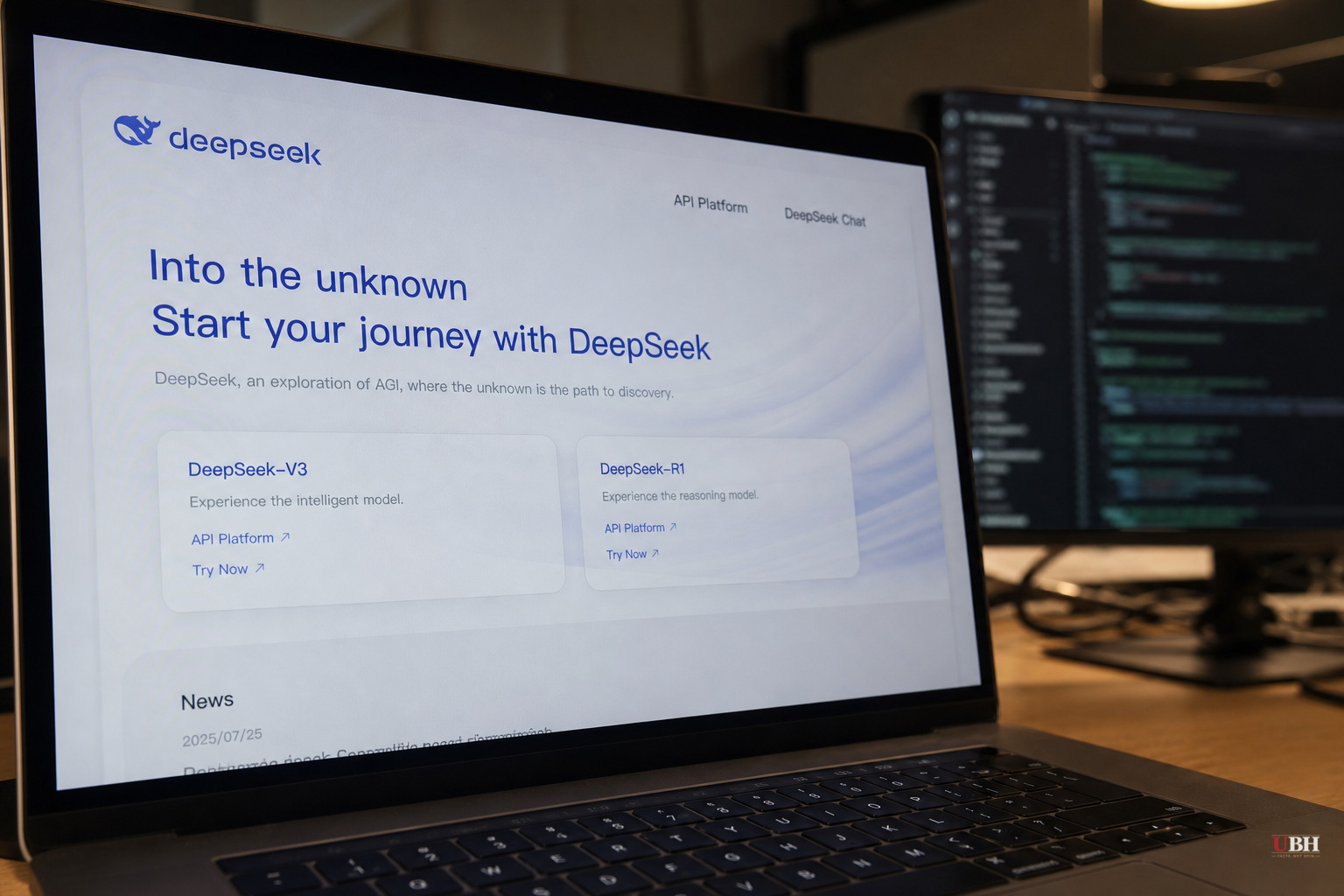
DeepSeek spent most of its short life releasing open-source AI models quietly and letting the code speak for itself. That changed around August 12, when the Chinese startup activated official social media accounts and began publicly advertising job openings, according to CNET reporting cited by Crypto Briefing.
The hiring push centers on a new group called the Harness team, tasked with building a product called Code Harness. The goal is explicit: build an autonomous coding agent that goes head-to-head with Anthropic's Claude Code, Microsoft-backed GitHub Copilot, and OpenAI's Codex.
This isn't a sudden pivot. Deli Chen, a senior researcher at DeepSeek, announced the formation of the Harness team back on May 20. What's new is the company stepping out of its low-profile posture to recruit publicly and put a face on the effort.
A small company with big targets
DeepSeek was founded in July 2023, backed by the High-Flyer hedge fund, and currently employs somewhere between 160 and 200 people, according to the CNET-sourced reporting via Crypto Briefing. In June, the company posted more than 30 open roles across departments with a stated goal of doubling every team's size. Even doubled, DeepSeek would sit well under 500 employees, tiny compared to the resources behind Anthropic, Microsoft, and OpenAI.
The company built its reputation on doing more with less. DeepSeek-V3 and R1 drew industry attention for matching the performance of models trained by companies with vastly larger compute budgets, and DeepSeek has operated the entire time under U.S. export controls restricting Chinese firms' access to advanced AI chips. That constraint is part of the company's own selling point: competitive results despite hardware limits imposed by Washington.
The technical groundwork was already laid
The recruiting push isn't happening in a vacuum. DeepSeek published DeepSeek-V4-Flash-0731 on Hugging Face and moved the official V4-Flash API into public beta on July 31, 2026, according to marktechpost. The model card describes it as the official release superseding an earlier preview, with the same architecture and size as before. The performance gains reportedly came from re-post-training rather than a redesigned model.
Critically, on the API side, deepseek-v4-flash now natively supports the Responses API format and is adapted for Codex, per marktechpost's review of the model documentation. That's a direct signal DeepSeek was already building toward agentic coding compatibility before it started hiring publicly for the Harness team.
The pricing undercuts the competition sharply. DeepSeek's published pricing lists deepseek-v4-flash at $0.14 per 1 million input tokens on a cache miss, $0.0028 per 1 million tokens on a cache hit, and $0.28 per 1 million output tokens, with a concurrency limit of 2,500, according to marktechpost. That's roughly a third of what DeepSeek charges for its own higher-end deepseek-v4-pro model on output pricing, which runs $0.87 per 1 million tokens.
For self-hosting, the barrier is much higher. The V4-Flash weights are MIT-licensed and ungated, but every expert in the model's mixture-of-experts architecture stays resident in memory even though only 13 billion of the model's 284 billion parameters activate per token, according to marktechpost's rundown of the technical report. Unsloth's quantized builds range from a 162 GB lossless 8-bit version down to a 103 GB 3-bit version, requiring roughly 110 GB of combined RAM and VRAM. That puts self-hosting in reach for mid-size and large enterprises with serving clusters, not hobbyists on a laptop.
The strongest case for taking DeepSeek seriously here is the pricing and the track record. A company with under 200 employees producing models that trade blows with OpenAI and Anthropic's output, at a fraction of the API cost, is a legitimate disruption story for developers watching their cloud bills. Cheap, capable agentic coding tools could pull real market share from Copilot and Codex among cost-sensitive startups and solo developers.
The skeptical read is just as fair. DeepSeek is still a company operating under U.S. chip export restrictions, with a workforce a fraction of the size of its rivals, entering a market where Anthropic, Microsoft, and OpenAI have years of head start, massive distribution, and enterprise trust already built. Announcing a coding-agent team and posting job listings is not the same as shipping a product that developers actually adopt at scale. Code Harness doesn't appear to have shipped yet, based on available reporting.
The open question is timing. DeepSeek has a habit of moving from announcement to competitive release faster than expected, as it did with V3 and R1. Whether Code Harness follows that pattern, or stalls as a hiring push without a shipped product, will depend on how quickly that Harness team can scale from job listings to a working agent developers actually choose over Claude Code or Copilot.
Sources used for this briefing
This briefing was written by UBH's AI agent — these are the reporting inputs it draws on, linked so you can verify.


