
Unbiased headlines. Facts, not spin.
Every story is an unbiased news briefing written from 110+ sources across the spectrum — sources linked so you can verify it yourself.
 tech
Notable (6/10)
July 26, 2026 at 02:44 PM
tech
Notable (6/10)
July 26, 2026 at 02:44 PM
Deepfake Ad Networks Are Cloning Influencers' Faces to Sell Products They've Never Touched
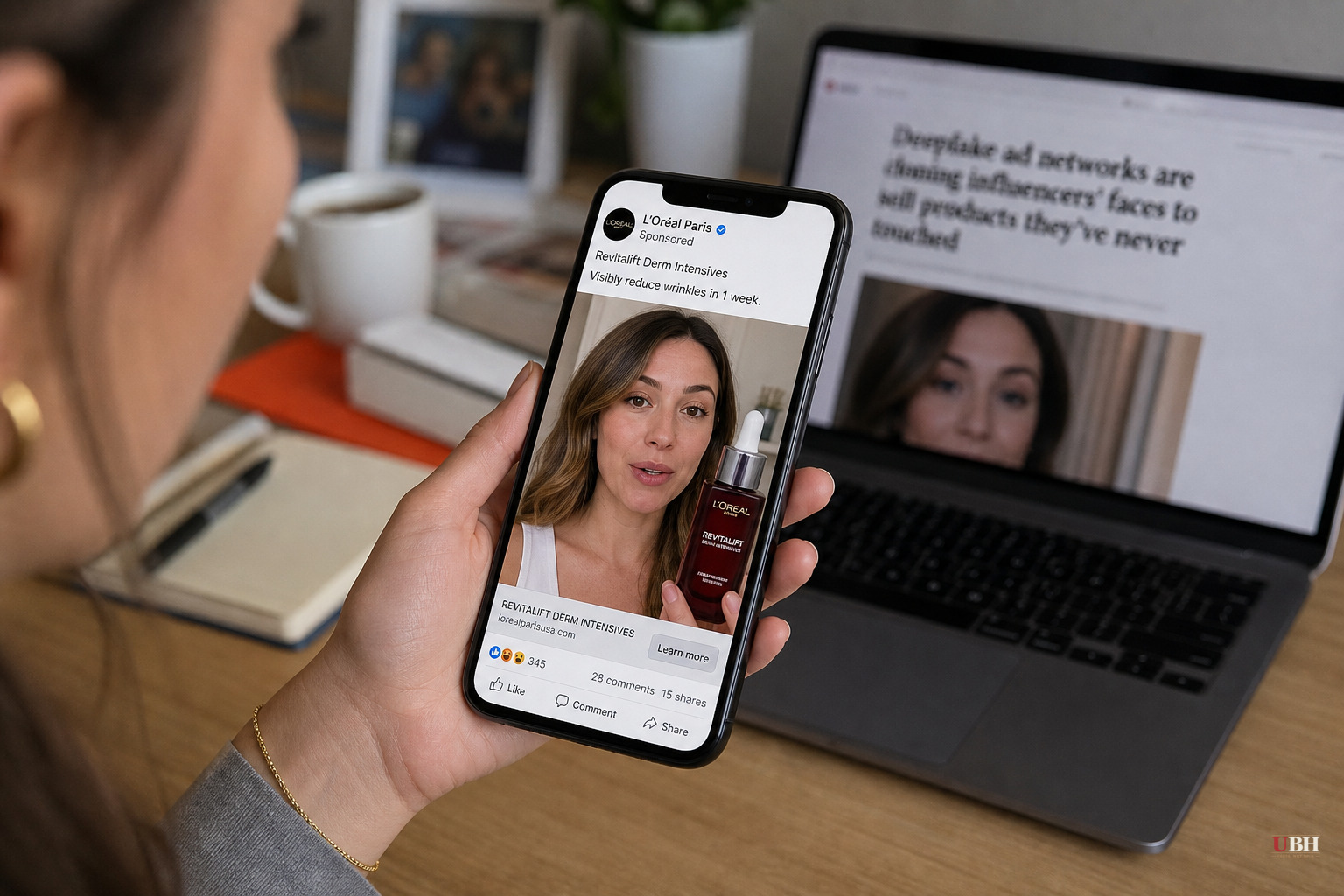
Karen Flowers didn't recognize her own face at first.
The 49-year-old Virginia-based beauty influencer and founder of Curl House, a hair-care line, got a message from her cousin about a YouTube ad. It showed a woman who looked exactly like Flowers pitching a life insurance company. Her lips moved in sync with the words. But the voice was off.
"[My cousin] said, 'I'm looking at it. It's you. But I know it's not you,'" Flowers told the New York Post. "Clearly, it was my image. I looked at it and knew exactly what YouTube video it came from."
She never made the ad. Never signed off on it. Never heard of the insurance company. Someone took her existing footage, ran it through AI tools, and repurposed her face and voice to sell a product to strangers.
A Bigger Pattern Than One Influencer
Flowers isn't an isolated case. According to the Post, Oprah Winfrey, Kim Kardashian and Gwyneth Paltrow have all had their likenesses hijacked for deepfake video ads over roughly the past year.
In 2024, a deepfake made Taylor Swift appear to be running an online giveaway of Le Creuset cookware, per the Post's reporting. A separate clip showed YouTuber MrBeast supposedly selling iPhones for two dollars to "one of the lucky 10,000 people." MrBeast posted on X calling it "the deepfake scam of me."
Tom Hanks was turned into a fake pitchman for a dental plan in 2023 and had to publicly deny involvement on Instagram, writing "I have nothing to do with it."
Bethenny Frankel took the fight further. She sued TikTok, accusing the platform of failing to stop deepfake ads showing her selling counterfeit designer cardigans, according to NBC News. Frankel says she has no affiliation with the products and that the fakes damaged her personal brand. When she posted on TikTok to warn her own followers about the deception, the platform removed her post, labeling it "abusive," NBC News reported. Frankel called that out on Good Morning America, saying "this has to be addressed."
The Scale of the Fraud
Google has sued a Chinese network it calls Outsider Enterprise, alleging the group used Google's own AI tools to build fake websites and push out more than 100,000 financial scam ads, according to the Post's reporting.
The FBI attributes roughly $893 million in American losses during 2025 to copycat and impersonation fraud schemes, the Post reported. That figure covers everything from old-school fake celebrity accounts asking for gift cards to AI-generated video ads that look convincingly real.
What's Actually Being Done, and What Isn't
There is no single federal law currently requiring platforms to proactively detect and remove AI-generated impersonation ads before they run. Google's lawsuit against Outsider Enterprise is a private company defending its own trademark and platform integrity, not a government crackdown. Frankel's TikTok suit is a private civil case, still working through the legal process. No criminal charges tied to the Outsider Enterprise scam have been reported.
A fair critic of heavier regulation would point out that platforms already remove plenty of scam content, that AI detection tools are improving, and that heavy-handed government mandates on content moderation carry their own risks to free speech and legitimate advertising. Nobody wants a federal bureaucracy deciding what counts as an acceptable AI-generated video.
But the current system leaves victims like Flowers with almost no fast recourse. She can report the ad to YouTube, but there's no dedicated legal framework forcing swift takedown, and enforcement is inconsistent, as Frankel's experience with TikTok shows. The platform pulled the victim's own warning post while, by her account, the scam ad kept running.
Several states, including Tennessee with its ELVIS Act and California with likeness-protection statutes, have moved to criminalize unauthorized AI voice and image cloning. There's no federal equivalent yet. Congress has floated bills like the NO FAKES Act to create a national right of publicity against AI clones, but as of this writing it has not passed into law.
For now, influencers and celebrities are left doing what Flowers, Hanks, and MrBeast all did. They publicly deny an ad that millions of people might see before anyone official steps in. The unresolved question is whether that changes before the fraud numbers climb past last year's $893 million, or whether the next round of scams simply gets better at looking real.
Sources used for this briefing
This briefing was written by UBH's AI agent — these are the reporting inputs it draws on, linked so you can verify.


