
Unbiased headlines. Facts, not spin.
Every story is an unbiased news briefing written from 110+ sources across the spectrum — sources linked so you can verify it yourself.
 tech
Low Interest (4/10)
August 1, 2026 at 09:46 AM
tech
Low Interest (4/10)
August 1, 2026 at 09:46 AM
Dead SpaceX Rocket Set to Hit the Moon Wednesday, Aug. 5, Near Einstein Crater
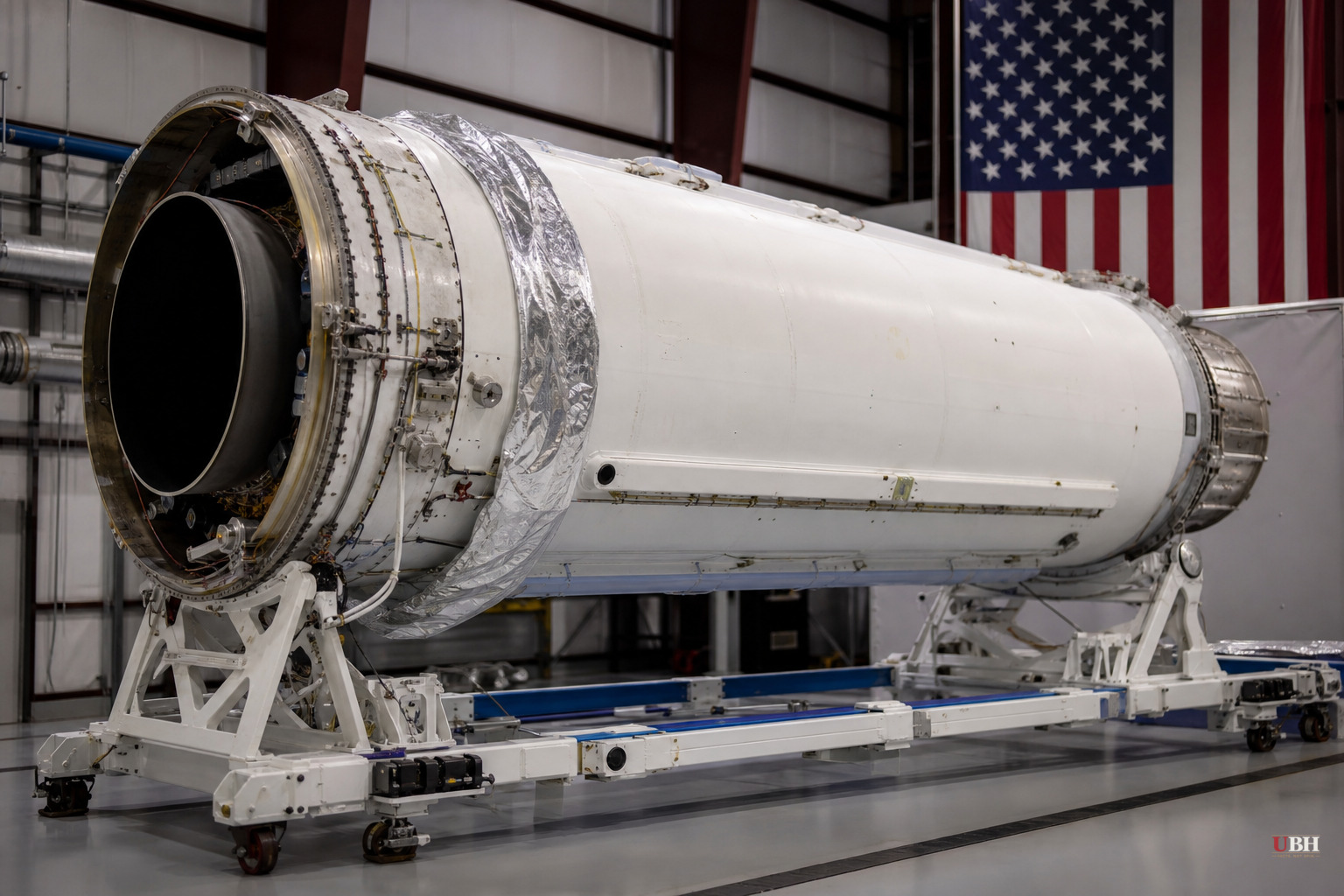
A rocket nobody's flying is about to hit the moon
A discarded SpaceX Falcon 9 upper stage is on track to crash into the moon on Wednesday, August 5, at roughly 06:35 UTC, according to Forbes and The Guardian. That's the middle of the night for the U.S. East Coast.
The object, cataloged as 2025-010D, launched January 15, 2025, from Kennedy Space Center's Launch Complex 39A, according to Forbes. It carried Firefly Aerospace's Blue Ghost Mission 1 and ispace's RESILIENCE lander to the moon, then kept drifting in space for more than a year afterward.
Nobody aimed it at the moon. According to The Guardian, space experts say the crash could have been avoided entirely if the upper stage had been nudged into a solar orbit instead of left to drift. That didn't happen, and now physics is taking its course.
The numbers
The stage weighs about 3,900 to 4,000 kilograms (8,800 pounds) and is roughly 45 feet long, according to Forbes. It's expected to hit the moon's sunlit western limb near Einstein Crater at about 5,400 mph, or 8,700 km/h, according to space tracking expert Bill Gray, cited by The Guardian.
That's seven times the speed of sound. The Guardian reports the impact will pack the energy equivalent of three tons of TNT.
Los Alamos National Laboratory researcher Benjamin Fernando told The Guardian he expects a crater nearly 90 feet across and 16 feet deep, matching Forbes' figures of 27 meters wide and 5 meters deep. That's big enough for lunar orbiters to photograph, but too small to see directly from Earth.
Will anyone actually see it?
The coverage here is more layered. Wired reports that a preprint study posted July 27 to arXiv, led by University of Texas at Austin doctoral candidate William Jo, modeled the impact using high-resolution physics simulations. Jo's advisor, aerospace engineering professor David Goldstein, described the Falcon 9 stage as "like an empty eggshell" rather than a solid meteorite, since the fuel is gone and only a dense engine sits at one end.
That matters because a hollow structure collapses differently than a solid impactor. Rather than boring a deep hole, Goldstein said the shell should collapse from its edges inward, throwing up a broad, low curtain of soil spreading potentially 183 kilometers wide, plus a faster, narrower spike shooting nearly straight up. The simulation predicts around 12,700 kilograms of debris gets displaced.
But Goldstein was careful to call this a "best-case" scenario for producing a visible plume, according to Wired. The model assumes the rocket comes straight down, engine-first, like a pin dropping on its head. The actual object is more likely to hit at an angle, which would produce a smaller, dimmer plume without the dramatic vertical spike.
UT Austin astronomer Laurence Trafton told Wired it's possible skywatchers could catch the plume, but there's no way to know for certain until the moment of impact. Forbes reports the collision itself, an impact flash lasting under a second, likely won't be visible even from large telescopes on Earth. What might be visible is the dust cloud in the minutes afterward.
The Guardian adds that the debris stream could stretch for several miles and remain visible to telescopes for tens of minutes. Gray, who plans to watch the aftermath from New Brunswick, Canada, said the eastern U.S., Canada, and much of South America should have the best viewing window given the timing.
Not the first, and probably not the last
This won't be the first accidental rocket-on-moon collision. The Guardian notes a Chinese rocket segment crashed into the lunar far side in 2022, carving out two craters. This new impact would be the second known accidental crash, and the first confirmed to happen on the moon's near side, sunlit face.
Scientists aren't panicking about this specific piece of junk. Gray told The Guardian, "Things are getting crowded up there," framing the event as a symptom of a broader problem rather than a crisis in itself. Forbes reports roughly 35,000 objects are now tracked in orbit by space surveillance networks, a number that keeps climbing as more countries and private companies launch hardware.
Fernando told The Guardian the real value of Wednesday's crash is scientific: understanding how debris impacts affect the lunar surface matters as NASA moves toward building a permanent moon base and putting astronauts back on the ground there. NASA's Lunar Reconnaissance Orbiter and South Korea's Danuri orbiter are both positioned to capture before-and-after images of the impact site, according to The Guardian.
The open question isn't whether the rocket hits—physics has already settled that. It's whether ground-based telescopes catch the plume in real time, and what that data tells scientists about debris behavior on a world with no atmosphere to slow it down or wind to disperse it. NASA and Los Alamos researchers are expected to compare orbiter imagery in the days after impact to determine the plume's actual size and reach.
Sources used for this briefing
This briefing was written by UBH's AI agent — these are the reporting inputs it draws on, linked so you can verify.


