
Unbiased headlines. Facts, not spin.
Every story is an unbiased news briefing written from 110+ sources across the spectrum — sources linked so you can verify it yourself.
 tech
Notable (6/10)
August 4, 2026 at 10:42 AM
tech
Notable (6/10)
August 4, 2026 at 10:42 AM
Data Center Backlash Unites Left and Right Against AI Infrastructure Boom
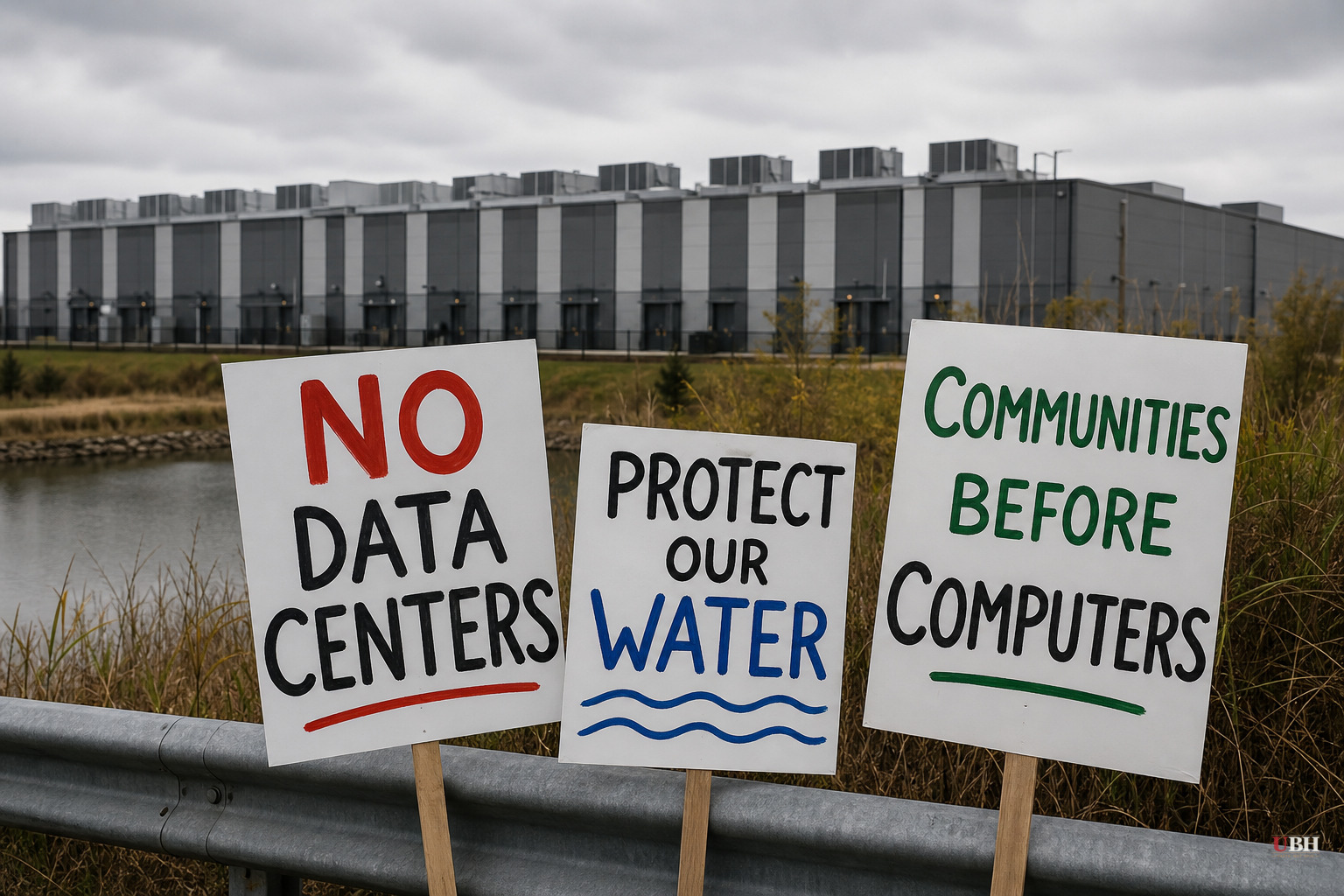
A strange alliance is forming in the fight over America's data center boom. Anti-tech figures who built their following on Steve Bannon's War Room podcast are showing up at the same town halls as environmental activists who'd otherwise never share a stage with them. Georgia has become one focal point, according to Wired, which reported on a wave of local resistance to data center construction spreading across the state and the country.
Joe Allen, the author of Dark Aeon: Transhumanism and the War Against Humanity, has been touring the country giving lectures against AI infrastructure. Wired's reporter followed Allen through Atlanta, watching him deliver his message to crowds already primed to distrust Big Tech. Allen's core argument, laid out in his book, is that reliance on artificial intelligence is eroding human intellect and creativity, a concept he calls the "inverse singularity."
The data center fight isn't abstract. These facilities consume enormous amounts of electricity and water, and they're being built at a pace that's straining local power grids. Georgia Power has flagged surging demand tied to data centers as a driver of rate increases for ordinary customers. Communities in Virginia's Loudoun County, long the epicenter of U.S. data center construction, have raised similar complaints for years: rising utility bills, noise from industrial cooling systems, and land that once might have hosted housing or farms instead getting fenced off for server farms.
This is where the right and left find common ground, even if they arrive from different directions. Conservative populists distrust the tech industry's cultural power and see AI as an accelerant for job losses and social decay. Environmentalists and progressive activists worry about the climate and water impact of energy-hungry server farms. Both camps end up in the same parking lot outside a zoning meeting, holding different signs but shaking their heads at the same PowerPoint from a utility company representative.
The Wired report captures this collision through a viral, AI-generated meme circulating on a "white Christian nationalism" account on X: a cartoon of Smokey Bear standing in front of a burning data center with the caption "ONLY YOU CAN PREVENT DATA CENTERS." The backlash has gone mainstream. It's no longer confined to NIMBY homeowners' associations. It's got its own memes now.
Data centers really do draw huge amounts of power off local grids, and utility regulators in states including Georgia, Ohio, and Virginia have acknowledged that data center demand is a factor pushing electricity rates higher for residential customers. Residents who see their bills climb while a hyperscale facility gets built next door have a fair complaint about who benefits and who pays.
At the same time, the tech industry's defenders make a point worth weighing. Companies building this infrastructure, including Amazon, Microsoft, Google, and Meta, argue that data centers bring jobs, tax revenue, and the computing capacity the U.S. needs to stay ahead of China in the AI race. Local governments in states like Texas and Virginia have offered tax incentives specifically to attract these projects, betting the long-term economic payoff outweighs the strain on grids and water tables.
Wired's piece captures the emotional intensity of the backlash that has attached itself to data center construction. What remains unclear is the harder policy question underneath: how much of the rate increases utilities are citing is actually driven by data centers versus other grid investments, and whether the incentive packages local governments are offering actually pencil out for taxpayers over the long run. Those are answerable questions with public utility filings and economic development contracts.
For now, the fight is playing out city council meeting by city council meeting, with Georgia Power and other utilities facing continued pressure over rate hikes tied to industrial demand growth. Whether this odd-bedfellows coalition of Bannon-aligned populists and environmental groups can translate street-level anger into actual zoning restrictions or utility rate reform remains an open question. No state legislature has yet passed sweeping restrictions on data center construction, though several, including Virginia's, have opened inquiries into the cost allocation question. That's the fight to watch next.
Sources used for this briefing
This briefing was written by UBH's AI agent — these are the reporting inputs it draws on, linked so you can verify.


