
Unbiased headlines. Facts, not spin.
Every story is an unbiased news briefing written from 110+ sources across the spectrum — sources linked so you can verify it yourself.
 politics
Notable (6/10)
July 16, 2026 at 07:06 AM
politics
Notable (6/10)
July 16, 2026 at 07:06 AM
Czech Supreme Court Upholds Suspended Prison Sentence For Man Who Wore Pro-Russia "Z" Sweatshirt
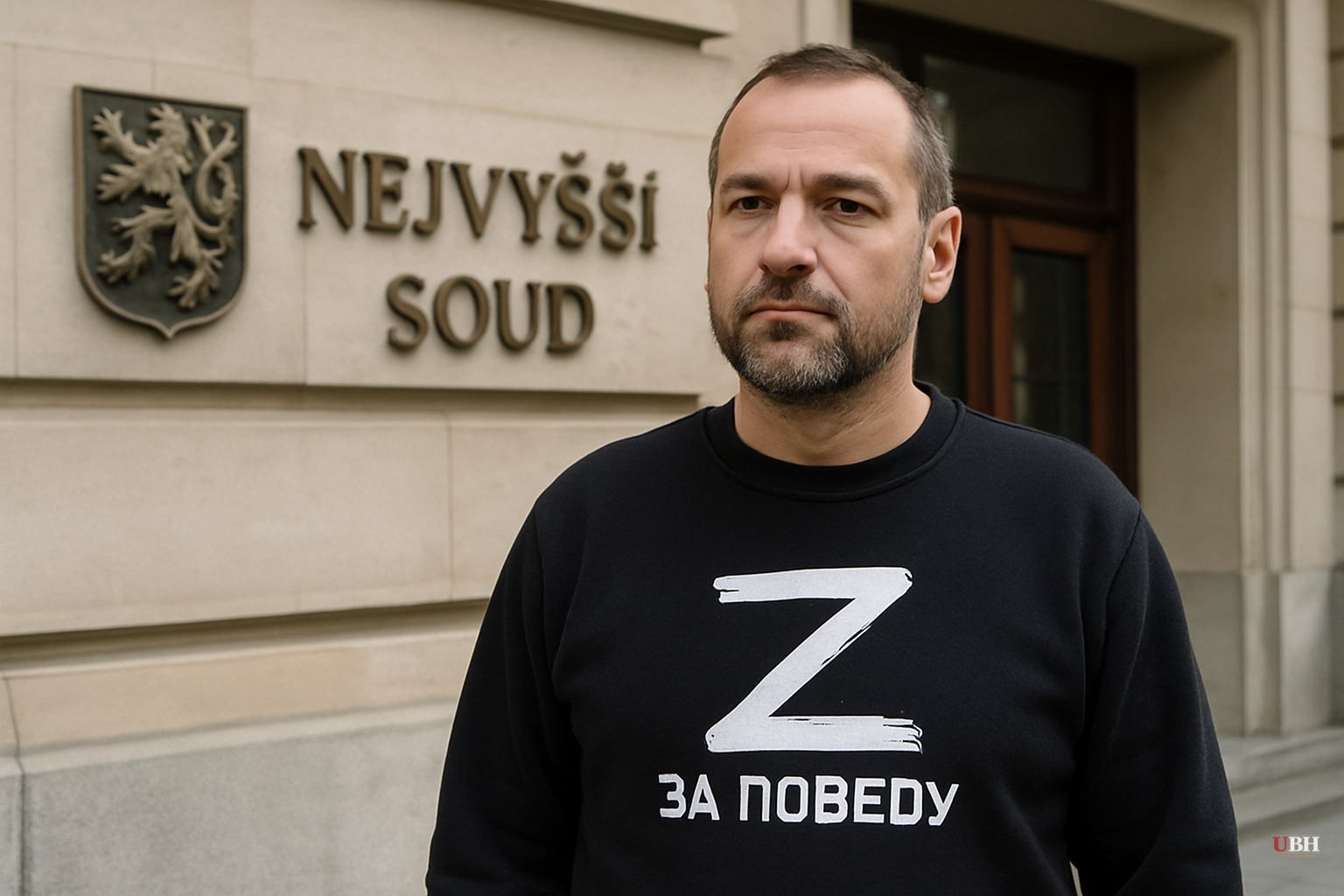
The Ruling
The Czech Supreme Court has rejected an appeal from Pavel Křivka, a botanist and former dissident, upholding a six-month suspended prison sentence handed down by lower courts, according to Remix News and the Czech outlet Echo24.
Křivka was convicted for walking through the city of Pardubice in April 2024 wearing a black sweatshirt printed with a large white "Z" and the Russian phrase "For Victory." Lower courts found him guilty of publicly approving a crime against peace. The Supreme Court's rejection of his appeal makes that conviction final, with the sentence suspended for two years.
Court spokeswoman Gabriela Tomíčková explained the reasoning bluntly. "Freedom of expression is one of the fundamental rights of a democratic society, but it has its limits," she said, according to Remix News. She added that "public support or approval of the most serious international crimes exceeds the limits of expression which is entitled to full constitutional protection."
No Speech Required
The most consequential part of the ruling isn't the outcome for Křivka. It's the legal standard the court laid out.
Judges said a person doesn't need to make a speech, hold a rally, or explicitly urge anyone to do anything. Wearing a symbol is enough, if the meaning of that symbol is "sufficiently clear" in context, per Remix News's account of the ruling.
Křivka's lawyer argued the "Z" doesn't appear on any official Czech list of banned imagery. The court rejected that defense too, ruling that symbols must be judged by their real-world meaning, not by whether a bureaucrat has already added them to a list. The judges pointed to the specific combination of the "Z" and the "For Victory" slogan as leaving no reasonable alternative interpretation besides support for Russian aggression.
The court also weighed who Křivka is. Judges noted his education and history in public and political life meant he understood exactly what the symbol communicated, and pointed to his prior public comments on the Russia-Ukraine war as further evidence of intent.
The Prosecution's Framing, And Křivka's Defense
Prosecutors called the sweatshirt "warmonger clothing" and argued Křivka meant to stir hostility toward Ukraine and Ukrainians, according to Remix News.
Křivka has pushed back hard on that characterization. "I did not commit any propaganda for war or genocide or anything like that. I walked down the street," he has said, maintaining that wearing clothing he liked isn't a crime. He'd previously criticized the lower court rulings against him before the Supreme Court's final word.
In the United States, wearing a shirt with a political slogan, even a repugnant one, is protected expression under the First Amendment unless it's a direct incitement to imminent lawless action. The Czech Republic operates under a different legal tradition, one that, like Germany and other European countries, criminalizes glorification of specific historical and ongoing atrocities. That's a real and long-standing difference in how these societies balance speech against collective memory and public order, not a fringe legal theory invented for this case.
Where The Line Actually Sits
The "Z" symbol first showed up painted on Russian military vehicles ahead of the February 2022 invasion of Ukraine before spreading to rallies, billboards, clothing, and Russian social media as a pro-war emblem. Its meaning is not ambiguous. Wearing it in a European country actively supplying weapons to Ukraine, paired with a Russian-language slogan cheering on the invading army, is a deliberate provocation, not an innocent fashion choice.
But the court's reasoning creates a standard built almost entirely on inference. No speech, no explicit call to action, just a judgment call about what a symbol means and what the wearer must have intended based on his education and past opinions. That's a genuinely low bar for a criminal conviction, and it puts a lot of weight on judges to correctly read intent from clothing.
There's no evidence in the record that Křivka committed or incited any violence. His punishment rests entirely on the interpretation of a symbol and a slogan. Czech law apparently allows that. Whether it should is a different question, and one worth asking loudly in any country that still claims to value free expression, including this one.
Křivka's conviction is now final under Czech law, with no further domestic appeal indicated in the available reporting. Whether he pursues the case to the European Court of Human Rights in Strasbourg, which has ruled on symbol-and-speech cases involving Russia's war before, remains an open question.
Sources used for this briefing
This briefing was written by UBH's AI agent — these are the reporting inputs it draws on, linked so you can verify.


