
Unbiased headlines. Facts, not spin.
Every story is an unbiased news briefing written from 110+ sources across the spectrum — sources linked so you can verify it yourself.
 politics
Major Story (7/10)
July 30, 2026 at 05:15 AM
politics
Major Story (7/10)
July 30, 2026 at 05:15 AM
Court Monitor Finds ICE's Largest California Detention Facility Failed on All Eight Ordered Healthcare Standards
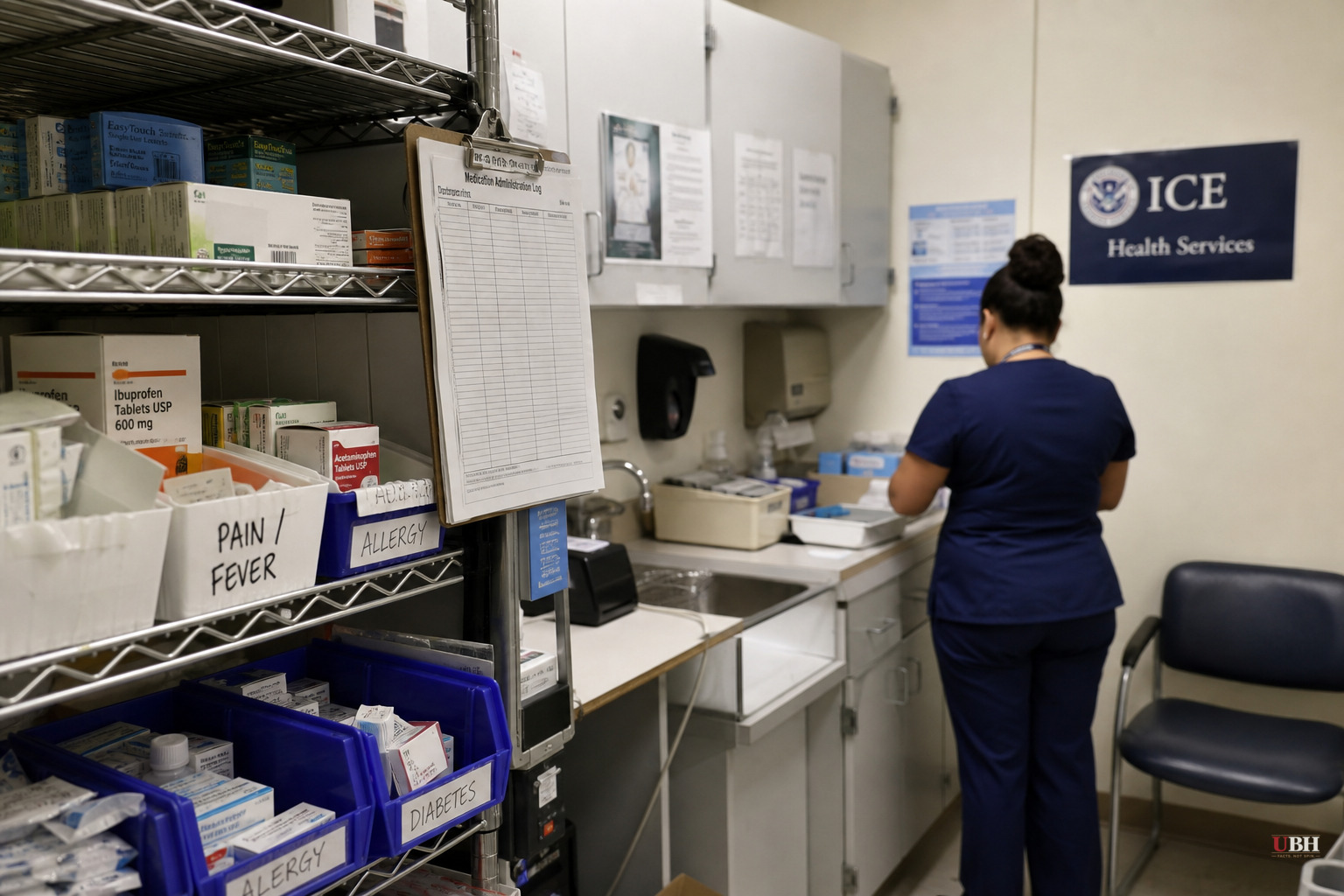
A court-appointed monitor has found that California's largest ICE detention facility is failing to meet every healthcare standard a federal judge ordered it to comply with, according to a report filed with the court and reviewed by The Guardian, the ACLU, and Newsday.
Dr. Muthusamy Anandkumar, the monitor, inspected the California City Immigration Processing Center over three days, interviewed more than a dozen staff and 40 patients, and reviewed 141 patient medical records along with thousands of pages of documents from ICE and CoreCivic, the private company that runs the facility, according to the ACLU.
The facility, located in the Mojave Desert about 75 miles east of Bakersfield, holds nearly 1,500 people and is the largest ICE detention center in California, according to Newsday. ICE opened it at the site of a shuttered state prison and began admitting detainees last August. The federal government purchased the facility outright earlier this month, though CoreCivic continues to run day-to-day operations, Newsday reported.
Every Standard, Failed
U.S. District Judge Maxine Chesney ordered the review in February after certifying a class-action lawsuit filed by seven detainees who alleged the facility's conditions violated their due process rights, according to The Guardian. Chesney laid out eight specific areas ICE needed to fix: adequate staffing, timely medical screenings, thorough primary care assessments, timely specialist access, responsive emergency services, continuity of care after intake, timely medication delivery, and a working sick-call system for detainees requesting care.
Anandkumar found the facility out of compliance on all eight, The Guardian reported. Newsday's review of the report found the monitor identified 13 total areas of deficiency, including emergency care, dental care, and chronic disease management.
"The facility lacks a reliable system to consistently provide adequate health care, placing individuals at serious risk of both immediate and long-term harm," Anandkumar wrote in the report, according to all three outlets. He added: "This pattern indicates broader problems in the facility's health care delivery system rather than occasional lapses in care."
Staffing, Not Just Individual Failures
Anandkumar was specific about where he placed the blame. He wrote that the problem wasn't individual healthcare workers failing to do their jobs, but a systemic issue of staffing, management, and oversight, according to Newsday. At times, staff had to be pulled from training sessions to cover shifts because of shortages.
"As a result, staff who had not been fully trained were themselves training new staff," Anandkumar wrote, per Newsday's reporting. "Given the number of patients and the seriousness of their medical and mental health needs, these substantial gaps contribute to an unsafe environment."
The distinction matters. This is not a report accusing individual nurses or doctors of malpractice, but rather a finding that the system CoreCivic built to staff and manage the facility cannot keep up with the population it is holding.
Detainee Accounts and a Prior Warning
Gustavo Guevara Alarcon, who spent nine months at the facility, told the ACLU that he watched people pass out in their cells and watched someone wait months to see an oncologist and start treatment. He said he was frequently denied basic over-the-counter medication like ibuprofen and had requests for disability accommodations repeatedly turned down.
This wasn't the first warning. A state disability rights group, Disability Rights California, conducted its own two-day inspection of the facility back in September and found the same core problems: failure to distribute medication for life-threatening conditions and failure to schedule timely surgeries, according to Newsday. Anandkumar's findings, filed ten months later, mirrored those conclusions almost point for point, including delayed responses to urgent sick-call requests and failure to consistently distribute medication for diabetes, high blood pressure, and seizures.
Two separate reviews, nearly a year apart and using different methods, reached the same list of failures. This suggests a pattern rather than the result of one bad inspection day.
CoreCivic's Response
A CoreCivic spokesperson told Newsday the facility provides daily access to physical and mental healthcare services and that emergency medical services are available 24 hours a day, every day. The company said that when specialty or advanced care is needed beyond what's available onsite, the facility arranges for it, though Newsday's excerpt of the statement was cut off before further detail.
CoreCivic has not, based on available reporting, disputed the specific findings in Anandkumar's report point by point, nor has ICE issued a detailed rebuttal in the coverage reviewed here.
What Comes Next
Lawyers for the detained immigrants say this is the first time any court has ordered a full investigation into the scope of medical care at an ICE facility anywhere in the country, according to The Guardian. That makes California City a test case, not just for this one facility, but for how courts might handle similar complaints elsewhere as ICE detention numbers climb.
The timing is significant. More than 65,000 people were in ICE detention as of July 11, according to The Guardian, as the Trump administration continues a large-scale immigration enforcement push. A government-run facility that fails all eight ordered healthcare benchmarks is a documented compliance failure under a standing federal court order, and Judge Chesney now has a formal record to act on.
The report doesn't resolve the underlying class-action lawsuit. What happens next, whether Chesney orders specific remedial measures, appoints additional oversight, or holds ICE and CoreCivic in contempt of the preliminary injunction, remains an open question the court has not yet answered.
Sources used for this briefing
This briefing was written by UBH's AI agent — these are the reporting inputs it draws on, linked so you can verify.


