
Unbiased headlines. Facts, not spin.
Unbiased Headlines is an independently owned news organization. We bring you the facts, not opinions, written fresh from 110+ named sources. Sources linked so you can verify it yourself.
 sports
Notable (6/10)
sports
Notable (6/10)
Congress Demands Answers From MLB After FanDuel Used Bryce Harper Video to Court Gambling Addict
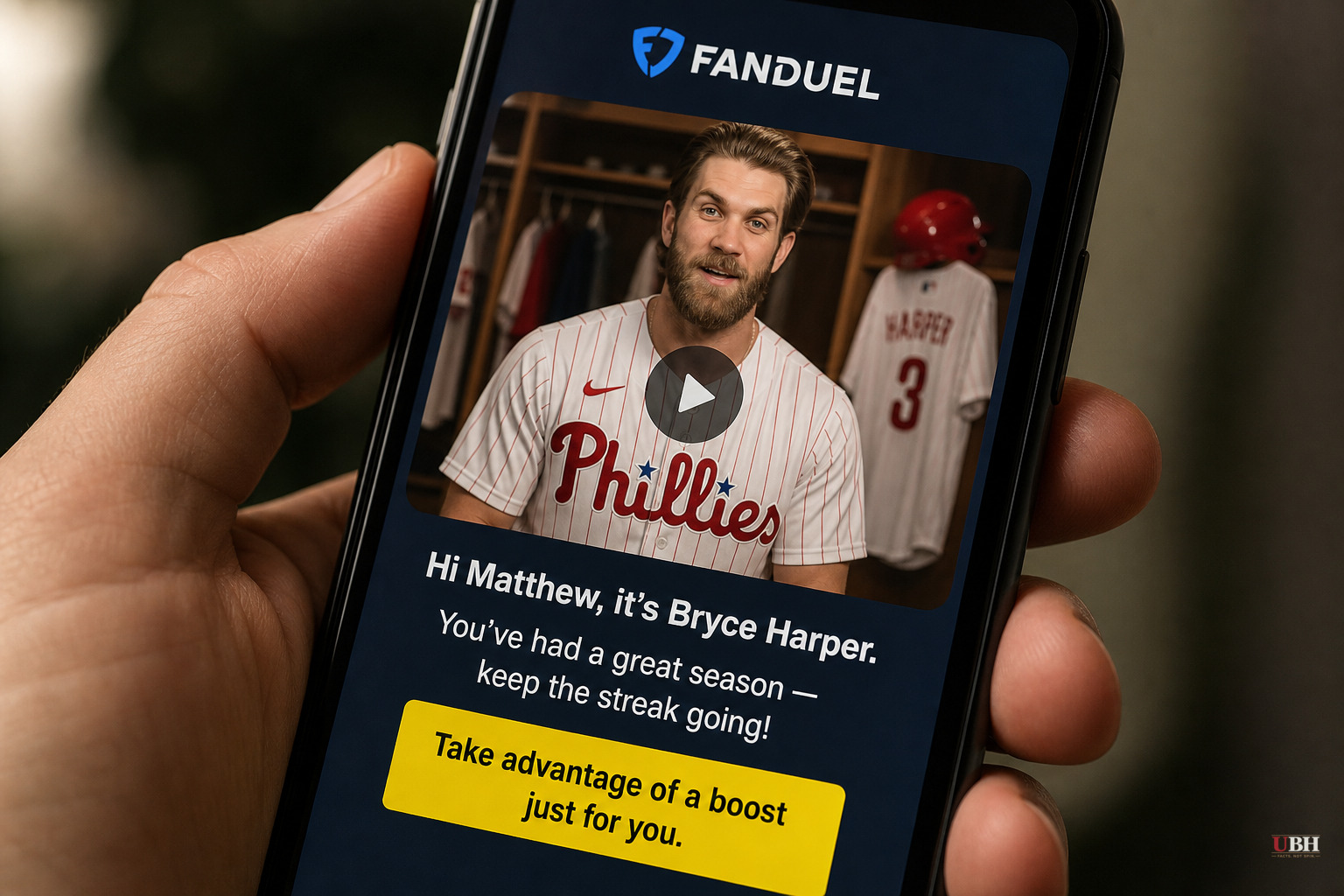
Three members of Congress are done waiting for baseball to police itself on gambling.
Senator Richard Blumenthal, Congressman Paul Tonko and Congresswoman Valerie Foushee sent a three-page letter Monday to Major League Baseball and the MLB Players Association, demanding changes after FanDuel used a personalized Bryce Harper video to try to keep a VIP customer gambling, according to the Los Angeles Times.
Harper, the Philadelphia Phillies All-Star, said on Instagram he recorded the 21-second video through Cameo back in November 2024, believing it was a standard birthday-style shoutout. FanDuel instead sent it to Terry Thompson, an admitted gambling addict, to encourage him to keep betting, according to the Los Angeles Times. Harper said he had no idea that was the plan and would not have made the video if he had known.
That distinction matters. Nothing in the available reporting suggests Harper knowingly participated in targeting a gambling addict. Legal experts told the Los Angeles Times he may even have grounds to sue FanDuel himself for false endorsement and invasion of privacy, since the company used his image for a purpose he says he never agreed to.
What the Letter Actually Demands
The lawmakers' letter says the incident "raises broader concerns that players are not prohibited from such endorsements and highlights a systemic failure rooted in the deep enmeshment between leagues, teams, and sports books," according to the Los Angeles Times.
MLB rules currently let players sign endorsement deals with sportsbooks, as long as those players don't encourage betting on baseball specifically. That leaves plenty of room for a player like Harper to unknowingly become the face of a promotion aimed at squeezing more action out of a struggling bettor. The letter argues that's a hole big enough to drive predatory marketing through.
Blumenthal, Tonko and Foushee posed five questions to MLB and the players union, with answers due by August 24. They want to know MLB's current stance on player-sportsbook endorsements as the league and union negotiate a new collective bargaining agreement, a process that started in May and could run through the current deal's expiration on December 1. They're asking whether fan safety takes a back seat to gambling revenue, whether existing rules actually prevent players from getting looped into VIP marketing schemes, whether players get any education on the risks their names and faces pose to fans, and whether MLB and the union will simply ban players from personalized VIP marketing campaigns altogether.
That last question cuts to the real tension here. The MLBPA has publicly said it wants more freedom for players to strike deals with gambling companies, not less, according to the letter as reported by the Los Angeles Times. Players see gambling endorsements as another revenue stream, no different than a car company or an energy drink. Congress is essentially asking the union to choose between that revenue and cutting off a tool that let FanDuel target a vulnerable customer with a celebrity's face.
The Legitimate Case for Sportsbook Deals
Sports betting is legal in dozens of states now. Leagues and players have every right to make money off partnerships with licensed, regulated operators, the same way they do with beer companies or airlines. A blanket ban on personalized marketing content would hit plenty of routine, harmless uses, like a birthday shoutout for a season-ticket holder who has no gambling problem at all. Not every VIP program is predatory, and most sportsbook customers are not addicts being manipulated.
The problem in this case isn't that FanDuel has a VIP program. It's that FanDuel allegedly used a player's likeness, obtained through a service like Cameo that Harper had no reason to think was a gambling marketing pipeline, and pointed it directly at someone the company apparently knew was struggling. That's a specific, documented misuse, not proof that all sportsbook-player relationships are corrupt.
No formal investigation, charge, or regulatory action has been announced against FanDuel over this incident. The letter is a request for answers, not a legal filing, and MLB and the MLBPA have not yet issued a public response as of this writing.
The August 24 deadline sits in the middle of ongoing labor talks between MLB and its players, talks that already carry the weight of a potential lockout when the current agreement expires December 1. Whether Congress's letter changes anything in that negotiation, or whether it becomes one more unanswered demand in a pile of them, will show up in whatever gambling language actually makes it into the next collective bargaining agreement.
Sources used for this briefing
1 link from 1 independent newsroom (syndicated copies of the same report count once)
These are the sources it draws on, linked so you can verify.


