
Unbiased headlines. Facts, not spin.
Unbiased Headlines is an independently owned news organization. We bring you the facts, not opinions, written fresh from 110+ named sources. Sources linked so you can verify it yourself.
 tech
Notable (6/10)
Confiant: MoldyRoost ad campaign ran iPhone exploits in 47-plus countries to steal crypto seed phrases
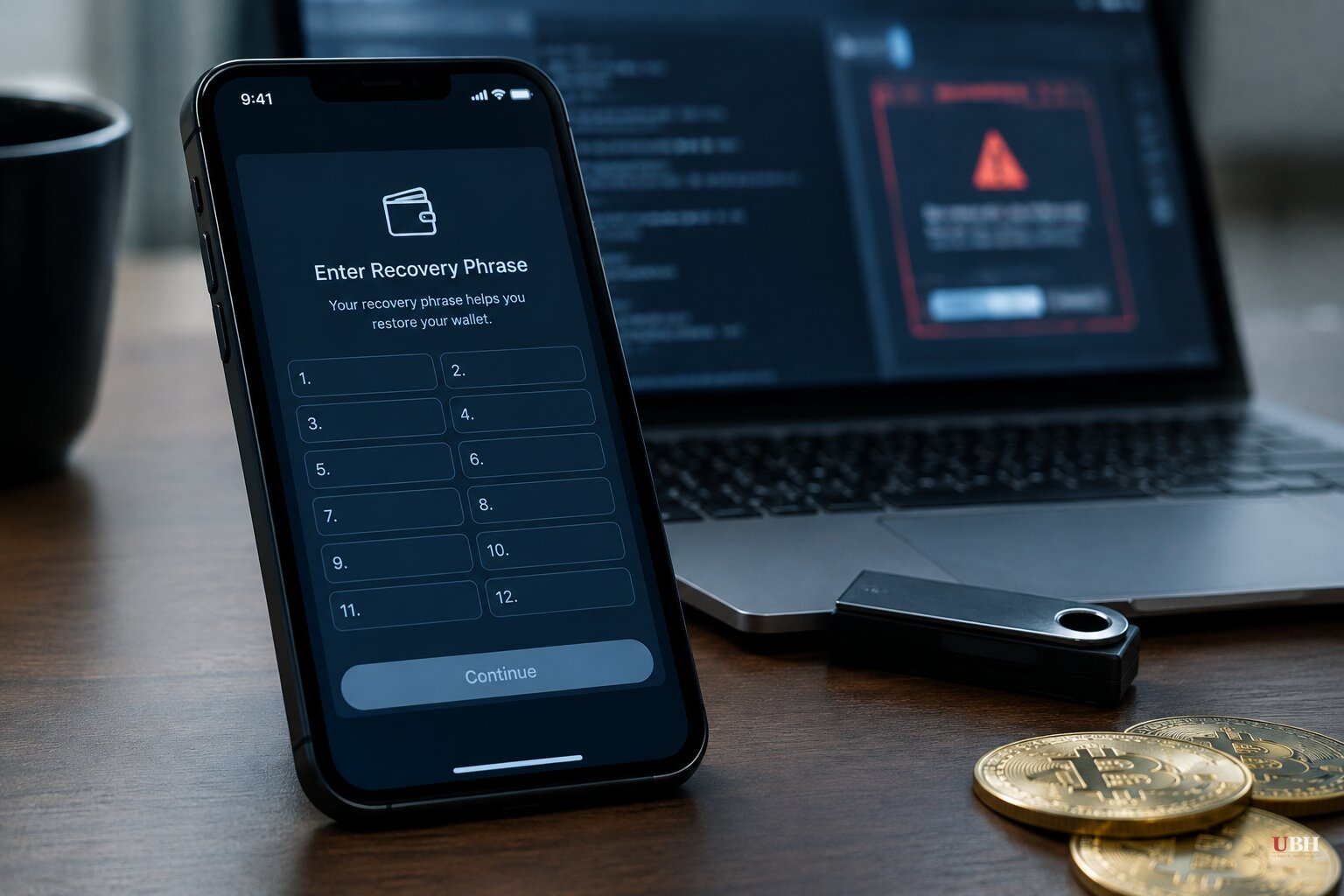
A malicious ad operation spent roughly six months pushing iPhone exploits through ordinary web advertising, with one goal: lifting crypto wallet recovery phrases off victims' phones. Ad-security firm Confiant named it MoldyRoost in a report dated Nov. 20, 2026.
Confiant tied more than 480 advertising domains to the operation. Activity ran from May 12 through Nov. 17 and reached more than 47 countries.
No download, no tap
The attack was a drive-by. In Confiant researchers Roshan and Eliya Stein's words: "Just loading the landing page of a MoldyRoost ad on a vulnerable iPhone is enough to get infected." The victim did not have to install an app, approve a wallet transaction or paste a command.
The operation bought programmatic ads, the automated auctions that decide which banner appears on a page. Clicks led to landing pages dressed up as legitimate sites. A router then checked the visitor's device and iOS version and picked a matching exploit chain.
Everyone else got a harmless page, a decoy site or an empty frame. That makes the campaign harder for ad reviewers and security scanners to catch. Someone inspecting the ad on a desktop would see benign content while an eligible iPhone received the payload.
The Agoda decoy
One campaign imitated the Hong Kong site of travel booking service Agoda, served from an ad on a Hong Kong forum. The page cloned the real site while an invisible frame loaded a separate host and picked the exploit. An 18-second loading bar absorbed taps, then forwarded the visitor to the genuine Agoda site.
Other ads promoted online games, crypto mining and Tron energy services. Some showed fake human-verification prompts. Confiant said the exploit began when the page loaded, not when the user completed the prompt.
Six clusters, one dominant
Confiant sorted the activity into six sub-clusters, labeled A through F. The largest, A, held 403 domains detected across 35 countries, including 197 tied to Hong Kong, 40 to Japan and 22 to Singapore.
Sub-cluster D used fake Cloudflare human-verification pages and five ad domains observed through Nov. 8. Sub-cluster F was small: two domains aimed at India and the United States, seen Nov. 3 and Nov. 12.
Confiant assesses that the six share a delivery operation. It says ownership remains uncertain. It also says MoldyRoost did not write the underlying exploit kits. It distributes them.
What the malware went after
The kits come from the Coruna and DarkSword families, with branches named SilkPath and GhostWave. Confiant describes a chain that starts with code execution in Safari, escapes the browser sandbox and ends in a kernel takeover.
Coruna targets iOS 13 through 17.2.1 and hooks MetaMask, Phantom and Trust Wallet. It also searches Apple Notes for seed phrases and scans saved images for QR codes. Confiant counts five exploit chains and 23 vulnerabilities in that toolkit.
DarkSword targets iOS 18.4 through 18.7 using six vulnerabilities. Its stealer can pull keychain data, messages from iMessage, WhatsApp and Telegram, photos, saved Wi-Fi passwords and wallet records. Some payloads can capture screenshots or microphone audio.
The flaws are in Apple's operating system, not the wallet apps. MetaMask, Phantom and Trust Wallet were targeted because of what users keep on the same phone.
Google Threat Intelligence Group has separately documented Coruna's path from suspected espionage use to financially motivated criminals, including campaigns built around fake financial sites.
Source code left in the open
In mid-November, a server exposed part of the operation's own repository. Readable Git objects on the domain ab124[.]live let Confiant recover commits dated Oct. 27 through Nov. 4.
The code showed iOS-version routing, adaptations of the Coruna and DarkSword chains and ongoing maintenance of the list of wallets to hunt. One commit generated a separate subdomain and payload for each sales channel, so the backend could attribute stolen wallets to the channel that delivered the victim. Another change forced keychain uploads after an upstream filter dropped reports.
The per-channel attribution points to a commercial arrangement, with traffic sources or affiliates credited for the wallets they bring in. That is Confiant's reading of the code. Who sits at the top has not been established.
Updated phones look safe
Confiant found no confirmed exploit code for iOS 26. Apple patched the vulnerabilities associated with DarkSword in iOS 26.3 while the campaign was still running. Confiant's findings show no evidence of the exploits succeeding on fully updated iOS 26 devices.
The recovered code did include routing for iOS 26. Confiant says that does not establish working iOS 26 exploits exist.
The risk therefore falls on people running older iOS versions. A seed phrase is the master key to a self-custody wallet. Whoever holds it can move the funds, and blockchain transfers generally cannot be reversed. A phrase typed into Notes or saved as a screenshot is only as safe as the phone's operating system.
What is still unknown
The numbers published so far describe infrastructure: domains, countries, exploit chains. They do not describe victims. No count of compromised phones or total stolen has been disclosed.
Confiant's last observed activity was Nov. 17, and the operation's ownership is unresolved. Whether the operators move on to new infrastructure, or whether a working iOS 26 chain surfaces, is the open question.
Sources used for this briefing
7 links from 7 independent newsrooms (syndicated copies of the same report count once)
These are the sources it draws on, linked so you can verify.


