
Unbiased headlines. Facts, not spin.
Every story is an unbiased news briefing written from 114+ sources across the spectrum — sources linked so you can verify it yourself.
 sports
Notable (5/10)
October 9, 2026 at 03:52 AM
sports
Notable (5/10)
October 9, 2026 at 03:52 AM
College Sports Commission Investigating 5 to 10 Power Four Programs Over Possible NIL Cap Evasion, CBS Sports Reports
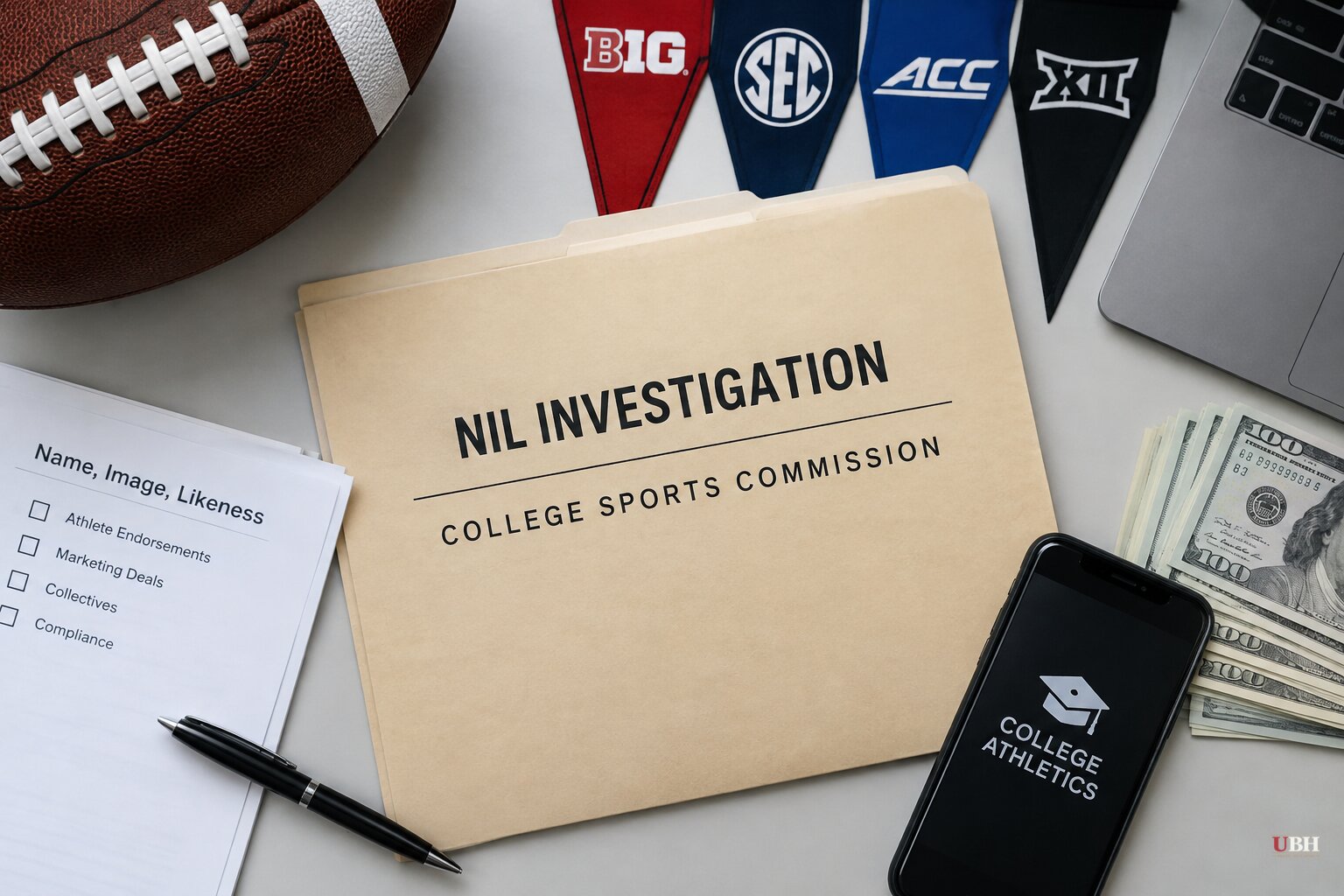
The College Sports Commission is running long-term investigations into five to 10 Power Four programs over potential cap evasion and NIL violations, according to CBS Sports reporting published Thursday, Oct. 8. Several of the programs are College Football Playoff contenders.
No schools have been named. No case has concluded. CBS Sports, citing conversations with more than 20 people across college football, reported that CSC investigators have been on campuses conducting in-person interviews, with no timeline for finishing.
The memo
On Aug. 20, the CSC sent a memo to university presidents, chancellors, athletic directors and other campus officials. It said:
"The DOI is actively conducting multiple, longer-term investigations into potential cap evasion and NIL-related violations by institutions, student-athletes, and certain third parties."
The memo, obtained by CBS Sports through public records requests, also asked athletic department staff to report what they see on recruiting practices, agent conduct and "questionable business proposals." DOI is the CSC's Department of Investigations.
The money
The House settlement lets schools spend about $21.5 million directly on athletes in 2026-27 through revenue sharing. Any money an athlete receives from a third party must clear the CSC approval process, which checks whether the deal meets a fair-market range of compensation.
There is no cap on total spending as long as those deals are submitted and approved. That gap is where the investigators are looking.
Earlier CBS Sports reporting put seven college football rosters in the $40 million to $50 million range. Football rosters at that level, plus basketball rosters topping $10 million, mean schools are chasing tens of millions in third-party money just to stay competitive.
The CSC reported in September that its NIL GO platform cleared $227.25 million in deals between July 1 and Aug. 31. It failed to clear $67.08 million in deals that did not meet fair-market standards or the terms of the settlement.
In July, the CSC exempted deals between $600 and $15,000 from the fair-market review, provided the athlete has $50,000 or less in associated deals. Above $50,000, the review applies again.
An enforcement tool it never got
The CSC wanted all 68 Power Four schools to sign a participation agreement. It would have forced compliance with investigations and penalties, required schools to waive the right to sue over enforcement decisions, and barred them from helping state attorneys general file suit on their behalf.
The CSC could never get all the Power Four conferences on board at the same time, and multiple sources told CBS Sports the agreement is very unlikely ever to be adopted.
Schools also routinely take weeks or months to answer CSC information requests, often through outside counsel, per the same reporting.
"This is the hardest enforcement challenge in sports in the United States," one source told CBS Sports. "It's not even close in my mind."
Another source, who was not identified, pointed to deals in which athletes never delivered the promised services. "We could discipline 100 student athletes tomorrow who have not fulfilled their NIL obligations," the source said. "The reality is, no one wanted them to. No one cared if they did." The source said that failure to perform shows a deal "was a sham deal from the start." That is one anonymous source's characterization, and no specific deal or school has been identified.
A Power Four general manager, also unnamed, said the CSC doesn't "have teeth to enforce it."
The Kawhi Leonard comparison
CBS Sports likened the probes to the NBA's case involving Kawhi Leonard and the Los Angeles Clippers. Leonard reportedly signed a $28 million endorsement deal with Aspiration, a company that later went bankrupt. It was alleged to be a disguised way to pay him above the salary cap. The NBA investigated, found the Clippers in violation and penalized both the team and Leonard, according to Newsweek's account. That case involved one team and one player, and it took close to a year.
The college version could reach several high-profile programs in the middle of the season. CBS Sports called the probes "the most significant test yet" of whether the CSC can police the revenue-sharing system.
What comes next
CBS Sports reported that many schools want action before the transfer portal opens in January, partly as a warning to anyone else working the system. With no timeline and no compulsory process, that deadline is not guaranteed.
Separately, Congress is weighing a federal overlay. WRUF reported that the Protect College Sports Act, sponsored by Sens. Ted Cruz of Texas and Maria Cantwell of Washington, passed the Senate 77-22 on Monday. The station reported that President Donald Trump and former Alabama coach Nick Saban support it, and that House action is expected after the midterm elections.
Whether the CSC can bring a case to a finding without the legal leverage it sought, and whether any penalty lands before the January portal window, remains unsettled.
Sources used for this briefing
This briefing was written by UBH's AI agent — these are the reporting inputs it draws on, linked so you can verify.


