
Unbiased headlines. Facts, not spin.
Unbiased Headlines is an independently owned news organization. We bring you the facts, not opinions, written fresh from 110+ named sources. Sources linked so you can verify it yourself.
 sports
Low Interest (4/10)
sports
Low Interest (4/10)
College Football Playoff Stays at 12 Teams for 2026. ESPN Floats a 20-Team Compromise the Big Ten Already Hates
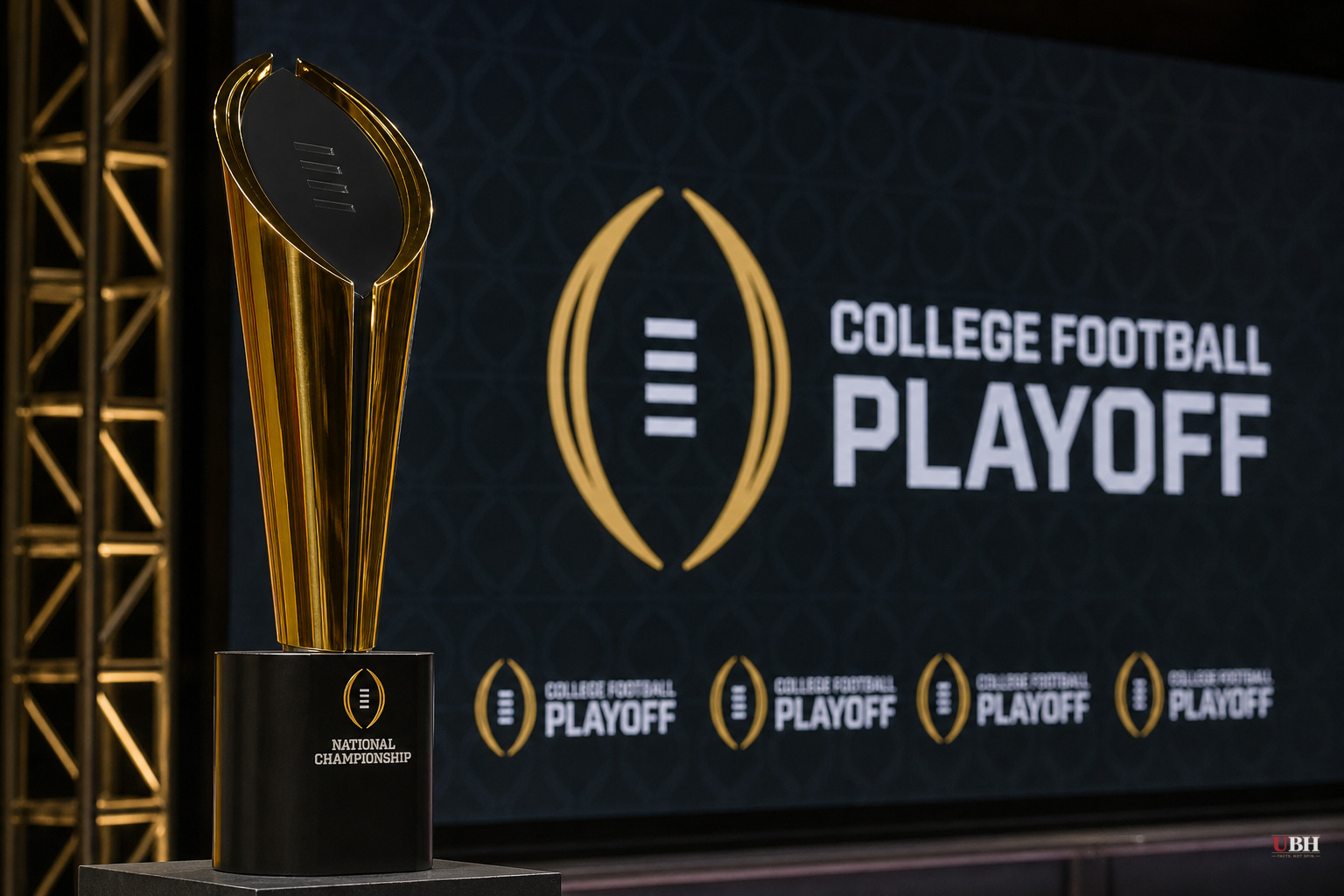
The College Football Playoff will stay at 12 teams for the 2026-27 season. Commissioners extended the current format rather than force through an expansion deal, according to theundrafted.org, with the bracket reveal set for Dec. 6 and campus-site first-round games beginning Dec. 18-19.
The national championship is scheduled for Allegiant Stadium in Las Vegas on Monday, Jan. 25. First-round games will air across ESPN, ABC, and TNT/truTru/HBO Max windows, with the Fiesta Bowl hosting a Dec. 30 quarterfinal and the Cotton, Rose, and Peach Bowls following on Jan. 1.
That's the settled part. Everything after this season is still a fight, and it's an ugly one.
ESPN's new pitch: call it 16, but it's really 20
On Monday, Aug. 10, conference commissioners and Notre Dame met virtually to hash out financial models for playoff expansion, according to Fox News. During that window, ESPN's Ross Dellenger of Yahoo Sports reported that the network is socializing a format with CFP leaders: 16 teams in the main draw, plus four play-in games for seeds 13 through 16. Do the math and that's a 20-team field wearing a 16-team label.
Brandon Marcello of CBS Sports reported that ESPN shared the format with a handful of conference executives the week before, and while it wasn't formally on Monday's agenda as of Sunday, it was expected to come up anyway, according to Awful Announcing.
The Big Ten wasted no time. Dellenger reported the conference does not support the ESPN plan. Given that the SEC and Big Ten both have to sign off for any new format to happen, that's close to a dead end for this particular version, at least for now.
Why the Big Ten wants 24 and the SEC wants 16
This isn't really a debate about what's best for players or the sport. It's a fight over television inventory and who gets to sell it.
According to Awful Announcing, ESPN automatically retains CFP broadcast rights up to a 14-team format under the current deal. Anything beyond that is supposed to hit the open market, where Fox, the Big Ten's lead media partner, could bid on new games. ESPN analyst Paul Finebaum muddied that picture last month by suggesting ESPN actually retains rights up to 16 teams, not 14. If Finebaum is right, ESPN's play-in proposal lets it expand the field to effectively 20 teams without ever opening the door for Fox or anyone else to bid on new inventory.
That's the entire ballgame. The Big Ten and Fox back a 24-team playoff because it forces additional games onto the open market. The SEC has held at 16 teams, a number that keeps more control and revenue inside ESPN's existing deal. Si.com reported the SEC's position "has held strong" while the Big Ten's 24-team push has been gaining momentum after the conference dropped its earlier demand for guaranteed automatic bids tied to conference standings.
The Indiana problem
Complicating all of this is Indiana's run to a 16-0 national championship under the current 12-team format, according to theundrafted.org. Access advocates point to the Hoosiers as proof the 12-team bracket already works, unlocking a brand-new champion that never would have sniffed a four-team field. Expansion backers counter that a bigger bracket could produce more Cinderella runs, not fewer, and that leaving deserving one-loss Power Four teams or Group of Five programs off the board every December is a real cost of standing still.
Both camps will keep citing the same trophy to argue opposite conclusions. One data point generates two readings, and there's no consensus yet.
What's actually at stake for fans
Every scenario on the table, 16, 20, or 24, changes conference championship weekend, bowl scheduling, and how many at-large bids Power Four leagues get relative to the Group of Five. The 20-team play-in model preserves conference title games as a de facto play-in round, which is good for ESPN's existing Saturday inventory in December but does nothing to solve the access complaints from smaller conferences.
None of this is resolved. A formal decision on any format beyond 2026 needs both the SEC and Big Ten to agree, and as of Monday's meeting they don't. Another decision deadline is looming before the 2027 season, and until then, the sport runs on the same 12-team rules it has used for two years running.
The open question heading into fall: does ESPN sweeten or reshape its play-in proposal enough to get the Big Ten on board, or does the SEC eventually cave toward 24 teams because Fox and the Big Ten simply refuse to move? Nobody in this fight has the votes yet, and December is closer than it looks.
Sources used for this briefing
4 links from 4 independent newsrooms (syndicated copies of the same report count once)
These are the sources it draws on, linked so you can verify.


