
Unbiased headlines. Facts, not spin.
Unbiased Headlines is an independently owned news organization. We bring you the facts, not opinions, written fresh from 110+ named sources. Sources linked so you can verify it yourself.
 tech
Major Story (7/10)
Claroc: 35,578 of 37,571 Grok-Built Apps Were Open to Anyone With the Link, Including 24 From SpaceXSI Staff
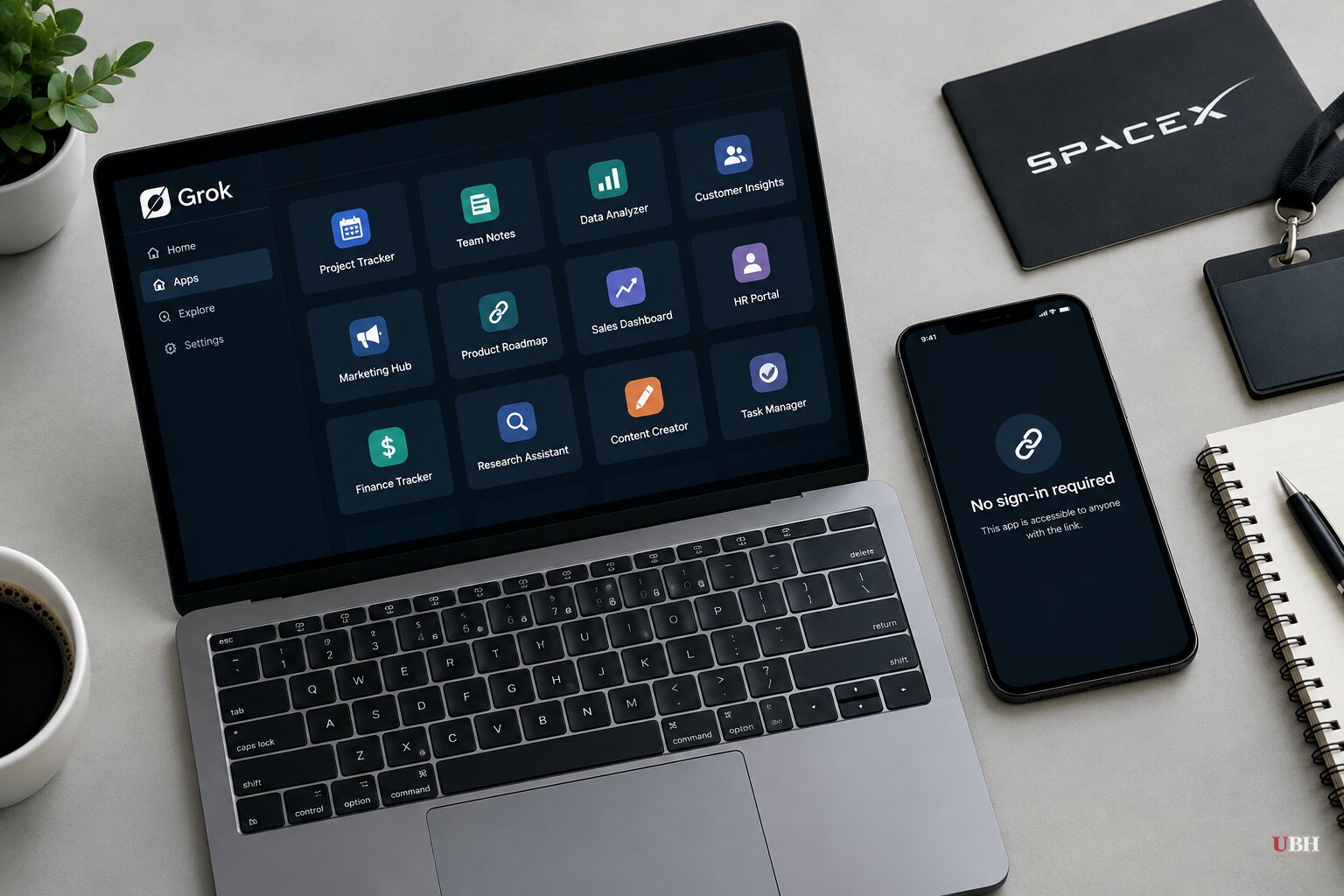
Thousands of apps built with Grok are sitting on the open internet, and some of them hold hospital rosters, plaintext passwords and SpaceXSI's own sales pipeline.
The security firm Claroc scanned more than 43,500 addresses under grok.me on November 8. Of the 37,571 apps still online, 35,578 (94.7%) opened for any visitor with no login. Only 1,993 asked for a sign-in. The researchers loaded each app's first page once, signed into nothing, as any visitor in a private browser window would.
No hacking was involved.
How the apps were found
Grok's Build mode lets a user describe an app in chat and have it written and published. The feature was opened to every Grok plan on August 19. Each published app gets its own subdomain on grok.me.
Claroc says the addresses are not secret in practice. Opening an app makes a visitor's computer look up its subdomain in DNS, and passive DNS services record those lookups. Anyone with an account can search the records by pattern.
Grok suggests four random words as each app's name, and about half of the names Claroc found followed that pattern. Those names are hard to guess, but the researchers say nobody has to guess them when they are listed in a searchable database.
What was inside
Most of the open apps were games, landing pages and calculators. About 1 in 10 held internal business data or personal information, and Claroc rates roughly 2% as high or critical. The firm estimates 650 to 800 apps contained private data.
The examples Claroc confirmed:
- An intensive care briefing for one patient, including lab values and ventilator status.
- A hospital group's searchable list of more than 3,500 employees.
- A fire department's live shift board with badge numbers.
- A contractor's timesheet app whose code held 18 employee accounts with passwords in plain text, in a script every visitor's browser downloads.
Beyond SpaceXSI and X, Claroc identified 30 organizations with internal data exposed, across construction, energy, healthcare and defense. Twenty-six have more than 1,000 employees and six are Fortune 500 companies. Claroc is withholding their names. Its co-founder and CTO, Asaf Aprozper, told Ars Technica he is notifying the companies, and that a luxury cruise line whose galley checklists were exposed pulled in its whole security team once Claroc shared the findings.
SpaceXSI's own apps
Twenty-four of the open apps were built by employees of SpaceXSI (the company formerly known as xAI) and the social network X. They included a confidential onboarding plan for a new enterprise sales hire, a sales territory map of 594 accounts, and eight X advertising proposals. One proposal was addressed to a U.S. federal agency and marked confidential.
Claroc also reported four live advertiser dashboards showing campaign spending, one tracking progress toward a $1.6 million sales target, plus seven campaign reports covering advertisers in Brazil, Japan, South Korea and Thailand.
"We were shocked," Claroc said in a post published Tuesday, November 10. "The company that makes Grok had its own internal material open to anyone holding the link, and we had never been given it."
Claroc says it notified SpaceXSI on November 8 and 9 and got no reply. A Claroc official then tagged Elon Musk and Grok manager Matt Palmer on X. According to Ars Technica, all 24 staff apps were still exposed Monday evening. SpaceXSI began pulling the links within hours of Ars emailing questions, and by publication they returned an "app not found" error.
The default setting dispute
Claroc points to the publish dialog. On the paid account its researchers used, the access menu offered three choices: "Anyone with the link," "Invited users" and "Only you." The first was already selected. When Claroc set a test app to "Only you," outside access was blocked.
In a comparison, an app shared from ChatGPT's builder defaulted to "Only me." Its address can also surface in DNS records, but it opens only for its owner.
SpaceXSI's position, as relayed in its response to media on November 10, is that apps stay private until the creator shares them and that publishing takes several steps. Claroc's reply: every owner of the 35,578 open apps went through those same steps.
Both statements are accurate as far as the facts go. Nobody publishes by accident, and the setting that exposed most of these apps was the one already highlighted. Whether that is a user error or a product design problem is the argument.
A second flaw in the apps' code
Claroc says two of its own test apps showed a separate problem. A contact-list app ended up with a database that had no login, so anonymous visitors could add entries.
In another test, for a sales-team customer list, Grok added Google and X sign-in on its own. But the generated code added every authenticated user to the team first and checked membership afterward. A stranger with any Google account could then read, edit and delete records. Claroc says it ran write and delete tests only on its own apps.
What happens next
SpaceXSI removed its own 24 apps but, according to Claroc, has not acted on the thousands belonging to other users. The company has not said whether it will change the default access setting. Unpublishing a grok.me app takes it offline within seconds, so any organization whose staff used Grok Build can close the exposure by checking each app's access setting, a step Claroc says needs no IT approval to skip in the first place.
Claroc's report also follows its earlier finding on Meta's Muse using the same passive-DNS method. The open question is whether the companies behind these tools change their defaults before the next scan.
Sources used for this briefing
7 links from 7 independent newsrooms (syndicated copies of the same report count once)
These are the sources it draws on, linked so you can verify.


