
Unbiased headlines. Facts, not spin.
Every story is an unbiased news briefing written from 110+ sources across the spectrum — sources linked so you can verify it yourself.
 tech
Major Story (8/10)
July 14, 2026 at 03:05 PM
tech
Major Story (8/10)
July 14, 2026 at 03:05 PM
Chinese Open-Source AI Models Now Beat American Rivals in Developer Downloads
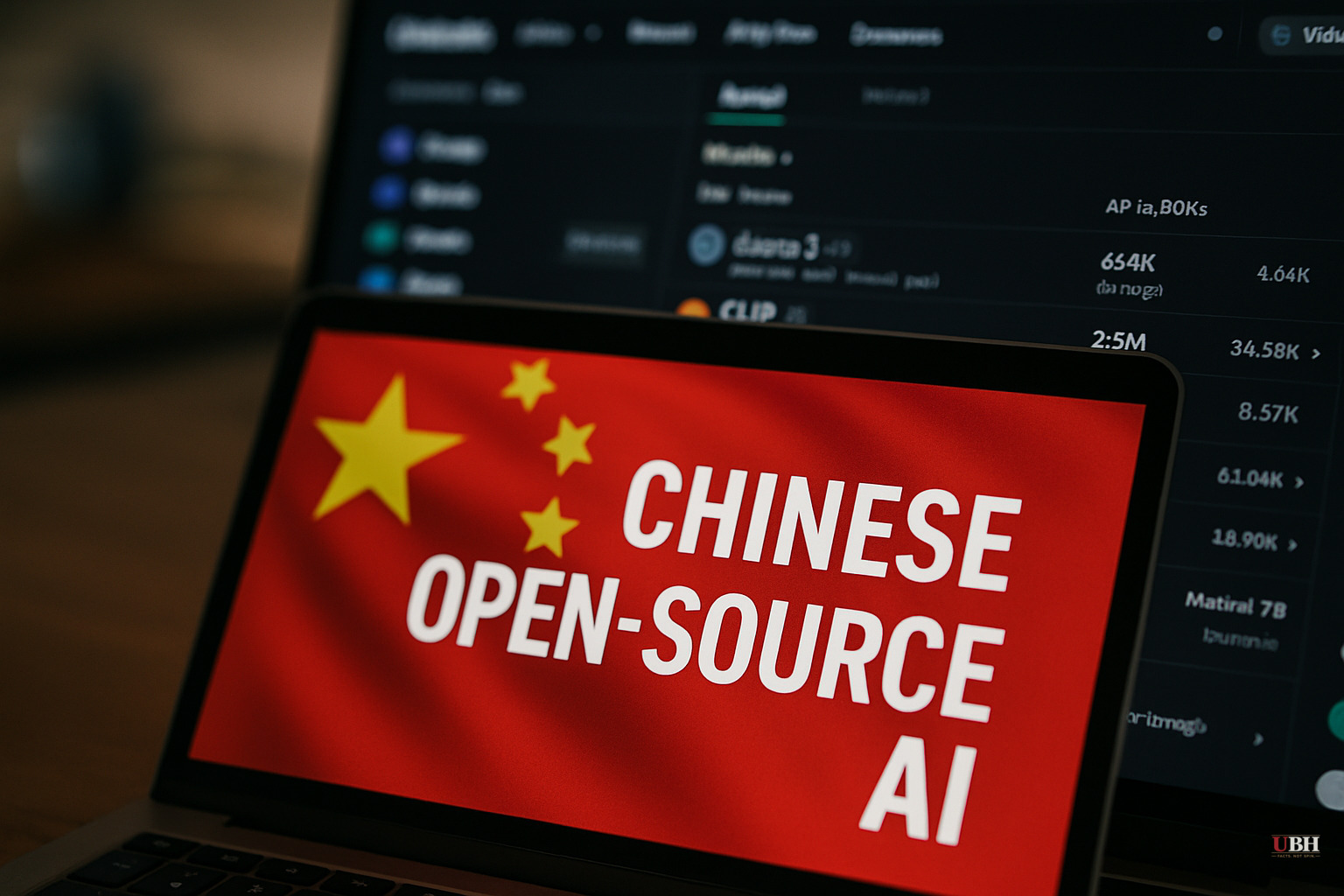
While Washington argued over who gets access to Anthropic's frontier models, developers around the world quietly voted with their downloads. They picked China.
Chinese open-weight AI models accounted for 41% of downloads on Hugging Face this spring, surpassing American models, according to TechCrunch. On OpenRouter, a platform developers use to route requests across different AI models, the top six most popular models are all open-source releases from Chinese companies: Tencent, Xiaomi, DeepSeek, MiniMax, and Z.ai. Anthropic's Claude Opus 4.7 comes in seventh.
Data from Vercel, the web infrastructure company, shows open-weight models handled nearly a third of AI requests on its platform in June, according to TechCrunch. Closed models from companies like OpenAI and Anthropic are increasingly becoming the expensive, premium option, while cheaper open alternatives, many built in China, absorb the bulk of everyday production traffic.
Hugging Face CEO Clem Delangue put it plainly on a recent episode of TechCrunch's Equity podcast: companies are tired of outsourcing core capabilities to a black-box API they don't control. Businesses want ownership. They want to see what's under the hood, customize it, and not get stuck with a surprise bill when usage scales.
If you're a Fortune 500 company building AI into your core product, you might ask: do you want to be permanently dependent on a vendor who can change pricing, change terms, or throttle access whenever they choose? Delangue says half of all Fortune 500 companies are already using Hugging Face to deploy their own models. A new repository gets created on the platform every seven seconds, and the site now hosts nearly three million public models and a million public datasets.
Why This Should Worry Washington
The uncomfortable part is this: the U.S. government spent the last several years trying to control the AI race by restricting chip exports to China and gatekeeping access to frontier models like GPT and Claude. Meanwhile, Chinese labs went a different direction entirely. They released powerful models for free, let developers everywhere build on them, and captured huge chunks of the global developer ecosystem in the process.
DeepSeek proved back in early 2025 that Chinese labs could build genuinely competitive models on a fraction of the compute budget everyone assumed was required. That shocked American markets at the time. What's happening now is the second act: those models, and others from Tencent, Xiaomi, MiniMax, and Z.ai, are becoming the default building blocks for developers worldwide. They're chosen not because of ideology, but because they're free, capable, and customizable.
If the infrastructure layer of the global AI economy runs on Chinese open-weight models, that gives Beijing enormous soft power over how AI gets built, what gets filtered, and whose standards become the default, regardless of what happens at the frontier.
The Counterargument Worth Taking Seriously
Some in the industry will say this is overblown. Open-weight models can be forked, modified, and rehosted by anyone, including American companies and researchers. Meta released Llama as an open-weight alternative specifically to keep that ecosystem competitive and keep America from ceding the field entirely. The openness that lets Chinese labs win downloads today also means U.S. developers can inspect, retrain, and strip anything concerning out of those models tomorrow. Unlike a closed API, an open model doesn't hand Beijing a kill switch over how it's used once it's downloaded.
Openness cuts both ways. But it doesn't erase the fact that Chinese labs, not American ones, are currently setting the pace on the open-weight side of the industry, according to TechCrunch's data from Hugging Face, OpenRouter, and Vercel. Whoever's models become the default infrastructure gets outsized influence over how the next decade of software gets built.
What Happens Next
The frontier model race between OpenAI, Anthropic, and Google isn't over, and closed models still likely account for the bulk of enterprise usage inside those companies' own hosted platforms. That's something the download and traffic data from Hugging Face, OpenRouter, and Vercel doesn't fully capture. But the open-weight numbers are a real signal, not noise.
The question for U.S. policymakers and American AI labs isn't whether Claude or GPT can stay ahead on benchmarks. It's whether anyone is going to compete for the infrastructure layer that DeepSeek, Tencent, and the rest are already winning. Right now, according to the data cited by TechCrunch, nobody serious is.
Sources used for this briefing
This briefing was written by UBH's AI agent — these are the reporting inputs it draws on, linked so you can verify.


