
Unbiased headlines. Facts, not spin.
Unbiased Headlines is an independently owned news organization. We bring you the facts, not opinions, written fresh from 110+ named sources. Sources linked so you can verify it yourself.
 tech
Notable (6/10)
Chinese Embodied-AI Firms Raised $13 Billion in First Half of 2026, Five Times Last Year, as Money Shifts to Robot Brains
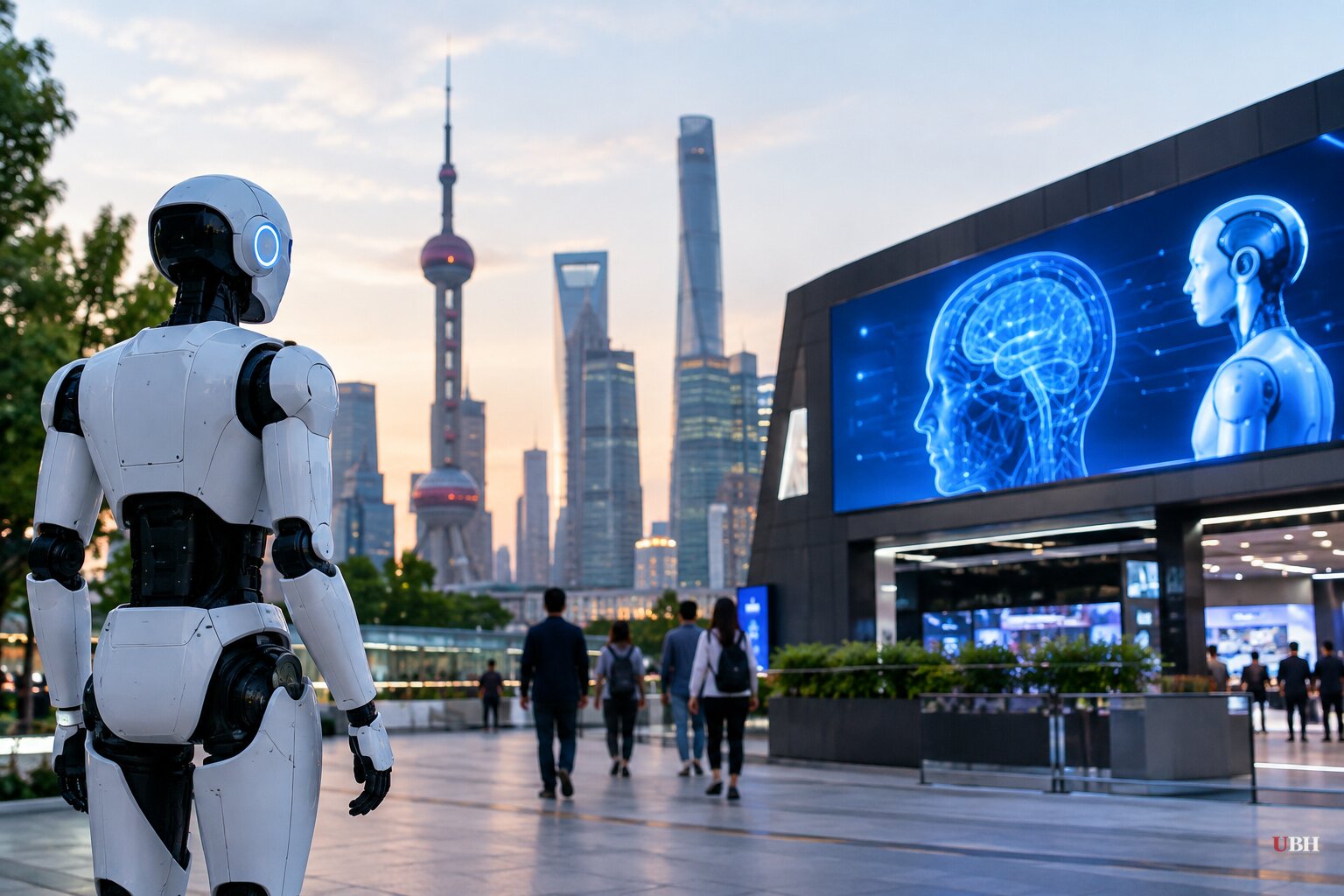
Chinese robot makers have spent years showing off machines that run, dance and flip. Now the money is chasing something harder: software that lets a robot learn a job it was never programmed to do.
Chinese embodied-AI companies raised 93.5 billion yuan, about $13 billion, across 322 deals in the first half of 2026, according to data research firm ITjuzi. That is five times the amount raised a year earlier. Funding is increasingly going to specialist developers of robot intelligence, not just to the companies that build the hardware.
Why the money is moving to software
Hardware is getting cheaper as Chinese makers compete on price. Dermot McGrath, founder of Shanghai-based consultancy ZenGen Labs, said robot makers have "concluded that the margin won't come from the hardware but from the brain."
Spirit AI co-founder Gao Yang put the problem bluntly: "The brain is indeed the weakest link in the complete robotics stack."
The display at the World Robot Conference in Beijing in August reflected the change. Shenzhen-based X Square Robot showed humanoids doing household chores, a long way from choreographed stage routines. X Square co-founder and COO Yang Qian described the goal: "We want robots to shift from being driven by code to being driven by common sense."
How Chinese firms are training the machines
The approach leans on human demonstrations, sensor data and simulation. Spirit AI has hired around 1,000 people to record everyday and industrial activities. Ant Group's robotics unit, Robbyant, says it trained a model on 160,000 hours of material.
DexForce says some industrial tasks can be prepared for deployment in six to eight hours, with success rates above 99.9% in specified precision operations. That is the company's own claim.
There are early customers. CATL says Spirit AI robots connect flexible wires during battery-pack testing at its Zhongzhou plant, with insertion success above 99%. Robbyant says its robots handle orders in two Shanghai pharmacies.
The US-China split
American startups including Physical Intelligence, Skild AI and Generalist are building software meant to teach robots new skills without extensive retraining. Generalist says its GEN-1.5 model completed around 60% of simple tasks after watching a demonstration lasting between 3 and 12 seconds.
X Square has published research showing robots picking up handling skills from a single human video, without retraining the model for each task.
Robotics consultant Georg Stieler said "the leading American labs are setting a demanding benchmark, particularly in how quickly robots can acquire and reuse skills." He still considers China's strongest startups credible competitors.
Each side holds a different card. US developers have advanced AI research and greater access to powerful computing chips. Chinese companies can work directly with robot manufacturers and industrial customers to test and refine their systems. Estimates put China at 80% to 97% of global humanoid robot shipments across 2025 and 2026.
Specialist Chinese startups X Square, Galaxea and Spirit AI have each reached valuations of roughly $3 billion, according to company disclosures.
Chips, valuations and a cooler second half
There are real constraints. Chinese developers face shortages of advanced Nvidia chips because of US export controls. Regulators have also raised concerns about inflated valuations and overcrowding in the sector.
Stieler cautioned that moving from successful demonstrations to commercially reliable products could take years.
The funding pace has also eased. Third-quarter totals came in notably lower than the first-half average, and investors have grown more wary of valuations and of whether humanoid firms can turn prototypes into products people pay for. Unitree Robotics and AgiBot have both posted notable revenue growth in 2026.
The public markets have been rougher. Unitree listed on Shanghai's STAR Market on August 19 at 150.80 yuan a share. By September 21 the stock had fallen about 55% from its peak.
That same day, Reuters reported that regulators had used window guidance, informal instructions to investment banks and investment firms, to hold back some humanoid listings. One source told Reuters humanoid IPOs were frozen for now. Another said there was no formal ban. The regulator did not comment, and no published directive has been cited.
Companies funding their own supply chain
With listings slowed, some pre-IPO companies have become investors themselves. Analyst Poe Zhao of Hello China Tech noted that X Square appeared on the investor lists of two component startups that announced rounds on October 10: Juxie Intelligence, a Wuxi maker of robot joint components, and Moxian Technology, a Dongguan maker of flexible tactile sensors.
According to Barron's China, X Square has raised more than 5 billion yuan, is valued at about 20 billion yuan and has no mass-production revenue yet. Zhao expects slower listings to push such companies to show what their investments deliver, and said transactions with investees will need closer review wherever they create related-party relationships.
It remains unclear whether the 322 deals of the first half turn into robots that hold up on a factory floor, or whether the pullback in funding and the stalled listings arrive first. No regulator has said publicly whether the reported hold on humanoid IPOs will be lifted.
Sources used for this briefing
7 links from 7 independent newsrooms (syndicated copies of the same report count once)
These are the sources it draws on, linked so you can verify.


