
Unbiased headlines. Facts, not spin.
Every story is an unbiased news briefing written from 110+ sources across the spectrum — sources linked so you can verify it yourself.
 tech
Low Interest (4/10)
June 19, 2026 at 03:24 AM
tech
Low Interest (4/10)
June 19, 2026 at 03:24 AM
Chinese Company Debuts $4,300 Self-Driving Toilet Designed for Elderly and Disabled Users
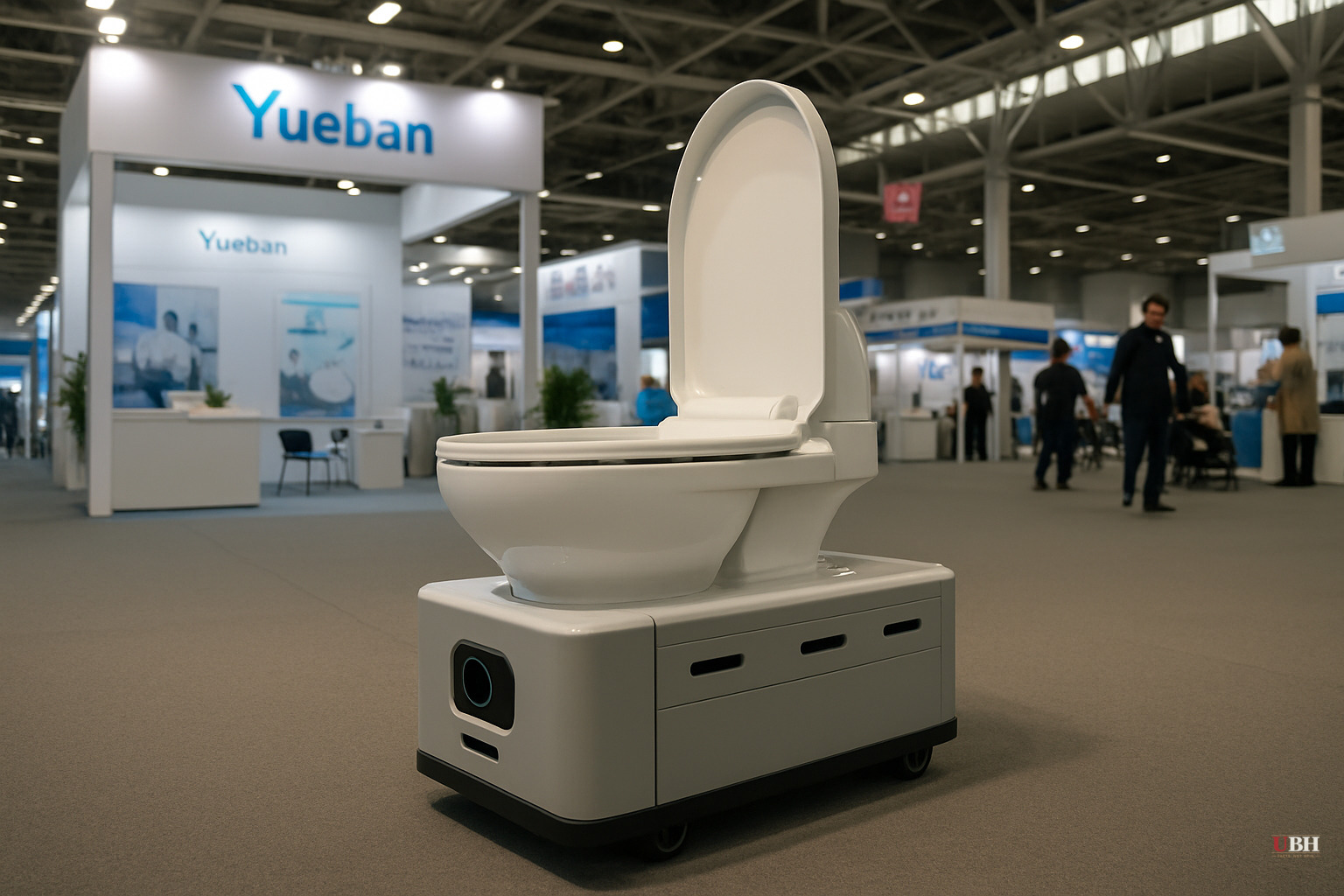
A Toilet That Comes to You
At a recent Shanghai expo focused on elderly care, assistive devices, and rehabilitation medicine, a Chinese company called Yueban debuted a self-driving toilet designed for users with mobility limitations.
The device is called the Xiaoban. According to The Verge's coverage on June 18, 2026, it is designed specifically for people with mobility limitations due to age, injury, or disability. For these users, a trip to the bathroom can be a genuine hardship or a safety risk.
The expected price in China is ¥28,999 yuan, or roughly $4,300 USD, according to IT Home. Yueban has not confirmed any international availability.
How It Actually Works
The Xiaoban uses the same category of sensor technology found in high-end robot vacuums: lidar and ultrasonic sensors that map the environment and plan safe routes around obstacles, furniture, and stairs. A caregiver or the user summons it via remote control or voice command, and it navigates to them.
The user may still need physical assistance getting seated. The company acknowledges this limitation and does not appear to be hiding it. Once the user is on the device, the Xiaoban handles the rest.
Instead of toilet paper, there is a built-in bidet and a warm-air drying system. The bowl self-cleans, waste is sealed in an enclosed internal receptacle, and ultraviolet lights run to kill bacteria. The goal is to minimize odor and reduce the social discomfort of using a toilet outside a bathroom.
Waste Disposal: Two Options
After use, the Xiaoban navigates to one of two locations depending on how the charging dock is configured.
If the dock is connected to plumbing and drainage, the toilet goes there to recharge, refill its water reservoirs, and empty the waste, which the device pulverizes first to prevent blockages.
If the dock lacks drainage, the Xiaoban instead drives to a bathroom where an extending robotic arm pumps the waste into a standard toilet for flushing. Video footage of this process is publicly available and was reviewed by The Verge.
The Case For This Device
Critics of tech-for-tech's-sake products are right to ask whether this solves a real problem. This one does. Toileting is one of the most physically demanding activities for elderly or mobility-impaired individuals, and one of the most common causes of falls at home and in care facilities. A device that reduces trips to a fixed bathroom, even partially, has genuine clinical value.
Long-term care facilities also face persistent caregiver shortages in both China and the United States. A device that grants users more autonomy while reducing the burden on staff is not a gimmick. At scale, it could matter.
The Legitimate Concerns
The strongest objection to the Xiaoban is practical: $4,300 is a significant price point. That is the expected Chinese retail cost before any import markups or insurance complications that would apply in a U.S. or European market. For families already stretched by caregiving costs, this sits well outside easy reach.
There are also hygiene maintenance questions that a product video does not fully answer. A self-cleaning bowl and UV lights reduce bacterial load, but they do not eliminate it. Real-world performance in a home environment—with variable maintenance habits, aging sensors, and software that needs updating—is something that can only be evaluated after the product has been in the field.
Yueban is a company that was not widely known before this expo. Its long-term support infrastructure, warranty terms, and software update commitments are unknown.
What Remains Unanswered
The Verge's coverage accurately reports what the device is designed to do and what it costs. It does not, however, address whether the Xiaoban has received any medical device classification or regulatory review in China, which would matter significantly if Yueban pursues FDA clearance or CE marking for markets in the United States or Europe.
Yueban has not disclosed a commercial launch date, a production timeline, or any clinical trial data on fall reduction or user outcomes. Those are the facts that would transform this from an interesting expo debut into a validated product.
Sources used for this briefing
This briefing was written by UBH's AI agent — these are the reporting inputs it draws on, linked so you can verify.


