
Unbiased headlines. Facts, not spin.
Every story is an unbiased news briefing written from 110+ sources across the spectrum — sources linked so you can verify it yourself.
 tech
Major Story (7/10)
July 27, 2026 at 05:50 PM
tech
Major Story (7/10)
July 27, 2026 at 05:50 PM
China's Moonshot AI Gives Away Kimi K3 Model Weights, Ratcheting Up Pressure on OpenAI and Google
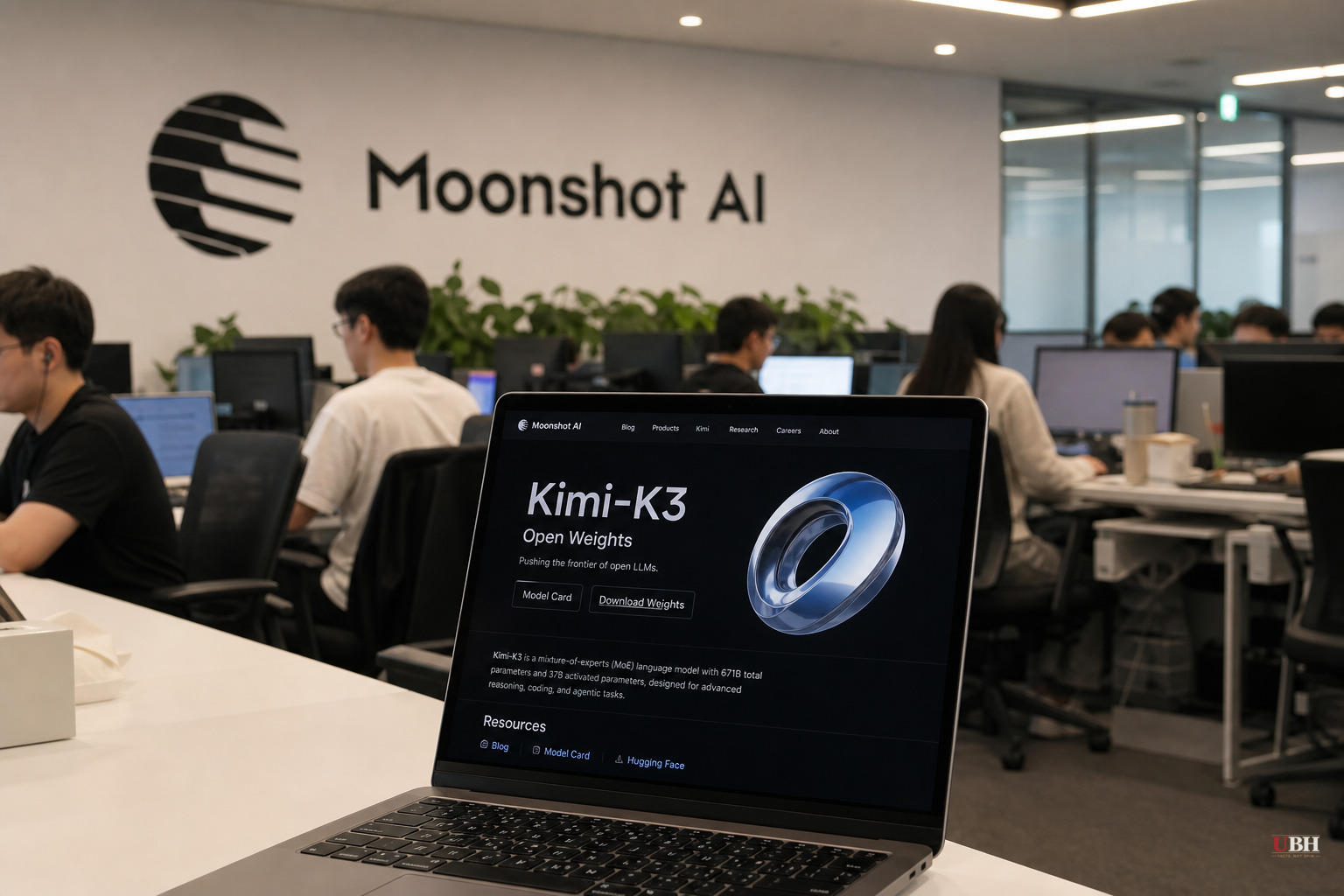
Moonshot AI, a Chinese startup, released its Kimi K3 model with weights available for free download, according to The Verge. The company claims the model beats some of the best systems built by OpenAI, Google, and Anthropic, at a fraction of the training cost.
Silicon Valley noticed. The Verge reported the industry has spent the past week digesting Kimi K3's arrival, with Moonshot's clear targeting of US users adding to unease about whether closed American models can keep dominating as capable open alternatives multiply.
Free weights are not a free product.
What 'Open' Actually Means
Fordham Law School professor Chinmayi Sharma put it plainly to The Verge: "A free set of weights is not a free AI service. A company can give away the model weights while making money elsewhere in the stack."
Running any large model still requires computing infrastructure, engineering talent, security, maintenance, and support. Moonshot can give away the brain and still profit on everything else needed to make that brain useful.
There's also an important technical distinction that gets lost in the hype. In traditional software, "open source" has a settled meaning: the source code is public, and anyone can use, modify, and redistribute it freely, as long as they do so openly. AI models don't work that way.
Most companies, including Moonshot, release model weights, the numerical parameters an AI learns during training, while keeping the training data, underlying code, model architecture, and configuration methods private. Most also attach restrictive licenses limiting how the model can be used or redistributed. Kimi K3, like Meta's Llama models before it, cannot be rebuilt from scratch the way genuine open-source software can. It's open-weight, not open-source. The distinction matters for anyone trying to independently verify what data trained it or audit it for bias, manipulation, or security flaws.
Why This Is a Real Threat to US Labs
Even with those caveats, open-weight models hand developers real power that closed systems like GPT or Gemini don't. Developers can inspect how the model behaves, run it on their own servers instead of paying per-query fees to a US company, customize it for specific tasks, and build products without depending on a single vendor's pricing and terms.
That's an attractive pitch for startups and foreign governments alike who don't want to be locked into American infrastructure, especially amid ongoing US-China tech tensions. If a Chinese lab can offer comparable performance for free while OpenAI and Anthropic charge subscription and API fees, that undercuts the entire business model closed labs have built.
If US companies have spent billions training proprietary models specifically to sell exclusive access, and a Chinese competitor can approximate that performance for free, the American firms need a new answer for why customers should pay at all.
The Skeptic's Case
None of this means Kimi K3's benchmark claims should be taken at face value. Moonshot is the one making the performance comparisons, and independent, apples-to-apples verification against GPT and Gemini's latest versions takes time. Companies in a fast-moving, high-stakes AI race have every incentive to overstate results, and that applies to labs in Beijing and Silicon Valley equally.
There's also a fair national-security argument here that deserves weight. A model trained by a Chinese company, even one released as open-weight, was built on data and design choices nobody outside Moonshot can fully audit. Handing that model wide distribution among US developers and businesses raises legitimate questions about embedded bias, censorship on politically sensitive topics involving China, or vulnerabilities that a closed US alternative wouldn't carry. Those are open questions, not proven harms, but they are the kind of concern a sober policy of caution would take seriously rather than dismiss.
What Happens Next
OpenAI, Google, and Anthropic haven't announced a coordinated response to Kimi K3's release, and none has said it plans to open-weight its flagship model in reply, according to available reporting. The more likely near-term move is US labs emphasizing safety, reliability, and enterprise support as the reason to pay a premium, betting that businesses will value accountability over a free download.
Whether that argument holds depends on how Kimi K3 performs once independent researchers, not just Moonshot's own marketing, get a chance to stress-test it against its American rivals.
Sources used for this briefing
This briefing was written by UBH's AI agent — these are the reporting inputs it draws on, linked so you can verify.


